
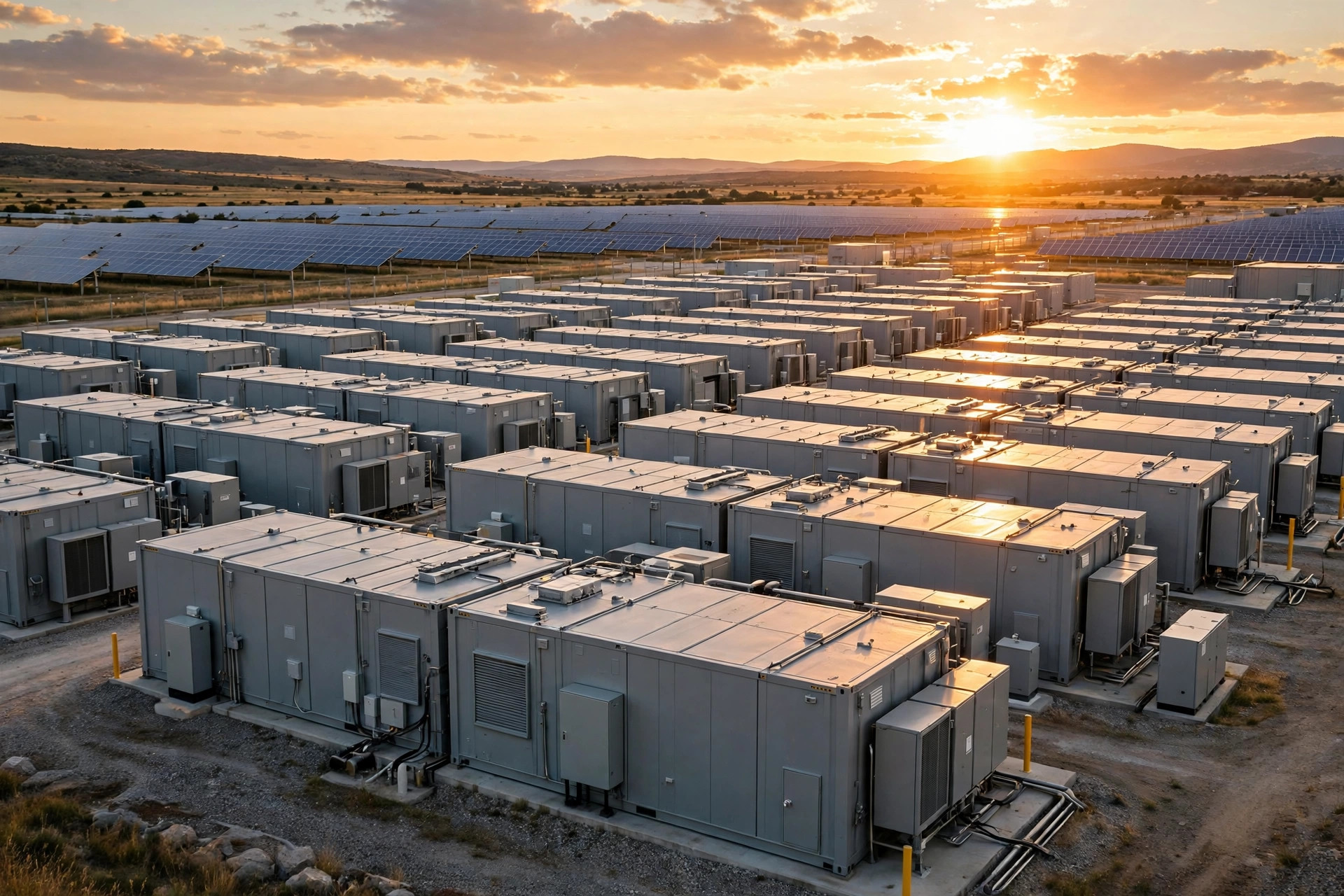
The India energy storage scheme approved by the Union Cabinet on 4 November 2026 is the country's biggest single push yet to solve one of the hardest problems in clean energy: how to keep the lights on when the sun is not shining. Under the scheme, the government will provide ₹14,500 crore in viability gap funding to support 92 gigawatt-hours (GWh) of grid-scale energy storage between the financial years 2026-27 and 2030-31. The plan covers pumped hydro, batteries and emerging technologies, and it is expected to unlock about ₹97,600 crore of total investment. Here is what the scheme does, why it matters, and what happens next.
India Energy Storage Scheme: The 92 GWh Breakdown
The 92 GWh of storage the scheme will support is split three ways. The largest share, 60 GWh, will come from hydro pumped storage plants, which pump water uphill when power is plentiful and let it run back down through turbines when demand rises. A further 30 GWh will come from battery energy storage systems, known as BESS, the large grid-scale batteries that have become the fastest-growing form of storage worldwide. The remaining 2 GWh will come from alternative energy storage technologies.
The money is viability gap funding, which means the government will cover part of the cost of building these projects so they can sell their services at prices that electricity buyers can afford. The total financial support of ₹14,500 crore runs from 2026-27 to 2030-31, and the scheme is aimed at capacity that is yet to be commissioned. In other words, this is a plan for storage that still has to be built, not a claim about storage that already exists.
The scale is large by any measure. The government says the 92 GWh of new capacity will be equivalent to 170 per cent of the grid-scale energy storage India has today. It will also help India meet the storage capacity its planners say the country will need by 2031-32, which the Central Electricity Authority puts at about 411 GWh. The scheme's 92 GWh is roughly a fifth of that total requirement, which shows both how big the plan is and how much more storage India will still need after it.
Battery projects under the scheme must meet a minimum domestic content requirement of 40 per cent. That rule is designed to promote indigenous manufacturing and reduce import dependence, so that more of the batteries, components and know-how behind the storage build-out are made in India rather than bought abroad.
Why the India Energy Storage Scheme Matters Now
India has built renewable energy capacity at a remarkable pace, but solar and wind power have a basic limitation: they produce electricity when the sun shines or the wind blows, not necessarily when people need it most. Demand in India peaks in the evening, after the sun has set, and that gap between when power is generated and when it is used is the single biggest challenge facing the grid.
Storage closes that gap. A battery or a pumped hydro plant can soak up cheap solar power in the middle of the day and release it in the evening, when households switch on lights, fans and air conditioners. Without storage, surplus solar power can go to waste, and the grid must lean on coal and gas plants to cover the evening peak. With storage, the same solar power can be used twice over, once when it is generated and again when it is needed.
That is why the scheme matters for more than the energy sector. Reliable round-the-clock power affects factories, hospitals, schools and homes, and it affects the cost of electricity itself. Storage also strengthens grid stability, because it can respond in seconds to sudden changes in supply or demand. As India's renewable capacity keeps growing, storage is becoming the missing piece that decides whether that clean power can actually be used. Cleaner power also matters for the air Indians breathe, as the capital's struggle with pollution shows in our report on Delhi's air quality turning very poor around Diwali 2026.
What Is Viability Gap Funding?
Viability gap funding, or VGF, is a capital subsidy. Some infrastructure projects are socially useful but commercially difficult: they cost more to build than the revenue they can earn, at least in their early years. Rather than leaving those projects unbuilt, the government pays part of the building cost, closing the gap between what the project costs and what buyers can pay for its services.
India has used this approach for storage before, on a much smaller scale. The government's first VGF scheme for battery storage supported 4,000 MWh, or 4 GWh, of battery capacity. The new scheme is more than twenty times larger in capacity terms, and it extends the approach beyond batteries to pumped hydro and other technologies. The estimated VGF requirement per unit of storage has also fallen sharply as the technology has matured, from about ₹96 lakh per MWh in the earlier scheme to about ₹46 lakh, or 30 per cent of the capital cost.
The logic is straightforward. If the government pays part of the cost of building storage, developers can build more of it, and the power system gets flexibility it would not otherwise have. The test of the scheme will not be the announcement, but how much storage actually gets built and commissioned in the years to 2030-31.
The Lithium and Nickel Plan
The Cabinet also approved a separate scheme worth ₹2,814 crore for lithium and nickel processing facilities. Lithium and nickel are the key materials in the batteries that store electricity, and India currently depends heavily on imports for both. Building domestic processing capacity is meant to give India more control over the supply chain for its own energy transition, and to reduce the risk that shortages or price spikes abroad slow down the storage build-out at home.
The two schemes fit together. The storage scheme creates demand for batteries and their materials, and the processing scheme builds the domestic capacity to supply them. Taken together, they point to a strategy of building an Indian storage industry, rather than simply importing one. The domestic content requirement for battery projects under the storage scheme pushes in the same direction.
What Else the Cabinet Approved
The Cabinet meeting covered more than energy. It also approved an Agnipath pathway for willing Agniveers to enter permanent service, giving the short-service soldiers a route into longer military careers. The government also set out its wider economic ambitions: India is targeting $1 trillion in exports after 14 per cent growth in the first half of the financial year, and Defence Minister Rajnath Singh has set a defence production target of ₹3 lakh crore, with an export goal of ₹50,000 crore by 2029.
Those announcements were made alongside the storage decision, and they give a sense of the government's priorities: building domestic manufacturing capacity, whether in batteries, defence equipment or exports. The storage scheme is the largest of the energy decisions, but it sits inside a broader push to make more of what India uses at home.
What Happens Next
The scheme runs from 2026-27 to 2030-31, and the work now moves to implementation. Projects will need to be identified, bids invited, and contracts awarded, and the storage capacity will then need to be built and connected to the grid. It is the same kind of long build-out now under way in India's cities, where new infrastructure such as the Pune Metro Pink Line, which opened in November 2026, is changing how people travel. The official scorecard to watch is commissioned capacity, not announcements: how many gigawatt-hours of storage are actually operating, as recorded in the Central Electricity Authority's data and in the Power Ministry's replies to Parliament.
For households and businesses, the effects will arrive gradually. Storage does not change the power system overnight, but each gigawatt-hour that comes online makes the grid more flexible and makes better use of the solar power India is already generating. If the scheme delivers on its 92 GWh target, it will be one of the largest storage build-outs anywhere in the world. The next few years will show whether it does.
Sources: Press Information Bureau, The Hindu BusinessLine, Education Times (Times of India), November 2026