
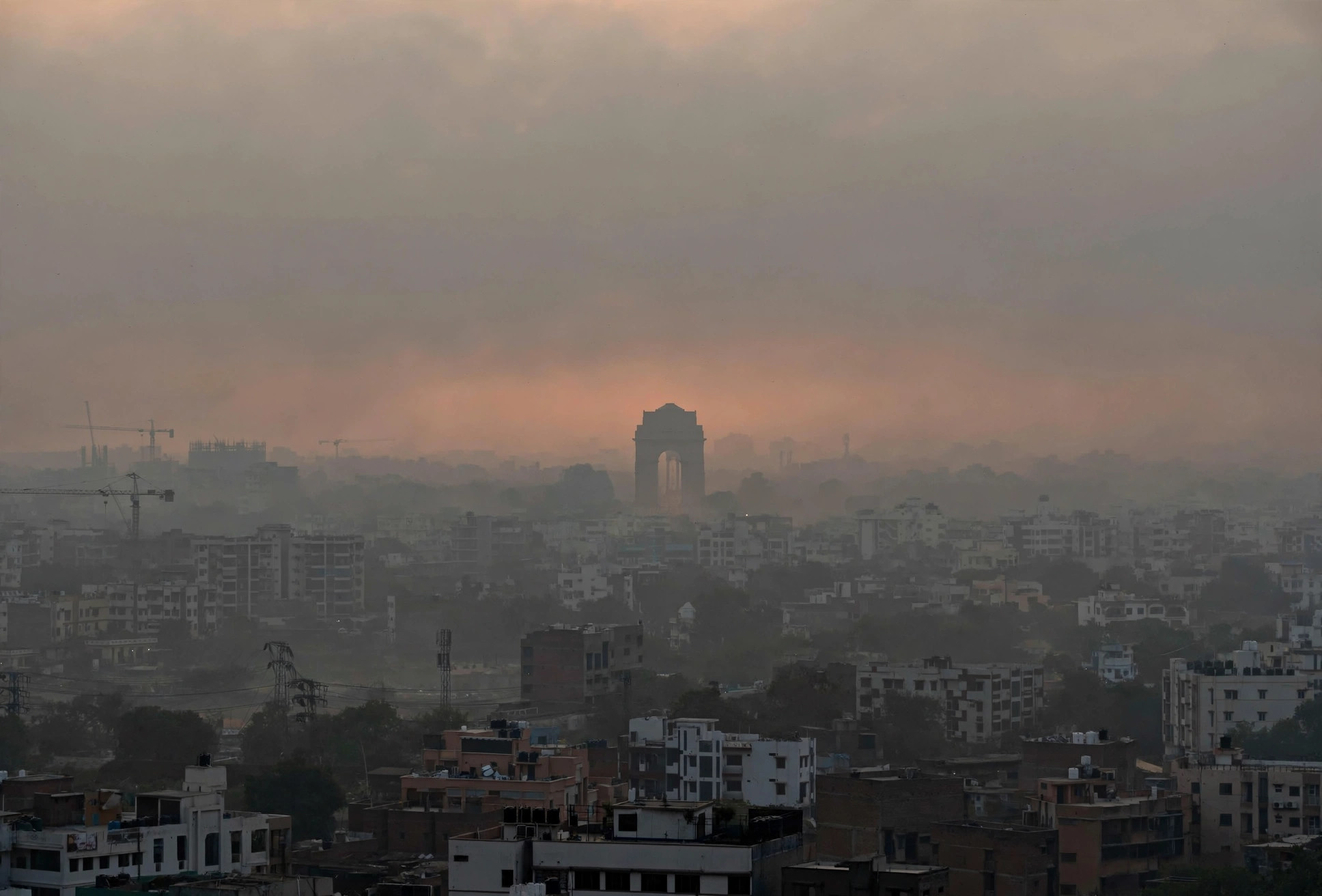
The Delhi air quality Diwali 2026 story is a worrying one for the capital's residents. In the days before Diwali, which falls on 8 November 2026, the city's air has deteriorated sharply, reaching very poor levels for the first time this season. The average air quality index hit 330 on Tuesday 3 November, and some parts of the city recorded severe readings. In response, the Commission for Air Quality Management has invoked Stage II of the Graded Response Action Plan across Delhi and the National Capital Region, while the Supreme Court has set out detailed rules for the limited use of green crackers on 7 and 8 November. This is what the numbers show, what the rules mean, and how residents can protect themselves.
Delhi air quality Diwali 2026: how bad the air has become
The rise has been fast. According to AQI.in figures reported by India Today, Delhi's air quality index stood at 124 on 30 October, then climbed to 256 on 31 October, 369 on 1 November and 393 on 2 November. The Commission for Air Quality Management, known as CAQM, reported slightly different figures from its own monitoring, with an index of 117 on 31 October, 261 on 1 November and 324 on 2 November, but the direction is the same in both sets of data: a steep worsening over four days. The average index reached 330 on Tuesday 3 November, which falls in the very poor category.
The worst readings are more alarming still. Jahangirpuri recorded an index of 451, which counts as severe, and eight monitoring stations across the city were above 400. Across the border in Ghaziabad, the index reached 516 on the morning of 3 November. Monday 2 November was Delhi's first very poor reading of the season, a milestone that normally arrives later in the winter, and its early arrival this year has added to concerns about what the Diwali weekend will bring. For context, Delhi has already had one of the coldest October days in 75 years this season, as reported in our piece on Delhi's coldest October day in 75 years, and the weather conditions that bring cold, still air also trap pollution close to the ground.
What GRAP Stage II means for Delhi-NCR
On 2 November, CAQM invoked Stage II of the Graded Response Action Plan, known as GRAP, across Delhi and the National Capital Region, with immediate effect. Stage II applies when the air quality index is between 301 and 400, the very poor band. Stage I of the plan has already been in force since 21 October, when the air first began to worsen.
Stage II brings a set of measures designed to cut dust and emissions quickly. They include more road cleaning and water sprinkling, wider use of anti-smog guns that spray fine mist to settle dust, stricter checks on vehicles, no fuel for vehicles that do not have a valid pollution certificate, and tighter monitoring of construction sites. The idea is to act before the air slips into the severe category, when emergency measures become necessary. Whether Stage II is enough will depend on the weather and on how much stubble burning and local emissions add to the load in the coming days.
Delhi air quality Diwali 2026: the green cracker rules
Firecrackers are the most contentious part of the Diwali air-quality debate, and this year the Supreme Court has set out precise rules. In an order dated 29 October, from Justices M. M. Sundresh and Prasanna B. Varale, which was released on 2 November, the court said that certified green crackers may be used in Delhi and the National Capital Region only on 7 and 8 November, and only between 6 and 7 in the morning and between 8 and 10 in the evening. Green crackers are those certified by CSIR-NEERI, the Council of Scientific and Industrial Research's National Environmental Engineering Research Institute, and they must contain no barium and must not include ladi, the long strings of crackers.
The restrictions go further. Crackers may not be burst within 300 metres of hospitals, nursing homes, health centres, old-age homes, educational institutions and silence zones. Sales are allowed only from 4 to 6 November, by traders whose licences have been restored, and only at designated spots. Manufacturing is allowed only from 2 to 6 November. From 9 November, the complete ban on crackers returns. The court said the earlier complete ban had not significantly improved air quality, and had helped an illegal market for crackers to grow, which is why it has allowed a limited, regulated window instead. The Central Pollution Control Board must prepare daily air-quality reports for 2 to 6 November, for 7 and 8 November, and for the period after Diwali, so the effect of the rules can be measured.
Why the air turned bad and how to stay safe
Several causes have been cited for the deterioration. Local emissions from vehicles, construction and industry remain the largest year-round source. Stubble burning in adjoining states adds smoke at this time of year, unfavourable weather traps pollutants near the ground, and farm fires in Pakistan may also be contributing. It is the combination, rather than any single cause, that has pushed the index from 124 to nearly 400 in four days.
For residents, the advice is practical. Avoid outdoor exercise in the early morning and late evening when pollution is worst, keep windows closed during peak hours, and use an air purifier indoors if one is available. People with asthma, heart conditions or other breathing problems should be especially careful, and children and older people should limit time outdoors on very poor and severe days. Masks designed to filter fine particles can help during short trips outside, though they are not a substitute for staying indoors. If you must travel, check the latest reading for your area before leaving. And with Diwali falling on 8 November, the days around the festival are the ones to watch most closely. For other changes taking effect this month, see our guide to the new rules in India from 1 November 2026, and for support available to farming families affected by the season, our report on the PM-KISAN 24th instalment.