
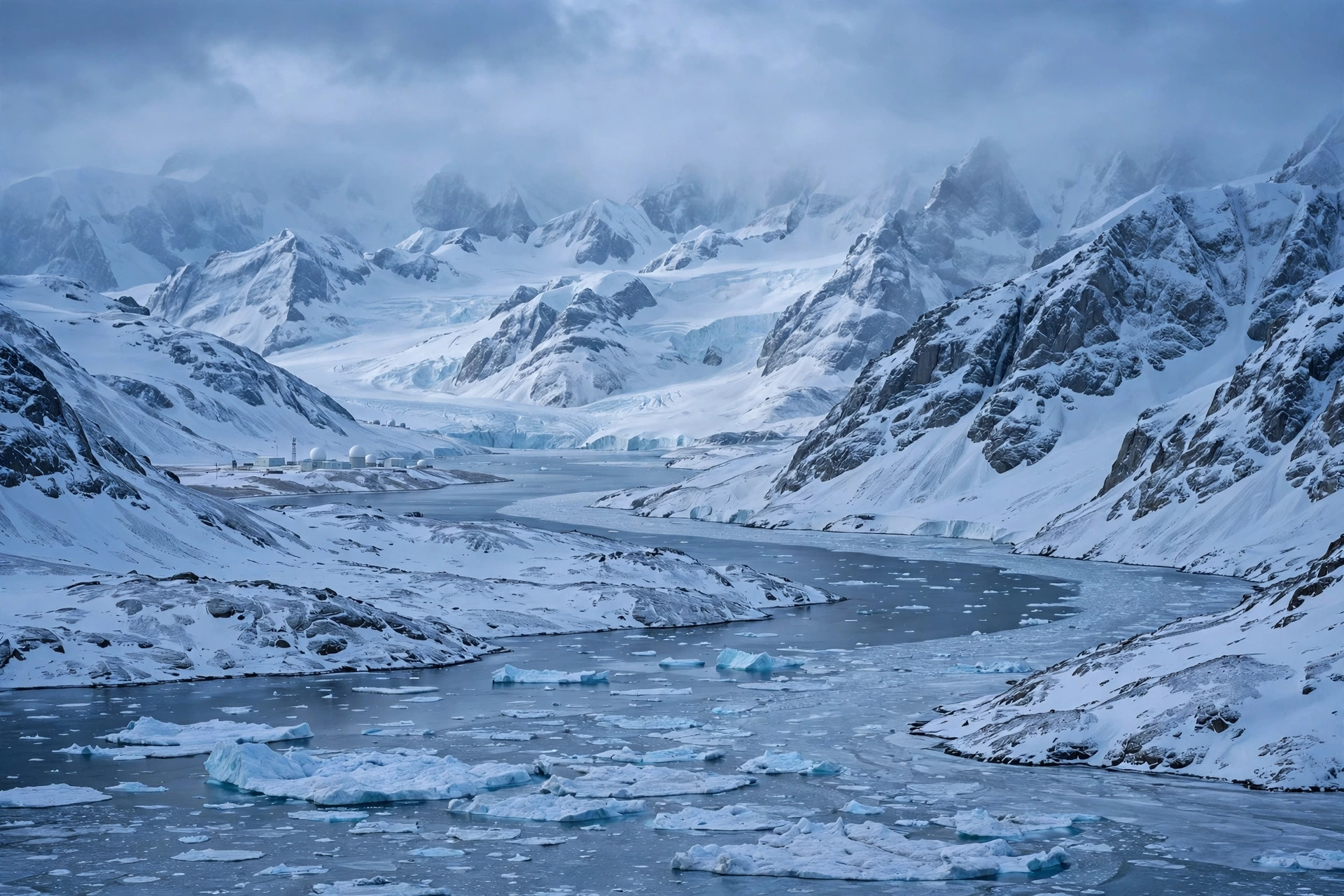
The Denmark Greenland security pact was approved by Denmark's parliament on Thursday 19 November 2026 by 109 votes to 0, with not a single lawmaker voting against it. The vote in the Folketing clears the way for a bigger American military presence in Greenland, including the possible expansion of the Pituffik Space Base in the island's far north-west. It also ends months of tension over the Trump administration's pressure about a possible United States takeover of the island. The agreement does not hand Greenland to the United States, and no new base is being built yet. What it does is settle, in law, the terms under which American forces can operate on the world's largest island. This article explains what the pact allows, what it does not do, and what still has to happen before it takes effect.
Denmark Greenland Security Pact: What Parliament Approved
The Folketing voted 109-0 in favour of the trilateral security agreement between Denmark, Greenland and the United States. Danish foreign minister Lars Løkke Rasmussen attended the vote at Christiansborg in Copenhagen. The result followed Greenland's own parliament, the Inatsisartut, which approved the same agreement on 3 November 2026 by 16 votes to 0, with 7 abstentions. The agreement itself was signed on 22 September 2026 at United Nations headquarters in New York by President Donald Trump, Danish prime minister Mette Frederiksen and Greenland's prime minister Jens-Frederik Nielsen. It amends and supplements the defence agreement of 27 April 1951, the Cold War-era deal under which the United States has kept a military presence in Greenland for more than seven decades.
The unanimity on both sides is the striking part. In Copenhagen, 109 votes for and none against is a rare result on any defence question, and in Nuuk the 16-0 vote with 7 abstentions was nearly as clear. That matters because the agreement arrives after months of public pressure from Washington about a possible American takeover of Greenland, pressure that had strained relations inside the Kingdom of Denmark. A divided vote would have left the deal politically fragile. A unanimous one gives both governments a firm mandate, and it gives Washington a clear signal that the arrangement has democratic backing in both parliaments. The deal still needs one formal step: it enters into force only after both parliaments approve and Denmark formally notifies the United States in a diplomatic note, and that notification was still pending when the vote passed.
What the Denmark Greenland Security Pact Allows
At its core, the pact paves the way for more American bases and a larger military presence in Greenland, and it lets the United States modernise and expand its activities at Pituffik Space Base. Pituffik, in the north-west of the island, is the northernmost American military installation and a key site for missile warning and space surveillance. Two other locations are named in the agreement as potential additional defence areas: Narsarsuaq in the south and Mestersvig in the east. Naming them does not mean construction starts tomorrow, but it does mean the legal groundwork is in place if the United States decides to use them.
The agreement also provides a framework for possible elements of President Trump's Golden Dome missile-defence system, the planned shield intended to protect the United States from long-range attack. Greenland's position between North America and the Arctic makes it valuable ground for early warning, and that geography is the reason the island has mattered to American defence planners since the Second World War. The pact updates the 1951 framework for a new era, when the Arctic is busier, Russia and China are more active in the region, and missile and space tracking matter more than they did when the original agreement was signed. Similar defence arrangements elsewhere have followed the same pattern: recent American defence pacts and mutual defence agreements have both been framed as responses to a changing security map, and the Greenland pact fits that pattern.
What the Pact Does Not Do
Three limits matter as much as the permissions. First, the agreement does not transfer ownership of Greenland to the United States. It reaffirms the territorial integrity of the Kingdom of Denmark and Greenland's right to self-determination, which means Greenlanders themselves decide the island's future status. Second, no new base is built yet and no construction is authorised immediately. The pact opens the door to more American facilities, but each step still needs decisions, funding and planning, and the named locations are potential sites, not building projects. Third, the deal is handled as an executive agreement, so no approval by the United States Senate is needed. That makes it faster to conclude, but it also means its standing rests on the executive branch rather than a treaty ratified by the Senate.
Those limits are the reason the unanimous votes are significant rather than surprising. Greenland's parliament would not have backed a deal that sold the island, and Denmark's parliament would not have backed one that surrendered sovereignty. What both parliaments approved is a defence arrangement inside the Kingdom of Denmark, with Greenland's consent, that gives the United States more room to operate while leaving ownership and self-determination untouched. Anyone reading the deal as a takeover should look again at the text: the sovereignty language is explicit, and it was there at the signing in New York on 22 September.
Why the Vote Was Unanimous
Unanimity in two parliaments on a defence deal with a major power is unusual, and it has a cause. For months, the Trump administration's pressure about a possible takeover had created real anxiety in Greenland and in Denmark, and it had also created a shared interest in settling the question on clear terms. A negotiated agreement, approved by both parliaments, replaces open-ended pressure with a written framework. For Greenland, the deal brings a formal say in the American presence on its territory and a reaffirmation of self-determination. For Denmark, it keeps the Kingdom intact while answering Washington's security concerns. For the United States, it secures the access its military planners wanted without the political cost of a confrontation with an ally.
The attendance of Lars Løkke Rasmussen at the Christiansborg vote underlines how seriously Copenhagen took the moment. Foreign ministers do not routinely sit through parliamentary votes, and his presence signalled that the government regarded this as a defining decision for the Kingdom's security. The 109-0 result also gives Denmark's government a strong hand in the next stage, the formal diplomatic notification to Washington that brings the agreement into force. European security talks this month have shown how much weight allied unity carries at the moment, and the Greenland vote is part of the same picture: allies settling their arrangements in public, by vote, rather than by pressure behind closed doors.
What Happens Next
The immediate step is the diplomatic note. Once Denmark formally notifies the United States, the agreement enters into force, and the practical work begins: planning for the modernisation and expansion at Pituffik, and assessments of Narsarsuaq and Mestersvig as possible additional defence areas. None of that will happen overnight. Base planning takes months, construction takes years, and the Golden Dome elements are at the framework stage rather than the building stage. The honest expectation is a slow, visible build-up rather than a sudden arrival of new forces.
The longer question is political. The pact settles the legal terms of the American presence, but it does not settle Greenland's future status, which remains for Greenlanders to decide. The self-determination language in the agreement keeps that question open, and the unanimous votes suggest both parliaments wanted it kept open. For now, the Denmark Greenland security pact has done what its backers promised: it eased a months-long tension with Washington, it gave the American military a clear legal footing, and it did so with the consent of the people who live on the island. The test now is whether the implementation matches the promise.