
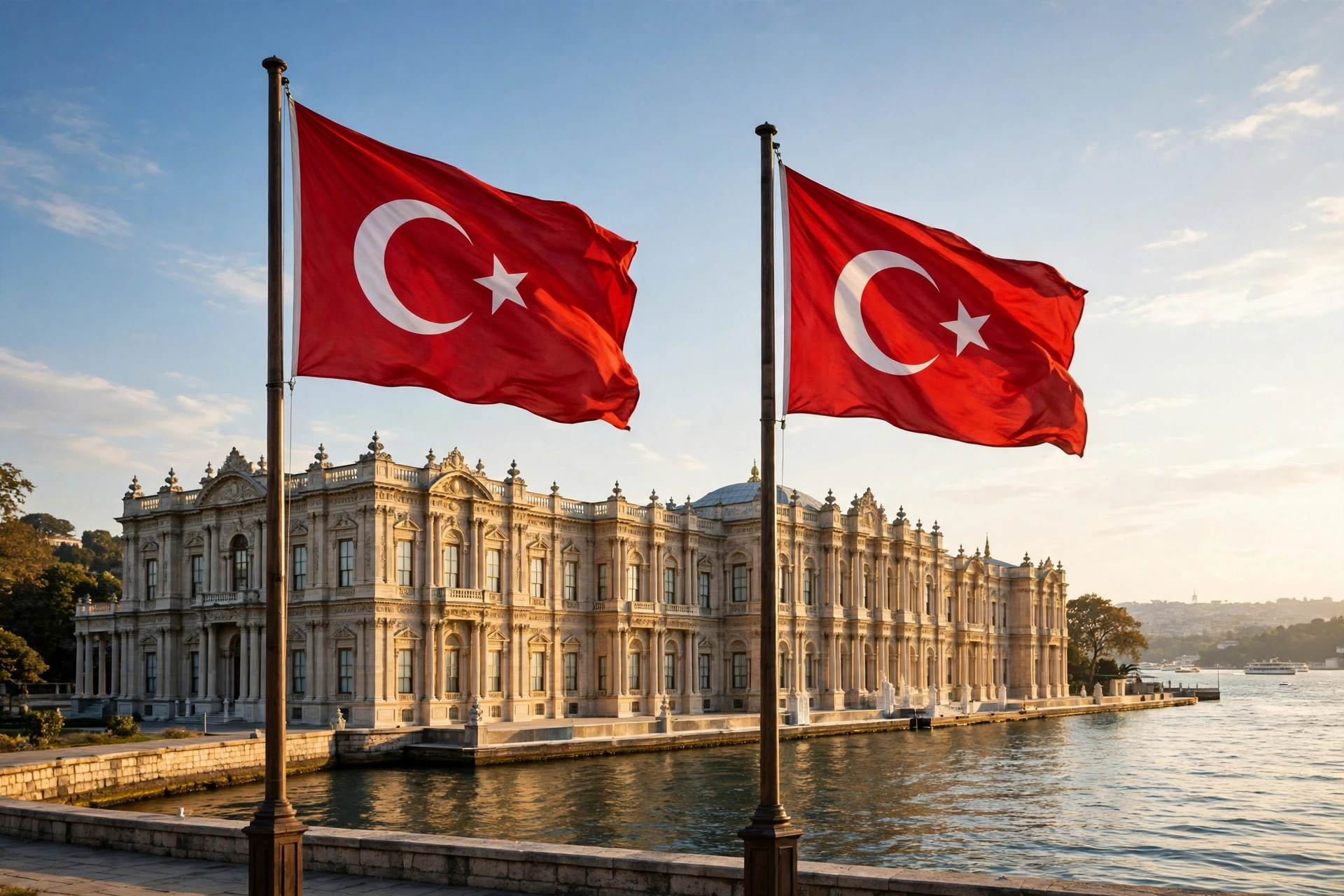
The Türkiye-Qatar defence pact was signed on Friday, 13 November 2026, in Istanbul, and it is the most significant defence commitment either country has made in years. President Recep Tayyip Erdoğan and Qatar's Emir, Sheikh Tamim bin Hamad Al Thani, signed the mutual defence agreement in person at the Dolmabahçe Presidential Office, during the 12th session of the two countries' Supreme Strategic Committee. The joint communiqué that followed pledged "a unified stance in confronting any external armed attack targeting either party or both of them."
That sentence is the whole public substance of the deal — and also its limit. Neither government has published the full text, no ratification schedule or entry-into-force date has been announced, and no arms contract or value was attached to the signing. What the pact promises, what it leaves open, and why it arrived now are three different questions, and only the first has a firm answer.
What the Türkiye-Qatar defence pact says
The official description comes from the joint communiqué issued after the talks, signed by Turkish Foreign Minister Hakan Fidan and Qatar's Prime Minister and Foreign Minister, Sheikh Mohammed bin Abdulrahman Al Thani. According to Reuters, the two sides agreed to consult on threats to their security, as well as regional and global security issues and defence policies, and to expand cooperation through joint military exercises, defence-industry cooperation and personnel training exchanges.
The communiqué frames the agreement as strengthening collective defence and promoting regional security, and says it reflects the two countries' commitment to safeguarding their sovereignty and territorial integrity, as well as their shared vision of a more secure and stable regional order. The signing itself was the centrepiece of the 12th Supreme Strategic Committee session — the high-level forum the two countries set up under a joint accord dated 19 December 2014 to coordinate policy across government. Erdoğan and the Emir signed the accord themselves rather than leaving it to ministers, which is how both sides signalled that this was a leaders' decision, not a bureaucratic one.
Qatar's foreign ministry confirmed the same position in its own words, saying Doha and Ankara would take a united stance against any outside military attack aimed at either country or at both, according to reporting by N12 relayed by Israel.com. The Turkish presidency's announcement, reported by The Hindu, likewise described the accord without giving its detailed provisions.
What the Türkiye-Qatar defence pact does not say
Everything beyond the communiqué is unknown, and that matters more than the signing ceremony. Neither government has published the text, so it is not public what exactly counts as an attack under the pact, what each side must do if one happens, or whether it changes the Turkish military presence in Qatar. No ratification schedule or entry-into-force date has been announced, and neither side has said whether the agreement needs parliamentary approval in either country.
The public description also does not specify automatic troop deployment. A mutual defence agreement and an automatic military response are different things, and the communiqué's language — a "unified stance" and consultation on threats — stops short of promising that an attack on one would trigger an automatic armed response from the other. No statement from either government has filled that gap, and no reaction from Israel or other governments was cited in the first reporting of the signing.
There is also no money attached. The agreement itself contains no announced arms contract, quantity or value, according to Defense and Tech. Defence-industry cooperation is listed as an area to expand, but no deal was signed alongside the pact, and no figure has been published. Anyone describing the pact as a weapons deal is going beyond what either government has said.
Why the Türkiye-Qatar defence pact matters now
The pact is the third regional defence arrangement in four months. The first was the Mecca pact on 7 August, and the second was the Badr memo on 21 October. Three arrangements in four months is a pattern, not a coincidence: governments across the region are writing down security commitments with each other at a pace not seen in years, and the Türkiye-Qatar pact is the latest entry in that sequence.
The timing sits against a tense regional backdrop. Reuters reported the signing as aimed at strengthening collective defence and promoting regional security, and the two leaders discussed Iran and Gaza during the same Istanbul meeting, according to the Times of Israel. The Emir had come to Istanbul from the COP31 climate summit. None of that makes the pact a response to any single event — the communiqué does not name a threat — but it does explain why both governments wanted the commitment on paper now rather than later.
For Türkiye, the pact deepens a partnership that already runs through the Supreme Strategic Committee and a Turkish military presence in Qatar. For Qatar, a small state with large energy wealth, a written defence commitment from the region's largest military power is a different kind of security from the partnerships it already holds. Qatar's regional profile has grown well beyond energy — it has hosted major global events and built dense diplomatic ties across the Gulf, including recent high-level visits from Asian leaders. The two countries have coordinated closely for a decade, including on regional diplomacy; the pact turns that coordination into a formal defence undertaking, even if its precise obligations remain unpublished.
What to watch next after the signing
Four things will show whether the pact has substance behind the ceremony. The first is the text: if either government publishes it, the world will learn what counts as an attack, what each side owes the other, and whether ratification is required. The second is ratification itself — whether parliaments in Ankara or Doha take it up, and how quickly. The third is the first joint military exercise held under the pact, which would show the cooperation clauses working in practice.
The fourth is the reaction of other governments. No statement from Israel or other regional governments was cited in the first reports, and the Gulf Cooperation Council's own separate decision on 10 November — approving an advanced command in Kuwait for its Unified Military Command — is a different, institutional measure, not a response to the bilateral pact. How neighbours read the Türkiye-Qatar commitment, and whether they answer with arrangements of their own, will say as much about the region's direction as the pact itself.
Until the text appears, the honest summary is narrow: Türkiye and Qatar have signed a mutual defence agreement, pledged a unified stance against external armed attack on either or both, and promised closer consultation, exercises, defence-industry cooperation and training. Everything else — what triggers it, what it obliges, when it takes effect — is still to be published. The region has seen a run of defence arrangements in four months; the Türkiye-Qatar pact is the most formal of them, and the least explained.