
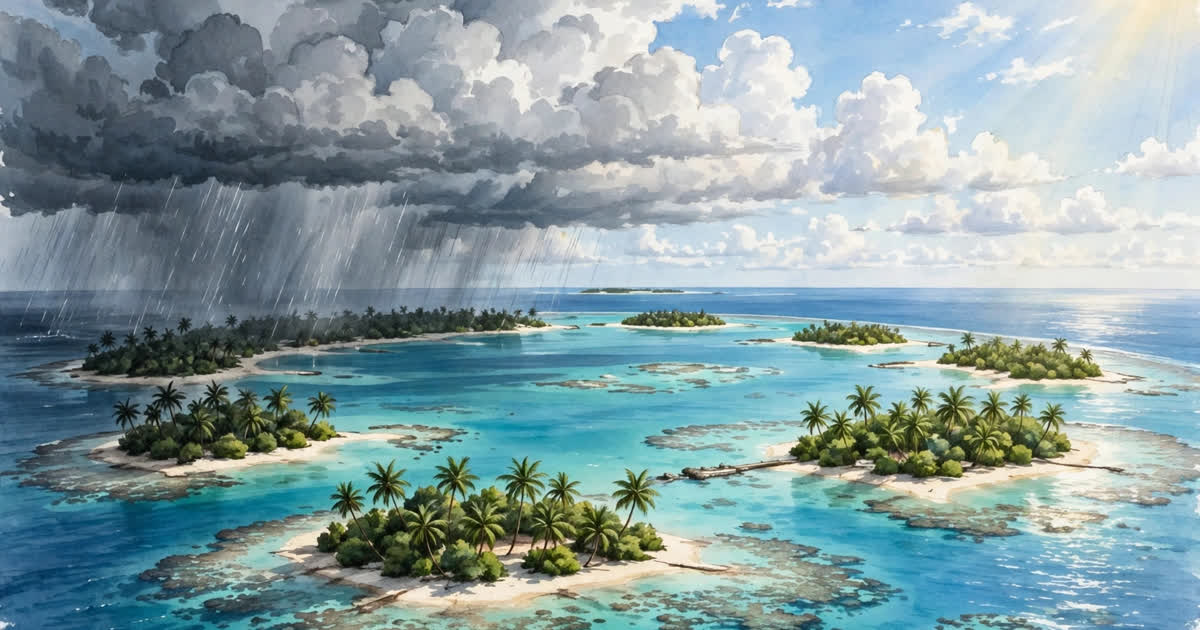
Maldives weather monsoon seasons divide the year into a dry northeast monsoon and a wet southwest monsoon, both warm, with differences in rain, wind, sunshine and sea conditions rather than temperature. The dry season, roughly December to April, offers the most sunshine and calm seas, while the wet season, roughly May to November, brings rain showers, stronger winds, lower prices and excellent surfing and manta encounters. This guide to Maldives weather monsoon seasons explains both periods, atoll differences, and how to choose the best time for your trip.
Maldives lies near the equator, with temperatures generally 28 to 31°C year-round, sea temperatures warm in every month, and humidity high throughout. What changes with Maldives weather monsoon seasons is rainfall frequency, wind direction, cloud cover, wave size and underwater visibility, which matter for beach days, diving, surfing and seaplane transfers. A traveller who understands monsoon patterns can enjoy the Maldives in either season, choosing activities that suit the season rather than expecting dry season weather in wet months.
Maldives Weather Monsoon Seasons: Dry Northeast Monsoon
Maldives weather monsoon seasons dry period, the northeast monsoon from roughly December to April, brings winds from the northeast, lower rainfall, more sunshine hours, and calmer seas, especially on western atoll sides. This is peak tourist season, with the highest hotel prices, fullest resorts, and best conditions for beach holidays, snorkelling, diving visibility and seaplane transfers. February to April often offers the driest, calmest weather, with excellent visibility and warm seas, making it popular for diving, honeymoons and family holidays, though crowds and prices peak around Christmas, New Year and Easter.
Dry season also brings cooler, drier air relative to wet season, though humidity remains high and temperatures stay warm. Trade winds are lighter, waves smaller on sheltered sides, and rain showers, when they occur, are brief. For Maldives weather monsoon seasons planning, dry season suits first-time visitors, honeymooners and divers seeking reliable sunshine and calm seas, accepting higher costs and early booking needs for that reliability.
Maldives Weather Monsoon Seasons: Wet Southwest Monsoon
Maldives weather monsoon seasons wet period, the southwest monsoon from roughly May to November, brings winds from the southwest, higher rainfall, more cloud, stronger winds and rougher seas on exposed sides. Rain typically falls as showers or thunderstorms, often in the afternoon or overnight, with sunny intervals between showers, rather than continuous all-day rain. Sea conditions vary by atoll side: eastern sides are rougher in southwest monsoon, while western sides may be calmer, and vice versa in northeast monsoon, so resort location by atoll side matters.
Wet season offers lower hotel prices, fewer tourists, lusher island vegetation, and excellent surfing on southern atolls, where swells arrive from the Indian Ocean. Manta season at Hanifaru Bay peaks in wet season, roughly June to November, making wet months ideal for manta snorkelling despite rain. Diving visibility can be variable with plankton, which attracts mantas and whale sharks, so wet season diving trades crystal visibility for bigger marine life encounters. With flexible plans and rain jackets for transfers, wet season Maldives is rewarding and affordable.
Maldives Weather Monsoon Seasons: Temperature, Rain and Sea
Maldives weather monsoon seasons temperatures stay remarkably stable, with daytime highs usually 29 to 31°C, nights 26 to 28°C, and sea temperatures 27 to 30°C year-round. Rain totals differ sharply: dry months may receive under 100 millimetres, while wet months can exceed 200 millimetres, though daily rain is often brief and followed by sunshine. Humidity is high in both seasons, higher in wet months, making air conditioning and light clothes important, and dehydration a risk even on cloudy days, so drink water regularly.
Sea conditions in Maldives weather monsoon seasons include waves, currents and visibility. Surf breaks on southern atolls, including the famous Pasta Point and Chickens breaks, work best in southwest monsoon, while other breaks suit northeast monsoon. Currents in channels are stronger during monsoon transitions and spring tides, requiring dive guide knowledge and experience for channel dives. Seaplane transfers, the iconic Maldives arrival, operate in daylight and good visibility, so heavy rain or low cloud can delay transfers, especially in wet season afternoons, and resorts allow buffer time for such delays.
Maldives Weather Monsoon Seasons: Atoll Differences
Maldives weather monsoon seasons vary by atoll latitude, with northern atolls generally drier and southern atolls wetter and more exposed to Indian Ocean swells. North Malé, Baa and Lhaviyani atolls offer classic resort experiences with seasonal patterns similar to central Maldives, while southern atolls such as Laamu, Gaafu and Addu offer surfing, diving and quieter resorts with different wind and wave patterns. Addu, the southernmost atoll, lies near the equator and has a more equatorial rainfall pattern, with rain possible year-round and less distinct monsoon seasonality.
Resort location within an atoll also matters: a resort on a western reef may be calm in one monsoon and rough in the other, while a resort on an eastern reef experiences the opposite. When choosing a resort, ask about beach and lagoon conditions in your travel month, house reef snorkelling, and transfer type, because seaplane, speedboat and domestic flight transfers each have different weather sensitivities. A resort with a good house reef, indoor facilities and flexible excursion policies handles wet season weather better than one relying solely on beach and boat trips.
Maldives Weather Monsoon Seasons: Diving, Surfing and Activities
Maldives weather monsoon seasons shape activity choices. Diving visibility is often best in dry season, with calm seas and clear water, while wet season offers manta and whale shark encounters driven by plankton, trading visibility for wildlife. Surfing peaks in southwest monsoon for southern atolls, with consistent swells and offshore winds on some breaks, while northeast monsoon offers smaller, cleaner waves for beginners in central atolls. Snorkelling works year-round on house reefs, with calm lagoon conditions best in dry season and on sheltered sides in wet season.
Other activities, including dolphin cruises, sandbank trips, fishing, spa treatments and island visits, work in both seasons with flexible scheduling. Rainy afternoons suit spa, cooking classes, and resort facilities, while sunny mornings suit boat trips and excursions. For photographers, wet season clouds and light can be dramatic, while dry season offers clearer sunsets and starry nights. Plan activities by morning and afternoon, not just by day, because Maldives weather monsoon seasons rain often clears within hours.
Maldives Weather Monsoon Seasons: Best Time and Packing Guide
The best time for Maldives weather monsoon seasons depends on priorities. For reliable sunshine, calm seas and best visibility, December to April is best, with February to April often driest. For mantas, surfing, lower prices and fewer crowds, May to November offers rewards, especially June to October for Hanifaru mantas and southern surf. For honeymoons, dry season offers classic beach weather, while wet season offers value and wildlife. For budget trips, wet season guesthouses on local islands offer significant savings, with ferry and speedboat transfers to consider alongside resort costs.
Packing for Maldives weather monsoon seasons should include swimwear, reef-safe sunscreen, light clothes, a rain jacket for transfers and boat trips, waterproof bags, water shoes for coral beaches, and motion sickness remedies if prone to seasickness. In dry season, add extra sun protection and a hat, because UV is extreme even on cloudy days. In wet season, add quick-dry layers and a light wind layer for boat trips. With monsoon seasons understood and plans flexible, Maldives weather monsoon seasons become a choice, not a gamble. For wider trip planning, see how to travel on a budget, travel insurance explained, and Maldives resorts and atolls guide.