
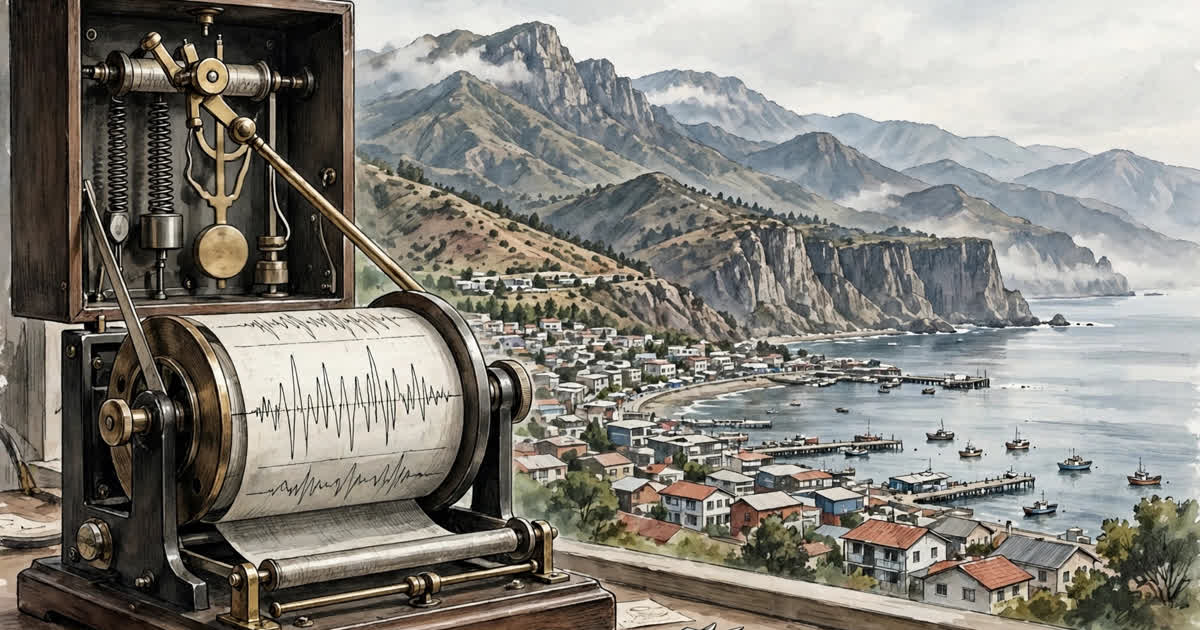
Chile earthquake alerts are part of everyday life in one of the most seismically active countries on Earth, where the Nazca Plate slides beneath the South American Plate along the Pacific coast. Chile has experienced some of the largest earthquakes ever recorded, including the 1960 Valdivia earthquake, and smaller tremors occur frequently. This guide to Chile earthquake alerts explains how the Centro Sismológico Nacional detects quakes, what alerts mean, and how to prepare and respond without panic.
The first thing to understand is that Chile earthquake alerts are not predictions. No system can predict the exact time, place and size of an earthquake in advance. What Chile does have is fast detection, rapid magnitude and location estimates, tsunami assessment for coastal quakes, and a culture of building codes, drills and public education that saves lives when strong shaking occurs. Knowing the difference between detection and prediction helps you react calmly to alerts and ignore false claims of precise forecasts.
Chile Earthquake Alerts: Why Chile Shakes So Often
Chile earthquake alerts begin with plate tectonics. Off Chile's coast, the oceanic Nazca Plate converges with the South American Plate and sinks beneath it, a process called subduction. Stress builds along the plate boundary over decades or centuries, then releases suddenly as an earthquake, sometimes followed by aftershocks that can continue for weeks or months. Because the boundary runs the length of Chile, quakes can occur from Arica in the north to Magallanes in the south, though the largest events cluster along the central and northern coast.
Chile's geography also shapes risk. Coastal cities face tsunami risk after large offshore quakes, while inland cities face strong shaking, landslides in mountain areas, and damage to older buildings. Modern Chilean building codes, developed after devastating quakes, require new structures to withstand strong shaking, and that engineering is a major reason casualty numbers in recent large quakes have been lower than in many other countries. Geography explains the hazard, but preparation and construction determine much of the outcome.
Chile Earthquake Alerts: How Sismológico Detection Works
Chile earthquake alerts are produced by the Centro Sismológico Nacional, known as CSN, part of the University of Chile. A network of seismometers across the country records ground motion continuously, and computers detect the first seismic waves, estimate the location and depth, and calculate magnitude within minutes. Early estimates are sometimes revised as more stations report, so a magnitude may change slightly in the first hour after a quake. That revision is normal science, not a sign of confusion.
CSN publishes quake information online, including time, location, depth and magnitude, and media and apps republish it quickly. For strong quakes, official channels also assess tsunami risk with SHOA, the Navy's hydrographic and oceanographic service, which issues tsunami alerts or cancellations for the coast. Follow CSN and SENAPRED, the national disaster prevention and response service, for authoritative information, and be cautious of social media posts that exaggerate magnitude or claim a tsunami without an official warning.
Chile Earthquake Alerts: Magnitude, Intensity and Depth Explained
Chile earthquake alerts use magnitude to describe the energy released at the source, and intensity to describe shaking felt at a place. Magnitude is a single number for the quake, now usually moment magnitude, while intensity varies by distance, depth, local geology and building type. A deep quake far offshore may have a high magnitude but feel moderate on land, while a shallow quake near a city can feel violent even at a lower magnitude. That is why two reports of the same quake can sound different: one describes the source, the other describes local experience.
Depth matters greatly. Shallow quakes, less than about 70 kilometres deep, usually cause stronger shaking near the epicentre than deep quakes of the same magnitude. Location matters too: an offshore quake raises tsunami questions, while an inland quake raises landslide and building-damage questions. When you read Chile earthquake alerts, note magnitude, depth and location together, and compare the felt intensity in your city with the epicentre distance, rather than reacting to magnitude alone.
Chile Earthquake Alerts: Tsunami Warnings and Coastal Safety
Chile earthquake alerts for coastal areas include tsunami assessment, and this is where calm, fast action matters most. After a large offshore quake, SHOA may issue a tsunami alert, precautionary alert, or cancellation, with evacuation zones defined by local authorities. If you feel strong shaking that lasts a long time near the coast, do not wait for an official alert if local guidance tells you to move to high ground: natural warnings, such as prolonged shaking or a sudden sea retreat, are themselves a signal to evacuate inland and uphill on foot where possible.
Tsunami waves do not always arrive as a single giant wall; they can arrive as a series of surges over hours, with dangerous currents between waves. Stay away from the coast until authorities declare it safe, even if the sea looks calm after the first surge. Keep a charged phone, but do not rely on driving if roads are congested, and follow marked evacuation routes. Hotels and coastal towns in Chile often display evacuation maps, so check the route on arrival rather than during an emergency.
Chile Earthquake Alerts: What to Do During and After Shaking
During shaking, Chile earthquake alerts guidance follows the drop, cover and hold on approach: drop to the ground, take cover under a sturdy table or desk, and hold on until shaking stops. Stay away from windows, heavy furniture and objects that can fall, and do not run outside during shaking, because falling debris near building entrances is a major hazard. If you are in bed, stay there and protect your head with a pillow unless you are near heavy objects that could fall. If you are driving, stop in a safe place away from bridges, overpasses and power lines, and stay in the vehicle.
After shaking stops, check yourself and others for injuries, check for gas leaks, damaged wiring and broken glass, and be ready for aftershocks. Use phones sparingly to keep networks available for emergencies, and follow official updates rather than rumours. If your building is damaged, leave it and do not re-enter until it has been checked. Keep shoes, a torch and a phone charger accessible, because aftershocks and power cuts often follow a strong quake, and darkness makes hazards harder to see.
Chile Earthquake Alerts: Preparing Your Home and Family
Preparation turns Chile earthquake alerts from frightening news into a manageable routine. Secure heavy furniture and water heaters to walls, store heavy items low, and keep a basic emergency kit with water, food, medicines, a torch, batteries, a radio, copies of documents and cash. Agree a family meeting point and an out-of-area contact, because local phone networks can be overwhelmed. Practise drop, cover and hold on with children, and include pets in the plan, with carriers, food and leads ready.
Review your building's safety features, know the evacuation route if you live near the coast, and keep your car's fuel tank at least half full in earthquake-prone regions. Check that insurance covers earthquake damage where available, and photograph valuable items for claims. Most importantly, treat every Chile earthquake alert as a reminder to check the kit, not as a reason to panic. Chile's combination of monitoring, engineering and public readiness is strong, and personal preparation completes it. For related science and safety context, see what climate change means, how solar panels work, and Santiago weather and seasons guide.