
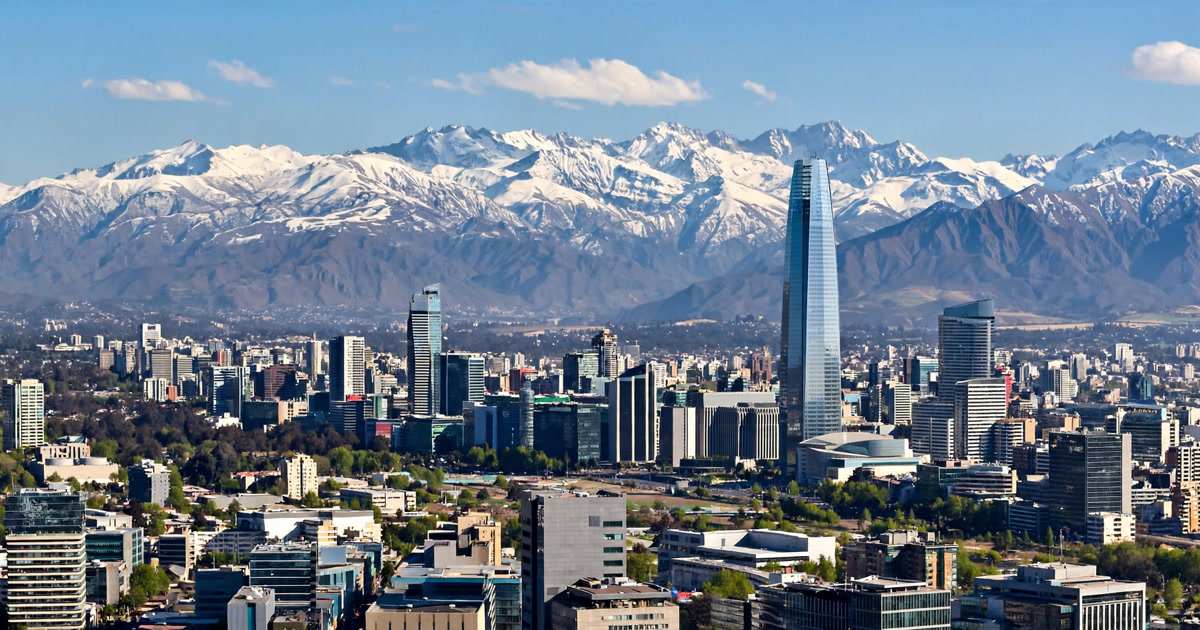
Anyone planning a trip to Chile quickly discovers that Santiago Chile weather is only the beginning of the story. Santiago sits in a valley between the coastal mountains and the Andes, giving it a Mediterranean climate with dry, warm summers and cool, wetter winters, but Chile itself stretches more than four thousand kilometres from the Atacama Desert in the north to Patagonia in the south. This guide explains Santiago Chile weather month by month, how to read Spanish-language forecasts using the words tiempo and clima, and how conditions change as you travel to other regions.
Understanding Santiago Chile weather matters because the city rewards good timing. Summer days are long, warm and ideal for viewpoints, wine valleys and outdoor dining, while winter brings rain, low cloud and occasional smog trapped in the valley, as well as snow in the nearby Andes ski resorts. A traveller who checks Santiago Chile weather before booking can choose the right season for hiking, skiing, city sightseeing or a longer journey south, and can pack sensibly instead of guessing.
Santiago Chile weather by season
Santiago Chile weather in summer, from December to February, is typically warm and dry. Daytime temperatures often reach the high twenties or low thirties Celsius, nights are cooler, and rain is rare. This is the best season for rooftop views, parks, day trips to Valparaíso and the Maipo wine valley, and long evenings outdoors, but sun protection, water and a hat are essential, and afternoon heat can be tiring for walking tours.
Autumn, from March to May, brings milder Santiago Chile weather and some of the city's most pleasant conditions. Temperatures fall gradually, the light softens, and the vineyards around Santiago turn golden during harvest season. Rain becomes more likely as autumn progresses, so a light waterproof layer is worth packing, but many travellers find this shoulder season ideal because crowds thin and the air feels fresher than in high summer.
Winter, from June to August, is the coolest and wettest period for Santiago Chile weather. Daytime temperatures are often in the low to mid teens Celsius, nights can fall to single figures, and rain arrives in fronts from the Pacific. The city can feel grey on still winter days, yet this is also ski season in the Andes resorts above Santiago, where snow conditions are best. Spring, from September to November, then brings warming days, blossom, and increasing sunshine, although mornings can still be chilly and showers are possible.
How to read a forecast: tiempo, clima and Santiago Chile weather
Spanish-language searches for Santiago Chile weather usually use two words that English speakers often confuse: tiempo and clima. Tiempo generally means the weather right now or in the coming days, as in tiempo en Santiago hoy, while clima more often means climate, the long-term pattern for a place or season. If you want today's forecast, search for tiempo; if you want to know what a month is usually like, search for clima. Knowing that distinction makes Santiago Chile weather searches far more useful.
A good Santiago Chile weather forecast will show maximum and minimum temperatures, rain probability, wind, humidity and sunrise and sunset times. Pay attention to the difference between a forecast for central Santiago and one for the foothills or the coast, because altitude and distance from the sea change conditions quickly. The Chilean Meteorological Directorate is the authoritative national source, and international forecast services are useful for comparison, but local forecasts are best for same-day decisions such as whether to head into the mountains.
Travellers should also watch for Santiago's winter air quality and temperature inversions, when cold air is trapped beneath warmer air and pollution lingers in the valley. On such days, the city's climate may look calm and dry, yet visibility is poor and the Andes disappear from view. Checking air quality alongside the forecast helps you decide whether to plan a viewpoint visit, a museum day, or a trip out of the valley to clearer air.
Santiago Chile weather compared with Chile's regions
Chile's regions make the city's climate looks moderate by comparison. The far north around the Atacama Desert is one of the driest places on Earth, with intense sun, very low rainfall and large differences between day and night temperatures. The central coast, including Valparaíso and Viña del Mar, is cooler and cloudier than Santiago, especially in the morning, because of coastal fog. The Lake District further south is greener and wetter, with rain possible in any month.
Patagonia, in the far south, has a completely different character from the city's climate. Winds are strong, weather changes rapidly, and summer is the main season for trekking in Torres del Paine, while winter brings snow, short days and limited services. Easter Island, far out in the Pacific, is subtropical and warm year-round with occasional rain. The lesson for any Chile itinerary is simple: never assume the city's climate applies to the next stop, and always check a local forecast for each region before travelling.
Packing for Chile therefore means layering. A traveller who starts in Santiago, visits the Atacama, then flies south to Patagonia may need sun protection, a warm jacket, waterproofs and sturdy walking shoes on the same trip. Planning the practical side of a multi-region journey is easier with our guide on how to travel on a budget and our explainer on what travel insurance covers, which covers delays and changes that weather can cause.
Best time to visit and practical Santiago Chile weather tips
The best time to visit Santiago depends on what you want to do. For city sightseeing, wine tours and outdoor dining, the warmer months and the autumn shoulder season offer the most reliable the city's climate. For skiing, winter is the obvious choice, with resorts such as Valle Nevado, La Parva and El Colorado within easy reach of the city. For combining Santiago with Patagonia, the southern summer from December to February gives the longest days and the most open trails.
A few practical the city's climate tips help in every season. Carry water and sun protection in summer, even on cloudy days at altitude, because ultraviolet levels are high. In winter, bring a warm layer for evenings and a waterproof jacket for rain, and allow extra time for mountain roads after snow. In every season, check the forecast the evening before and again in the morning, because Andean weather can shift quickly and a clear morning does not guarantee a clear afternoon.
Finally, treat the city's climate as a planning tool, not a reason to cancel a trip. Chile's climate variety is part of its appeal, and a rainy day in Santiago can become a museum day, a market visit, or a wine-tasting afternoon, while a clear winter morning can offer the sharpest views of the snow-covered Andes all year. With a seasonal plan, a local forecast and flexible days built into your itinerary, Santiago and Chile's regions are enjoyable in every month.