
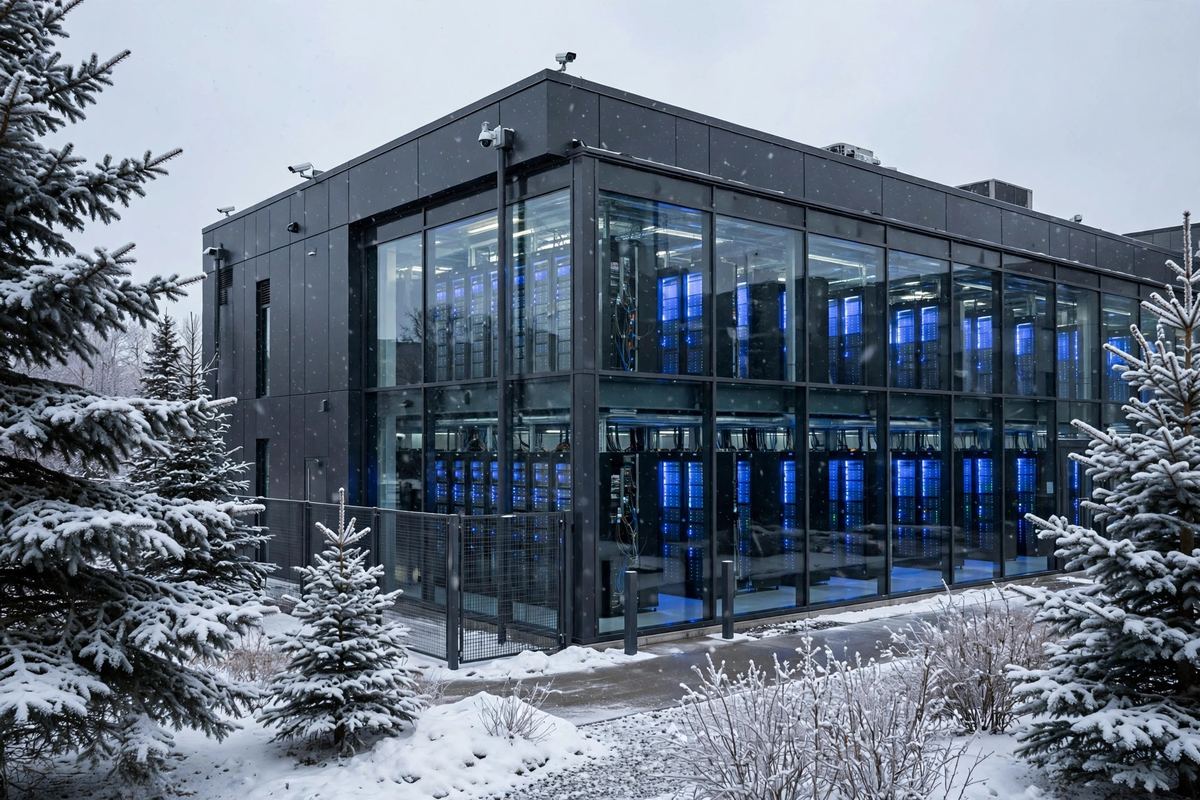
The Canadian federal government is planning to build a massive new data centre near Ottawa for the country's cyber intelligence agency, with an estimated construction cost of between $1.5 billion and $1.85 billion. The facility would serve the Communications Security Establishment, known as CSE, which is responsible for protecting government computer systems, gathering foreign signals intelligence, and conducting cyber operations. The plan was revealed in an advance procurement notice posted by Defence Construction Canada on 7 October, and reported widely in mid-October. The notice describes a 60-megawatt facility in the National Capital Region, equipped with specialised electrical and cooling systems, office space, and areas for receiving and shipping hardware.
To understand the significance of the project, it helps to know what CSE does. CSE is Canada's national cryptologic agency, operating under the National Defence portfolio. It has two broad missions. The first is defensive: it protects federal government networks from cyber attacks, helps secure critical infrastructure, and provides advice on cyber security to government departments and, through the Canadian Centre for Cyber Security, to the public and private sector. The second is intelligence gathering: it collects foreign signals intelligence, meaning information derived from intercepting communications and electronic signals abroad, which helps inform government decision-making on security, trade and foreign policy. Both missions depend on computing power. Modern signals intelligence involves processing enormous volumes of data, and modern cyber defence requires powerful systems to detect and analyse threats in real time.
The proposed data centre is, in essence, an investment in that computing capacity. In a statement to CTV News Ottawa, CSE confirmed that the facility would give the agency more secure computing capacity for its current and future work. The agency said the investment is part of the federal government's broader defence spending plans, aimed at modernising the secure infrastructure and capabilities needed to respond to evolving threats and support Canada's national security and defence priorities. CSE also stressed that it does not disclose specific operational or technical requirements beyond what is publicly available, in order to protect national security and the integrity of its operations. That reticence is standard for an intelligence agency, but it means many details of the project, including its exact location and the systems it will house, will remain undisclosed.
The scale of the project is notable even in a year of large data centre announcements in Canada. A 60-megawatt facility is large enough to power at least 30,000 homes, according to reporting on the procurement notice. The construction cost alone, up to $1.85 billion, exceeds the price tag of many commercial data centres, reflecting the specialised security, resilience and redundancy requirements of a facility that will handle classified material. For comparison, Bell is building a $1.7 billion artificial intelligence data centre in Saskatchewan, and Telus is working with the federal government on AI data centres in British Columbia. Those are commercial projects, but they illustrate how much capital is flowing into Canadian computing infrastructure as demand for artificial intelligence and cloud services grows.
The timing also matters. The federal government recently announced $500 million in additional funding for artificial intelligence, and just a month before the CSE notice, it outlined a framework for companies building data centres in Canada. Under that framework, new facilities must create lasting local benefits, must not shift electricity costs onto ordinary Canadians, must minimise water use and environmental impacts, and must be transparent about local impacts. Ontario unveiled its own data centre framework in August, based on three pillars: economic development, data protection and sovereignty, and community investment and public confidence. Ottawa city council, for its part, passed a motion about a month before the CSE announcement directing staff to study and develop a framework for assessing data centres based on their size and impact, with a report expected early next year.
Those frameworks exist because data centres have become a contentious local issue. A 60-megawatt facility consumes a large amount of electricity, generates heat and noise, and, once built and automated, creates relatively few permanent jobs compared with its cost. Tech expert Carmi Levy, quoted by CTV, warned that while becoming an artificial intelligence hub is inevitable, facilities drawing 60 megawatts consume massive power grids, generate noise and create few permanent jobs once automated. Ottawa Mayor Mark Sutcliffe said he was unaware of the procurement notice and emphasised that local residents must be consulted before any major construction proceeds. Other Ontario cities, including Oakville and Mississauga, have imposed one-year moratoriums on new data centres while they study the issue. Hydro Ottawa, the local utility, has received 34 requests from large electricity customers over the past two years, representing a combined 1,075 megawatts of potential demand, of which data centres alone accounted for 653 megawatts. The CSE project would add to that pressure.
It is important to understand the procurement stage the project has reached. The Defence Construction Canada notice is an advance procurement notice, not a request for proposals. Its purpose is to give interested companies time to obtain the necessary security clearances before a formal competition begins. The actual contract is expected to be posted early next year. The notice itself cautions that there is no guarantee the contract will proceed, or that security clearances will be granted within the anticipated timelines or at all. In other words, the project is real and budgeted, but it is not yet a done deal. The long lead time reflects the complexity of building a secure facility, which requires cleared contractors, specialised equipment and careful planning.
The broader context is a global race to build computing capacity for artificial intelligence and national security. Governments around the world are investing in sovereign computing infrastructure because they do not want to depend entirely on foreign companies or foreign data centres for sensitive work. Canada's move fits that pattern. A CSE data centre would give the government dedicated, secure capacity for intelligence and cyber defence work that cannot be outsourced to commercial cloud providers without additional risk. It would also support the government's stated goal of expanding domestic AI computing capacity, a goal reflected in the recent AI funding announcement and the data centre frameworks.
There are also questions that remain unanswered. The government has not said exactly where in the National Capital Region the facility would be built, how long construction would take, or how the project will be powered. Electricity supply is a key issue: a 60-megawatt facility needs a reliable, large-scale power connection, and the region is already seeing growing demand from commercial data centres. Water use is another consideration, since data centres use water for cooling, although modern designs can reduce consumption significantly. Environmental assessments and community consultations will need to address both issues. The government's own framework requires transparency about local impacts, and the Ottawa mayor's comments suggest that local consultation will be a political necessity as well as a procedural one.
What happens next is procedural but important. Defence Construction Canada is expected to post the formal contract opportunity early next year, after interested firms have had time to secure clearances. Ottawa city staff are expected to report back to council early next year on a framework for assessing data centres. Those two tracks will shape whether the project proceeds on schedule, and under what conditions. For now, the announcement signals that Canada intends to treat secure computing capacity as a core part of its national security infrastructure, and that it is willing to spend well over a billion dollars to build it. In an era when cyber attacks, disinformation and signals intelligence all depend on computing power, that investment is best understood not as a real estate project, but as a long-term bet on the country's ability to defend its networks and understand the world around it.
Related reading: Australia's digital duty of care bill
Related reading: EU leaders meet on energy and Ukraine
The risks of concentrated infrastructure were underlined in London, where a Google Cloud outage knocked UK banks including Revolut and Lloyds offline for hours.