
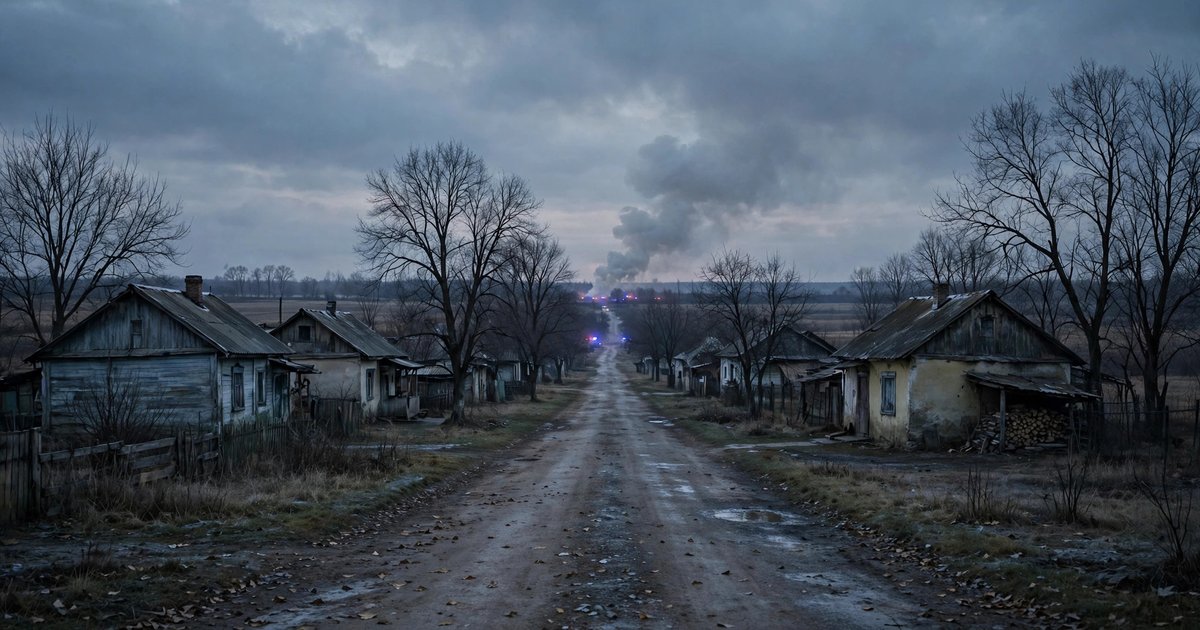
The Komyshuvakha attack killed at least 31 people on Monday, 2 November 2026, when Russian guided bombs struck a school being used as a humanitarian aid centre in the front-line village of Komyshuvakha, in Ukraine's southeastern Zaporizhzhia region. The school had become a lifeline for the villagers who stayed behind: every Monday, residents gathered there to collect humanitarian packages. The bombs fell just as people were arriving — and then, as rescuers and survivors took shelter, a second wave of bombs hit the shelter itself. Five people were injured and 27 were initially reported missing. By Tuesday, the confirmed toll had risen to 31, with more than 45 people still missing, and officials warned it could rise further as rescue teams searched the rubble.
What Happened in the Komyshuvakha Attack
Russian forces bombed the village of Komyshuvakha on Monday morning, 2 November 2026, according to Ukrainian President Volodymyr Zelensky and Ukraine's State Emergency Service. The first bombs hit the local school, which no longer holds classes because the village lies too close to the front line, and which had instead become the place where remaining residents received humanitarian aid every Monday. Zelensky said the Russians struck first just as people were arriving. Then came a second strike — more air bombs, this time on the shelter where people had taken cover. "A vile terrorist strike," Zelensky said in his nightly video address.
Regional officials said at least nine 3,000kg aerial bombs hit the village, and Zelensky said 10 guided bombs were dropped in all. The attack destroyed the school's gymnasium and an outbuilding, damaged the school building itself, and destroyed a fire truck. As night fell, emergency responders used torches to search through the rubble of collapsed buildings. Rescue work was repeatedly hampered by Russian drones, shelling and heavy smoke, according to local officials, and rescue teams were forced to halt work several times because of drone attacks in the area.
Komyshuvakha lies about 25 kilometres (15 miles) east of the city of Zaporizhzhia, and about 20 kilometres from the front line. The settlement has been considered a front-line village since November 2025, amid repeated Russian guided-bomb attacks, according to the Zaporizhzhia Investigation Center. Zaporizhzhia is one of four Ukrainian regions that Russian President Vladimir Putin claimed to have annexed in 2022, and the war is now in its fourth-and-a-half year since Russia's full-scale invasion began in 2022.
How the Komyshuvakha Attack Unfolded: Two Waves of Bombs
The pattern of the Komyshuvakha attack is what makes it stand out even in a war full of strikes on civilian sites. The first wave hit the school as residents arrived for the weekly aid distribution. The second wave — nine more bombs, according to Zelensky — was aimed precisely at the shelter where people had gathered after the first explosions. The Times described it as a double-tap strike, a technique in which a second attack follows the first to hit the rescuers and civilians who rush to help victims. Human rights organisations have widely condemned double-tap strikes for that reason.
Zelensky said Russia could not have been unaware of what the building was used for. "The Russians could not have failed to know that every week the locals who remain in Komyshuvakha receive humanitarian aid right there," he said. The weekly Monday distribution was a fixed, public routine: the same place, the same day, the same people. Russia's military had not publicly commented on the strike in the reports available on Monday, leaving unresolved whether Moscow disputes the location, the civilian use of the buildings, or the sequence described by Ukraine.
Who Was Killed in Komyshuvakha
The confirmed death toll moved during the day as emergency crews reached the site. Zelensky first reported 18 people killed. The count later rose to 24, and in his nightly video address Zelensky put the toll at 26. Ukraine's State Emergency Service confirmed the figure of at least 26 dead and said five people were being treated in hospital, including two rescue workers. On Tuesday, 3 November, the toll rose further — first to 29, then to 31 — according to officials cited by the Associated Press, with more than 45 people still missing. Officials warned that people were still believed to be trapped under the rubble, so the final toll could rise further. Regina Kharchenko, secretary of the Zaporizhzhia City Council, said 27 people were initially reported missing, while other local officials said about 20 people were unaccounted for.
Among the dead were two rescue workers and four police officers. The State Emergency Service named the two rescuers as Denys Konovalenko and Oleksii Sushchevskyi, both aged 44. Konovalenko had served in the civil protection service for nearly twelve years, while Sushchevskyi had worked in fire and rescue units in Zaporizhzhia since 2013. They were killed after responding to the first strike, when the second wave of bombs hit the area. A day of mourning was declared across the Zaporizhzhia region for Tuesday, 3 November 2026.
Why the School Was an Aid Centre
There were no classes at the Komyshuvakha school. The village is too close to the fighting for normal school life, so the building had taken on a different role: a shelter for residents and the distribution point for the humanitarian packages that the people who remained in the village depend on. Every Monday, they gathered there to pick up food and other aid. That routine is why the timing of the strike matters — the bombs fell on the one morning of the week when the largest number of civilians would predictably be at that building.
The attack was among the deadliest single attacks on civilians in southern Ukraine in recent months, and it came in a region that has lived with the war at close quarters since the full-scale invasion began. For the residents who stayed, the school was not a military site; it was where aid arrived and where people sheltered. Zelensky called the attack "utterly horrific" and said it was further proof that Russia does not want de-escalation.
The Oleshky Ceasefire That Had Just Expired
The Komyshuvakha attack came a day after the expiry of a six-day local ceasefire arranged to bring aid into Oleshky, a Russian-occupied town to the southwest in the Kherson region, and to evacuate residents who wished to leave. The truce, which started on 27 October, allowed food and medicine deliveries, road clearing and the evacuation of civilians from an area cut off by front-line fighting, and it was brokered with the involvement of US First Lady Melania Trump. Zelensky said the attack had shown that Moscow was intent on killing people instead of building on the past week's humanitarian mission. The timing does not prove the two events were operationally connected, but it sharply narrowed hopes that the limited pause around Oleshky would lead to anything wider.
The strike also landed against the backdrop of continuing diplomacy. US-led talks between Russia and Ukraine are set to resume next week, US special envoy Steve Witkoff said on Monday. At the same time, Western military support for Kyiv continues: the United States recently approved 500 Patriot missiles for Ukraine in a $2.1 billion sale. A United Nations report has found that Russian energy strikes on Ukraine were war crimes, adding to the legal pressure on Moscow over its conduct of the war.
What Happens Next for Ukraine
The immediate work in Komyshuvakha is rescue and recovery. Emergency teams were still searching the rubble on Monday night, and with more than 45 people still missing, the confirmed toll of 31 may not be final. The day of mourning declared for Tuesday, 3 November, will be observed across the Zaporizhzhia region. Beyond the village, the attack raises fresh questions about the safety of humanitarian sites near the front line and about whether the brief Oleshky ceasefire can be repeated anywhere else while strikes like this continue.
For Ukraine's allies, the bombing is likely to sharpen the debate over air defences and over the next round of talks. Witkoff's statement that US-led talks will resume next week means the Komyshuvakha attack will hang over the negotiations before they even begin. Zelensky has framed the strike as evidence of Moscow's intent; Russia, which had not commented on Monday, will face questions about whether a school used for weekly aid distribution was a deliberate target. What is certain is that 31 people who went to collect humanitarian aid on a Monday morning did not come home — and that the toll, officials say, could still rise.