
Australia has formally introduced its Digital Duty of Care bill in parliament, taking the country's already world-leading online-safety push a major step further. The bill would force major platforms to let users switch off the recommendation algorithms that decide what they see, and would hold online services directly responsible for protecting children from harmful content and addictive design.
The story is trending per news coverage, with wire reporting carried by outlets across several countries on October 15, 2026. Here is a full explainer of what the bill does, why Australia is pushing it, what it means for big tech, and what still has to happen before it becomes law.
What happened on October 15
Communications Minister Anika Wells formally introduced the Digital Duty of Care bill to parliament on Thursday morning, October 15, 2026. Speaking at the National Press Club in Canberra, she framed the legislation as a turning point in how governments treat the power of large technology companies.
"The problem today is that big tech has been allowed to live-test its products on Australians," Wells said. "Today, I want to make a simple argument: if you build it, you are responsible for its risks."
She added that future generations would look back on the era of unrestricted platform access to children with disbelief, comparing the new rules to seatbelt laws: society did not abandon seatbelts because some people did not want to buckle up, and it would not flinch from holding technology companies to account where children were at stake.
The introduction follows the release of draft legislation for consultation in September 2026, when Prime Minister Anthony Albanese and Wells first unveiled the package. Thursday's move turns the draft into a live parliamentary bill - the start of the formal legislative process, not the end of it.
What the bill would actually do
The centrepiece is a legal "duty of care" placed on providers of online services. Rather than only punishing specific pieces of harmful content after they appear, the duty would require services to take reasonable steps - in the draft's language, to do what is "reasonably practicable" - to provide a safe online environment in the first place.
The duty is deliberately broad. It is not limited to the biggest platforms: anyone responsible for an online service could be captured, from social media giants to online games, apps and AI chatbots. That breadth is one of the most debated features of the bill, because it means many smaller operators would also need to assess the risks their services create and document how they manage them.
For children, the bill sets out specific protections. Online services would have to protect under-18s from design features that may have harmful behavioural effects, including addictive mechanisms and features that can damage a young person's self-esteem. They would also have to guard minors against content that promotes eating disorders, hostile views about women and gender equality, pornography, crime or life-endangering stunts, and content that causes serious mental-health distress, including abuse and bullying.
For social media services, the bar would rise further for under-16s. Under the proposed rules, it would no longer be enough to take "reasonable steps" to keep under-16s off social media accounts. Platforms would have to ensure, so far as reasonably practicable, that specified design features do not operate for children under 16 - including when a child is logged out.
"My Feed, My Way": switching the algorithm off
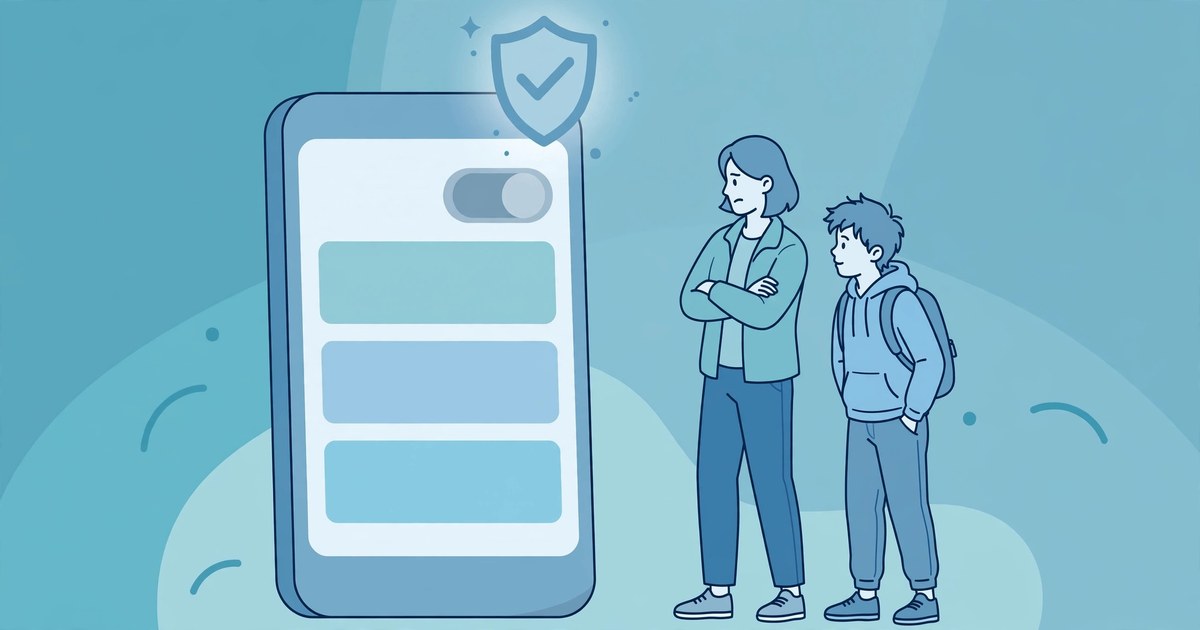
The part of the bill that has drawn the most global attention is the algorithm choice requirement, branded "My Feed, My Way". Social media platforms would have to give users over 16 a genuine, enduring choice between a personalised algorithmic feed and a feed based on the people and creators they choose to follow.
In practice, that means a user could turn off the recommendation engine - the system that ranks, suggests and pushes content to keep people scrolling - and instead see posts only from accounts they have deliberately chosen. The government says the aim is to give Australians real control over what they see online, rather than leaving the decision to an invisible ranking system optimised for engagement.
That matters because recommendation algorithms are the engine of modern social media. They decide which posts, videos and advertisements appear, in what order, and how often. Critics argue the systems can steer users toward extreme or sensational content because that content keeps them engaged longer. Supporters of the technology say personalisation helps people find content they enjoy and creators they would never otherwise discover. The bill does not ban algorithms - it requires that users be offered a real alternative.
The draft also gives the eSafety Commissioner stronger powers. The regulator would be able to issue removal notices for so-called "nudify" apps and websites that generate fake nude images, and the existing child cyberbullying and adult cyber-abuse schemes would be streamlined so harmful material can be addressed more quickly. Platforms would have to document the measures they take to identify and mitigate risks to Australian users, and keep those measures effective over time.
The penalties: up to A$109.2 million
Non-compliance with the duty of care could attract civil penalties of up to A$109.2 million (roughly US$78 million) under the figures announced with the draft. The government has presented the size of the penalty as a deliberate signal: for companies with billions in revenue, a small fine is simply a cost of doing business, while a penalty at this scale is meant to force safety into product design itself.
Some legal analysis has noted that the effective maximum can vary depending on how the penalty-unit provisions are applied, with other commentary citing lower figures for certain breach categories. The headline figure in the government's announcement is A$109.2 million, and the precise penalty structure will be settled as the bill moves through parliament.
Greens communications spokesperson Sarah Hanson-Young has argued that the threshold for harm should be lower and that penalties should be set as a percentage of a company's global revenue - a model closer to the European Union's approach under its digital rules - rather than a fixed dollar cap. She has also warned that an "opt-out" model is not enough, arguing that big tech will look for workarounds unless the rules are watertight.
Why Australia is doing this now
The bill builds directly on Australia's world-first social media minimum-age law, which took effect in December 2025 and bars under-16s from holding accounts on age-restricted platforms including Instagram, Facebook, TikTok and others. The government has said too many children remain on those platforms and that "big tech are not doing enough" to enforce the ban.
The eSafety Commissioner is already investigating possible non-compliance with the age ban by five services - Meta's Facebook and Instagram, Snapchat, TikTok and Google's YouTube - and an amendment moving through parliament would give the regulator stronger powers to investigate whether platforms are complying with the minimum-age rules.
The under-16 ban itself is being challenged in the High Court by Reddit, which argues it burdens the implied freedom of political communication in the Australian Constitution. In its defence, the government has conceded that scientists have not reached agreement on whether social media causes mental-health harms, but says credible risks - including addictive behaviour, disrupted sleep, and worsening depression, anxiety and suicidal thinking - justify action. The government has linked the two regimes, arguing that a properly applied duty of care would have a similar protective effect to the ban.
Australia's courts have also been active on the wider question of how far the law should go to protect people from online and environmental harms. In a separate landmark ruling this month, Australia's High Court delivered a landmark climate ruling on the Mount Pleasant coal mine, underlining how Australian courts are increasingly being asked to weigh corporate activity against public harm.
What supporters say
Supporters of the bill argue it closes a gap in the current system. Today, they say, the burden falls on users - especially parents and children - to navigate systems designed to hold their attention, while the companies that built those systems face few consequences when things go wrong.
Child-safety campaigners have welcomed the direction. Chanel Contos, founder of Teach Us Consent, called the draft laws a good first step, saying the reform sends the right message to big tech: companies cannot introduce harmful features into people's digital lives without asking for consent first. Democracy Counts campaign director Tom Mooney argued that because social media is where most Australians get their news and spend hours each day, it is common sense to require platforms to give users a choice over those experiences.
The government also points to the breadth of the problem. Online harms are not confined to one app: children encounter risky content, grooming and bullying across games, chatbots, messaging services and video platforms. A duty that follows the service, rather than a list of banned posts, is meant to keep pace with new products as they emerge.
What critics say
The bill faces an uphill battle in parliament. Labor will need support from the Greens to get it through the Senate, and Australia's conservative opposition has vowed to "fight it every step of the way", arguing the legislation gives the government too much power to control speech.
Civil-liberties and free-speech critics raise a different concern: that the definition of "harm" in the draft is vague, covering harm caused by material, conduct or both without specifying how serious or likely it must be. The Australian Christian Lobby, which supports firm action against the gravest harms such as grooming, sexual exploitation and content encouraging self-harm, has warned that with penalties in the tens of millions at stake, platforms will have a strong commercial incentive to remove or hide borderline content rather than defend it - meaning lawful speech could be caught up in the crackdown.
Wells has sought to defuse one of the most contested elements: she said on Thursday that a clause in the draft that would have granted ministerial powers to define harmful content had been removed. Whether that concession is enough to win over the crossbench and quiet the opposition remains to be seen.
Technology companies have not yet responded in detail to the introduced version of the bill, but the industry's general position is well established: platforms argue they already invest heavily in safety tools, age checks and content moderation, and warn that overly prescriptive rules can reduce choice, push users to less-regulated services, or slow the rollout of new features in Australia.
How this fits the global picture
Australia is not acting alone. Regulators around the world are moving from content-by-content takedowns toward systems-level duties. The European Union's Digital Services Act already imposes risk-assessment and transparency obligations on very large platforms, and the United Kingdom's Online Safety Act sets a duty of care for regulated services. What makes Australia's proposal distinctive is the combination of a hard under-16 account ban, a broad duty of care covering games and chatbots as well as social media, and an explicit right to switch off the recommendation algorithm.
If the bill passes, other governments are likely to watch closely. A working "algorithm off" switch in a major English-language market would be a real-world test of whether users actually choose chronological, follow-based feeds when given the option - and of whether platforms can operate profitably when fewer people are steered by engagement-maximising recommendations. If users largely keep the algorithm on, the industry will say the fuss was overblown; if large numbers switch off, regulators elsewhere will have a powerful precedent.
For ordinary users, the practical lesson is the same one that applies to every account they hold: review what the feed is showing and why. Understanding how online services handle your data and attention is the first step to making deliberate choices about them - and the same caution applies whenever personal information is at stake online.
What happens next
The bill has since cleared its first hurdle. On Wednesday, 28 October 2026, the House of Representatives passed the Online Safety Amendment (Digital Duty of Care) Bill 2026 by 96 votes to 38, after the government accepted 23 amendments — including one, moved by independent MP Kate Chaney, requiring platforms to shield under-18s from material or conduct that simulates emotional intimacy and encourages a child's dependence on a chatbot instead of human relationships. The bill now goes to the Senate, where a committee inquiry begins on 9 November and is due to report by 20 November, and where Labor needs Greens support to pass it. The opposition voted against the bill in the House. The Greens want tougher penalties and stronger compensation rights, while free-speech critics want tighter definitions of harm and stronger safeguards against over-removal.
The government has not set a fixed date for the bill to become law, and the parliamentary process is expected to take months. If it passes, the eSafety Commissioner would then need to issue guidance on what compliance looks like in practice - the document that will determine whether the duty is a genuine design standard or a paperwork exercise.
For now, the message from Canberra is unambiguous: Australia intends to be the country that makes platforms prove their products are safe, rather than asking users to prove they were harmed. Whether parliament agrees - and whether the world's biggest technology companies change their products in response - is the next act of a fight that is now being watched far beyond Australia.
Worldlession will update this story as the bill moves through parliament.
Parliament's culture wars are never far away either: Jacqui Lambie's clash with One Nation over a cartoon about her health has added a bitter personal edge to the session.
Enforcement is now following the rules, as Australia prepares to sue Facebook, Instagram, TikTok, Snapchat and YouTube over alleged under-16 ban violations.