
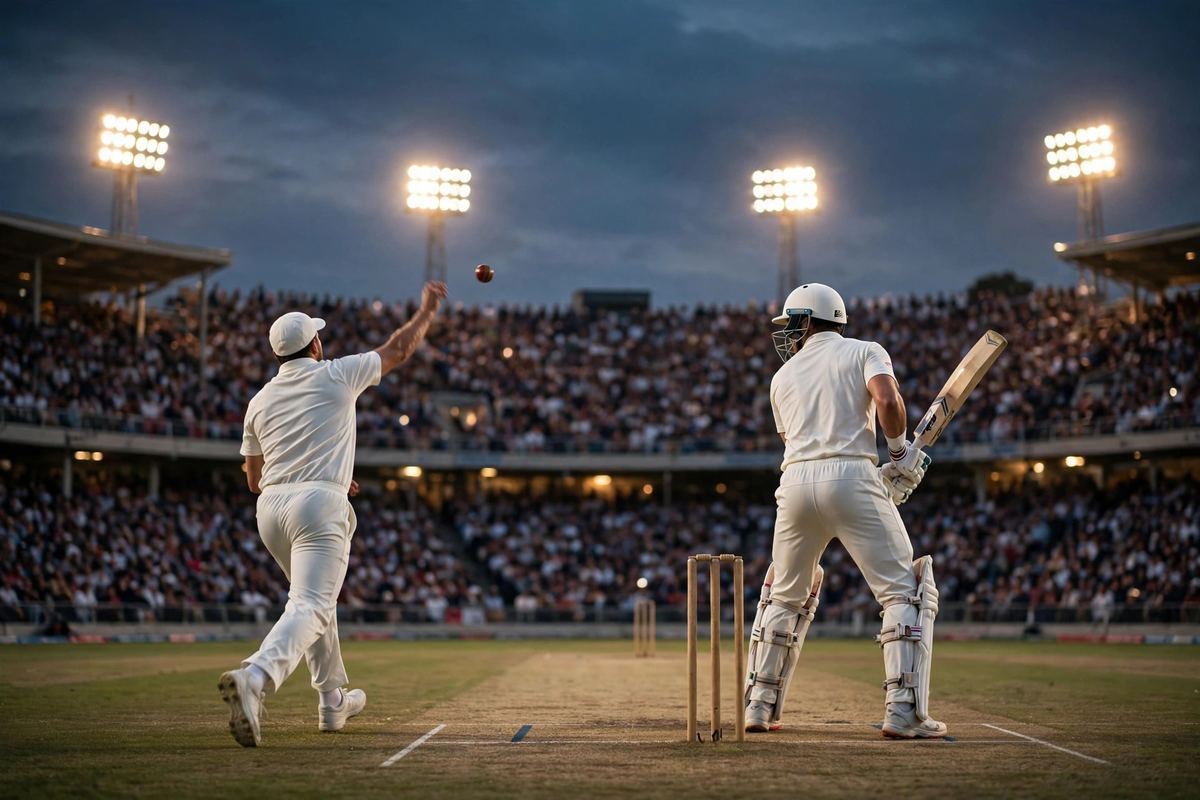
Background
Australia arrived at St George's Park in Gqeberha for the second Test of their tour of South Africa, scheduled for October 18 to 22, 2026, holding a 1-0 series lead. The visitors had dominated the first Test, winning by a commanding 214 runs, and a second victory would seal the series with a game to spare. Yet despite that comfortable position, the Australian selectors chose not to stand still. Instead they made one of the boldest selection calls of the tour: leaving out Nathan Lyon, the veteran spinner who has been a fixture of the Australian attack for more than a decade, and picking seamer Scott Boland in his place.
The decision said plenty about how the tourists read the conditions. Gqeberha in late October can produce green, moisture-laden surfaces, and the St George's Park pitch for this match looked exactly the kind of surface where seam bowling, not spin, would dominate the early passages of play. Test-match tradition often keeps a specialist spinner in the side almost by default, particularly on tour, so dropping Lyon was a genuine gamble rather than a routine rotation. It put the pressure on Boland to justify the call from the very first spell.
There was an added layer of intrigue in the age profile of both squads. This match set a remarkable record: nineteen players aged thirty or older took the field, the most in a men's Test match since England faced Australia in 1926 — a full century ago. Every one of Australia's eleven players is in his thirties. Opener Matt Renshaw, at thirty, is the youngest member of the Australian side, a fact underlined by his earlier 190 in this series. At the other end of the scale, Steve Smith and Scott Boland, both thirty-seven, share the honour of the oldest Australians with South Africa's Simon Harmer, also thirty-seven. In an era when white-ball leagues compete hard for players' time, both teams leaning so heavily on experience is itself a talking point, as Renshaw's big hundred earlier on the tour showed how much this generation of senior players still has to offer.
What Happened
Day one was frustratingly short. Persistent rain restricted play to just 12.2 overs before the weather closed in for good, leaving both teams and a soaked crowd with only a taste of what the match might offer. But what little cricket was possible proved dramatic. Pat Cummins, the Australian captain, won the toss and had no hesitation in bowling first, sending South Africa in on a damp, green-tinged pitch that promised early movement for the seamers.
That decision — and the selection of Boland over Lyon — was vindicated almost immediately. Boland struck twice in two balls, removing Aiden Markram and then David Bedingham in consecutive deliveries, suddenly reducing South Africa to a precarious position before they had found any rhythm at all. For a brief, electric moment, the visiting seamer was on a hat-trick, and the South African dressing room held its breath as captain Temba Bavuma walked out to face the hat-trick ball. Bavuma, a man with a reputation for composure in a crisis, survived it, denying Boland a place on the hat-trick honours board but unable to stop the momentum shifting firmly toward Australia.
When play was finally called off, South Africa had reached 2 for 20 from their 12.2 overs. Debutant Marques Ackerman was unbeaten on five, while Bavuma was four not out, and the two had the unenviable task of resuming against a pumped-up Australian attack whenever the weather relents. Twelve overs is the thinnest of foundations, yet the scoreboard pressure is already real: two wickets down, the top order unsettled, and four days of a damp, seam-friendly surface potentially still to come.
For Ackerman, the circumstances of his debut could hardly be more challenging. Walking out with his side two wickets down and a veteran seamer on a roll is a brutal introduction to Test cricket, though surviving the rest of day one with his wicket intact will have given the newcomer something to build on. The short day also meant the pitch was denied the baking sun that might have settled it; if anything, the moisture will linger, which keeps Australia's seamers firmly in the game when play resumes.
Why It Matters
Selection stories are the lifeblood of Test cricket discourse, and dropping a spinner of Lyon's stature is about as strong a statement as a selection panel can make. It tells the opposition that Australia trust their pitch-reading more than convention, and it tells their own squad that no place is guaranteed, even with a series lead. That the call was rewarded within a dozen overs will embolden the tourists' decision-makers — and put every other selector in world cricket on notice about reading conditions rather than reputations.
Beyond the team sheet, the match matters because it is alive with consequence. Australia can clinch the series with a win; South Africa must avoid defeat to stay in it. The rain-shortened first day has compressed the game, and compressed games often favour the side with momentum — right now, that is unmistakably Australia. But cricket has a habit of punishing premature conclusions, and South Africa's bowling attack will fancy its own chances on a surface that has already shown it will help anyone who bends the ball around.
The age record adds a fascinating historical dimension. Nineteen thirty-somethings in one Test match has not happened since 1926, when England and Australia played out a very different era of the game. Modern cricket is increasingly a young person's sport, dominated by franchise leagues and athletic fielding standards that favour youth. That both Australia and South Africa are currently drawing so heavily on veteran players raises genuine questions about where the next generation is — and about how long the old guard can keep the door shut. Smith's safe hands have already been a talking point this series, with his catching feats underlining that experience still converts into match-winning moments.
There is also a broader lesson here about adaptability. Tours are often decided not by the strongest eleven on paper but by the side that adjusts fastest to unfamiliar conditions. By swapping a spinner for a seamer on a green top, Australia showed a willingness to tailor their attack to the surface in front of them — exactly the kind of pragmatism that wins Test series away from home.
Key Facts
The essentials of the story so far: this is the second Test of Australia's tour of South Africa, played at St George's Park, Gqeberha, from October 18 to 22, 2026. Australia lead the series 1-0 after a 214-run victory in the first Test. For this match, selectors dropped veteran spinner Nathan Lyon and selected seamer Scott Boland instead.
Day one was rain-affected, with only 12.2 overs possible. Pat Cummins won the toss and elected to bowl on a damp, green pitch. At stumps, South Africa were 2 for 20. Boland claimed two wickets in two balls, dismissing Aiden Markram and David Bedingham, and came within one delivery of a hat-trick before Temba Bavuma survived the hat-trick ball. Debutant Marques Ackerman finished the day on five not out, with Bavuma four not out.
The match set a hundred-year record: nineteen players aged thirty or older — the most in a men's Test since England played Australia in 1926. All eleven Australian players are in their thirties, with Matt Renshaw the youngest at thirty and Steve Smith and Scott Boland the oldest at thirty-seven, matching South Africa's Simon Harmer.
What Happens Next
With the match scheduled through October 22, four days of potential play remain, though the weather will have the final say. Australia will look to press home their early advantage when play resumes, with Boland, Cummins and the rest of the seam attack sensing a chance to run through a fragile South African top order before conditions ease. South Africa, meanwhile, need a significant fightback — starting with Bavuma and debutant Ackerman digging in to build a competitive first-innings total.
The state of the series gives the second Test its edge. A 2-0 lead would seal the tour for Australia and cap a remarkable away performance; a South African recovery would set up a winner-takes-all decider. For now, the rain has merely paused a story that began with a brave selection call and a dream start for the bowler brought in to justify it. The rest of this Test promises to be worth waiting for, whatever the skies do next.
Elsewhere in the cricket world this month, weather has been an unwelcome theme, as a rain-delayed T20 decider in Bengaluru showed, while the Rose Bowl series between Australia and New Zealand's women has kept the region's cricket calendar busy.
Sources: Fox Sports Australia, Cricket Australia — October 2026