
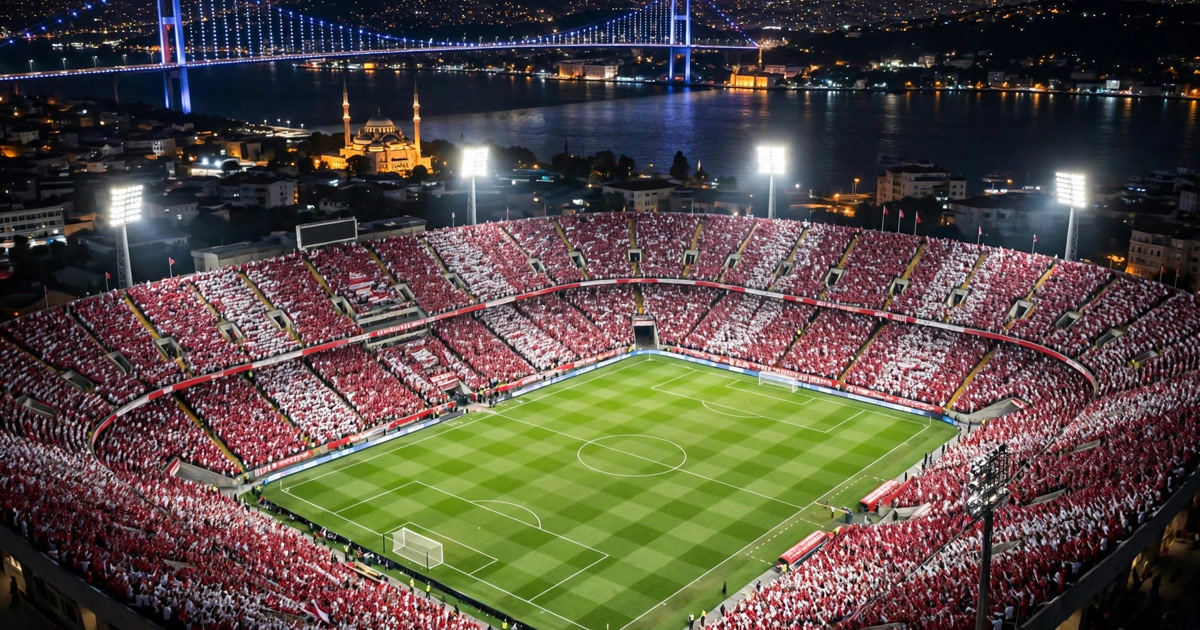
Turkish football is passionate, loud and fiercely loyal, and the Süper Lig fixtures and results are its weekly centrepiece. The Süper Lig is Turkey's top division, dominated historically by Istanbul's three giants, Galatasaray, Fenerbahçe and Beşiktaş, but regularly challenged by ambitious clubs from Trabzon, İzmir, Ankara and beyond. This guide explains how the Süper Lig fixtures and results work, how the table and derbies shape the season, and how Turkish clubs fare in the UEFA Champions League and other European competitions.
Following the Süper Lig fixtures and results is a good way into Turkish football because the league combines familiar European structures with a distinctive atmosphere. Stadiums are large and loud, derbies are intense, and the title race often involves several clubs deep into the season. The Süper Lig fixtures and results also matter for European qualification, because league position decides which Turkish clubs enter the Champions League, Europa League and Conference League in the following season.
How the Süper Lig fixtures and results are organised
The Süper Lig fixtures and results follow a double round-robin format in which each club plays every other club home and away. Three points are awarded for a win and one for a draw, and the champions are decided on points, with head-to-head records and goal difference used in tie-breaks according to current federation rules. The bottom clubs are relegated to the TFF First League, while the top clubs qualify for European competitions, making every round of the Süper Lig fixtures and results relevant at both ends of the table.
Fixture scheduling for the Süper Lig fixtures and results must balance league matches with Turkish Cup ties and European fixtures. Clubs playing in Europe on Tuesdays, Wednesdays or Thursdays often play league matches on Sundays or Mondays, and television scheduling can move kick-offs. As with other leagues, re-checking the Süper Lig fixtures and results on matchday is essential, especially during congested periods around European weeks and cup semi-finals.
The Süper Lig season typically runs from late summer to late spring, with a winter break that varies in length. Weather, travel across Turkey's large geography, and the intensity of derbies all shape the Süper Lig fixtures and results. A long away trip to Trabzon or Gaziantep, a derby in Istanbul, or a match played in snow or heavy rain can all produce results that surprise readers who only look at league positions.
Istanbul giants, derbies and the Süper Lig fixtures and results
Galatasaray, Fenerbahçe and Beşiktaş dominate discussion of the Süper Lig fixtures and results, and their derbies are among the most passionate in Europe. The Intercontinental Derby between Galatasaray and Fenerbahçe, the Beşiktaş–Galatasaray derby, and the Beşiktaş–Fenerbahçe derby all fill huge stadiums, generate enormous noise, and often decide the title race. These matches are played with extraordinary intensity, and form counts for less than usual when the derby arrives.
Trabzonspor, historically the most successful club outside Istanbul, remains a major force in the Süper Lig, and clubs such as Başakşehir, Samsunspor, Göztepe, Konyaspor and others regularly challenge for European places. That depth means the Süper Lig is not only about the Istanbul three: mid-table clubs can beat anyone on their day, and the race for European qualification often goes to the final rounds.
Turkish football is also famous for its supporters, choreographies and stadium atmospheres. Visitors planning a trip around the Süper Lig should use official club ticketing channels, follow stadium guidance, and plan transport in Istanbul carefully, because derby days involve large crowds and busy metro and ferry routes. Practical planning help is available in our guide on how to travel on a budget and our explainer on what travel insurance covers.
Turkish clubs in Europe and the Süper Lig fixtures and results
The link between the Süper Lig and European football is direct: league position determines European entry, and European performance affects Turkey's UEFA coefficient, which in turn affects how many Turkish clubs qualify in future seasons and at which stage they enter. Galatasaray, Fenerbahçe, Beşiktaş and Trabzonspor have all enjoyed memorable European runs, including Galatasaray's UEFA Cup triumph in 2000, and Turkish clubs regularly face Europe's biggest names in the Champions League league phase.
European weeks add complexity to the Süper Lig. A club returning from a difficult away trip in Europe may rotate its squad for a league match, while a club with no European commitments can prepare all week for a single league fixture. Supporters and analysts therefore read the Süper Lig alongside European results, injuries and squad rotation, rather than treating domestic form in isolation.
For followers abroad, the Champions League nights involving Turkish clubs are often the most accessible entry point, because they are widely televised. From there, following the Süper Lig weekly reveals the domestic story behind European performances: which players are in form, which managers are under pressure, and which young Turkish talents are emerging for the national team.
How to follow the Süper Lig fixtures and results
To follow the Süper Lig well, start with the table, then the coming round's fixtures, then the previous round's results. That routine takes a few minutes and gives you the title race, the European places and the relegation battle at a glance. Add the derby dates to your calendar, because they are the matches that define each season, and note which clubs are also playing in Europe that week.
Broadcast rights for the Süper Lig varies by country and season, so check local sports broadcasters and streaming services before assuming coverage. Live-scores services, federation pages and club accounts fill gaps with line-ups, goals and results, and Turkish football media in English provide analysis for international followers who do not speak Turkish.
Finally, enjoy the atmosphere that makes the Süper Lig distinctive. Turkish football combines technical quality, passionate support and unpredictable results, and a season followed weekly, from the opening round to the final derby, offers a rich and rewarding view of one of Europe's most vibrant football cultures.
Youth development is another reason to keep watching week after week. Turkish academies regularly produce players who move to larger European leagues, while experienced internationals return home to add quality and leadership. Tracking academy graduates, loan players and returning stars alongside the league table gives a fuller sense of how Turkish football renews itself, and why a club that looks ordinary today may produce the national team's next key player tomorrow.