
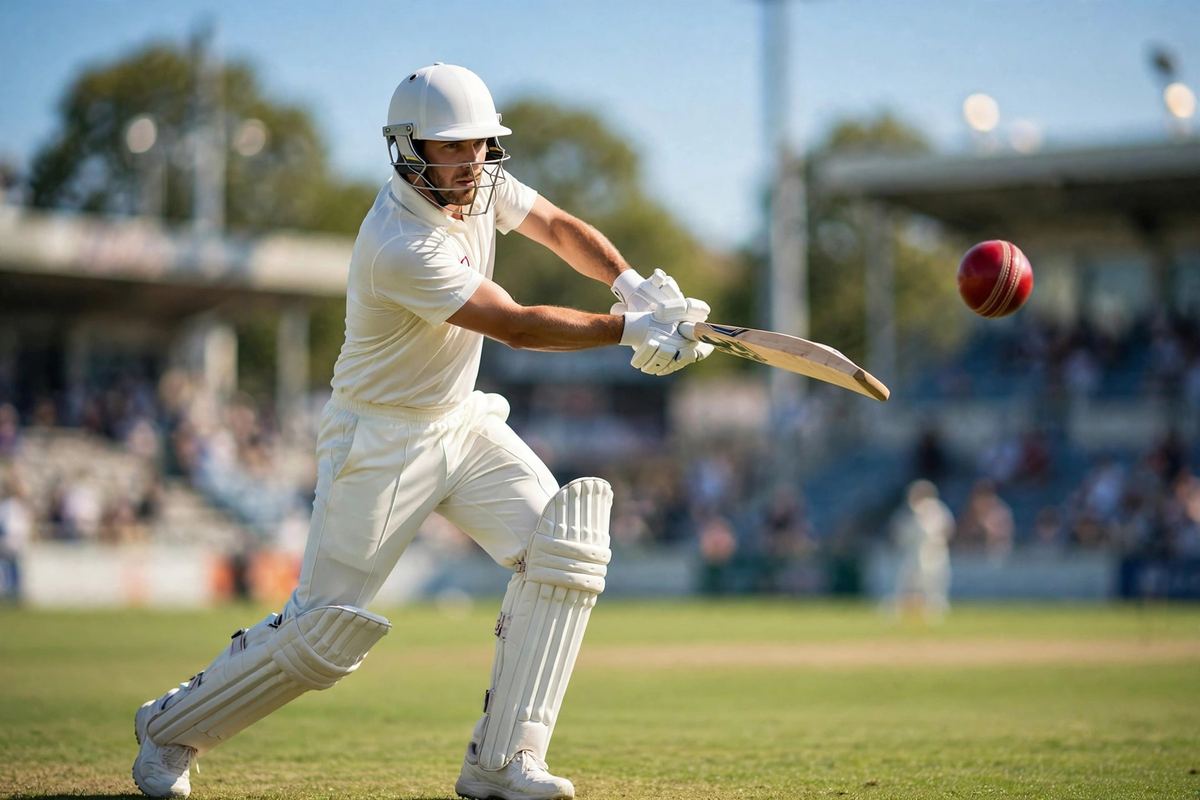
Day two of the First Test between Australia and South Africa at Kingsmead in Durban, on 10 October 2026, produced one of the great fightback innings of recent years. Matt Renshaw, batting with the composure of a man determined to define his career in a single afternoon, finished the day's early session on an unbeaten 190 — a career-best score that lifted Australia from a precarious 84 for 4 to a commanding 390 for 9 at tea. It was the fourth-highest score ever recorded by an Australian in a Test match in South Africa, and it turned a morning of anxiety into a story of rescue.
How Test Cricket Works
To understand why Renshaw's innings matters so much, it helps to understand the peculiar character of Test cricket. Unlike the fast-paced limited-overs formats — where each team faces a fixed number of balls and a match is over in an afternoon or evening — a Test match can run for up to five days, with each side batting twice. Scores are built not in a frenzy but through long, patient accumulation, and a single batter can occupy the crease for many hours.
In cricket, a batting team's score is expressed as runs for wickets lost — so 84/4 means 84 runs scored with four batters dismissed. In Test cricket, losing early wickets is the most common way to lose control of a match: once the top order falls cheaply, the tail (the lower-order batters, usually bowlers) is exposed and a small total can be skittled out quickly. That is exactly the trap Australia found themselves falling into at Kingsmead before Renshaw's stand with Nathan Lyon turned the innings around.
The batting partnership is the central unit of a cricket innings. Two batters bat together at a time, one at each end of the pitch, and they stay together until one is dismissed. A long partnership between a top-order batter and a lower-order player like Lyon — traditionally valued more for bowling than batting — is one of the most morale-defining events in the game. It frustrates the fielding side, drains their bowlers, and rebuilds a total from the wreckage of early wickets.
A Rivalry Built on Fast Bowling and Hard Cricket
Australia and South Africa have one of the most storied rivalries in world cricket, stretching back well over a century. Their contests are typically defined by pace bowling — both nations produce fast, aggressive bowlers — and by fiercely contested series that swing on individual brilliance rather than comfortable team dominance. Touring South Africa has always been considered one of the toughest assignments in the sport: the pitches often offer pace, bounce and seam movement that reward the home attack, and Australian touring sides of past generations have arrived with formidable reputations only to be tested hard.
Kingsmead in Durban is one of South Africa's iconic venues, a ground where visiting teams have frequently found the early going difficult. A First Test at such a venue sets the tone for an entire series. Win the opener and a team carries momentum; stumble badly in it and the questions begin immediately. That was the weight sitting on Australian shoulders when they slid to 84 for 4 — the classic touring nightmare of an opening-day or early-innings collapse, with the lower order exposed and the series threatening to start with a whimper.
What Happened on Day Two
Australia began their recovery from a deeply unpromising position. At 84 for 4, four of their frontline batters were gone and the innings was in danger of folding for a modest total. In Test cricket, such a scoreboard puts enormous pressure on the middle and lower order: every subsequent wicket makes the tail look longer, and the opposition bowlers smell blood, attacking with close fielders and fresh spells.
What followed was a display of remarkable discipline. Matt Renshaw, holding one end, anchored the innings while Nathan Lyon provided the stubborn lower-order resistance that turned a collapse into a comeback. A stand between a top-order batter and a number-ten or eleven — Lyon is best known as one of Australia's most successful spin bowlers rather than for his batting — is exactly the kind of partnership that defines the narrative of a Test match day. Lyon hung in, Renshaw accumulated, and together they dragged Australia back into the contest.
By tea on day two, Australia had reached 390 for 9. The transformation was staggering: more than 300 runs added for the loss of just five further wickets after the early collapse, with Renshaw still unbeaten on 190. In a format where patience is currency, Renshaw had spent it perfectly — defending the good balls, punishing the loose ones, and refusing to give his wicket away even as partners came and went.
The Scale of 190 Not Out
A score of 190 in Test cricket is a landmark by any measure. A century — 100 runs in a single innings — is the traditional milestone of batting excellence, and only a small fraction of Test innings ever reach it. To push on from a century toward a double hundred requires not just skill but extraordinary concentration: the longer a batter stays in, the more the fielding side studies his technique, the more the bowlers probe his weaknesses, and the greater the mental toll of every delivery faced.
Renshaw's unbeaten 190 was a career-best, the highest score he has ever made in first-class or Test cricket. The fact that it came while carrying his team — anchoring an innings that had been 84 for 4 — elevates it beyond a personal milestone into the category of innings that define careers. Cricket history is full of batters remembered as much for one heroic rescue as for their overall records, because these innings are made under maximum pressure, when failure would have been forgiven but success is never forgotten.
It also earned a place in the record books: the fourth-highest score by an Australian in a Test match in South Africa. Scoring heavily on South African soil has always been the mark of a serious touring batter, given the quality of home attacks and the demanding conditions. To enter the top four of that particular list, on a day when his team desperately needed someone to stand up, is a genuine achievement.
The Lyon Factor: Why Tail-End Stands Matter
Nathan Lyon's contribution deserves its own appreciation. In Test cricket, the lower-order batters — the "tail" — are expected to offer some resistance, but long stands with the tail are among the most demoralizing things that can happen to a bowling side. Bowlers who have worked hard to break through the top order expect to clean up the rest quickly; when a number ten or eleven digs in and refuses to get out, it breaks their rhythm and their spirit.
For the batting side, a tail-end partnership is pure bonus. Every run added beyond the collapse compounds the frustration of the opposition and inflates a total that once looked anaemic into something genuinely competitive. Renshaw's ability to farm the strike, protect Lyon where necessary, and keep the scoreboard moving turned what could have been a 150-all-out disaster into 390 for 9 — a total that completely changed the complexion of the match.
Why This Innings Matters for the Series
Test series are psychological battles as much as technical ones. The First Test sets the narrative: it tells both dressing rooms who holds the momentum and what kind of cricket the series will demand. Had Australia folded for a small total at Kingsmead, South Africa would have seized the initiative with the bat and the series would have begun on the visitors' back foot. Instead, 390 for 9 at tea — built on one man's monumental 190 not out — gave Australia a platform and, just as importantly, a story of defiance to carry into the rest of the match.
For Renshaw personally, this could be a career-defining moment. Test careers are often judged on a handful of innings played under the greatest pressure, in the toughest conditions, against the best opposition. A career-best 190, unbeaten, in South Africa, rescuing his team from 84 for 4 — that is the kind of innings selectors remember, teammates rally around, and supporters talk about for years.
The broader lesson of the day is one of Test cricket's oldest truths: the game is never over while one set batter remains at the crease. A collapse at 84 for 4 looked like the end of Australia's innings; it turned out to be the beginning of its best chapter. That capacity for reversal — a whole match tilting on a single partnership — is why the five-day format, for all the competition from shorter games, continues to produce the sport's most enduring drama.
Key Facts
Match: First Test, Australia vs South Africa, Kingsmead, Durban. Day: day two, 10 October 2026. Standout performance: Matt Renshaw, unbeaten 190 — a career-best score and the fourth-highest score by an Australian in a Test in South Africa. Team position: Australia reached 390 for 9 at tea after being 84 for 4. Key partnership: Renshaw's stand with Nathan Lyon anchored the comeback from the early collapse.
What Happens Next
With Australia at 390 for 9 at tea on day two, the immediate question is how many more runs the tail can add and what target that sets up for South Africa's reply. In Test cricket, a first-innings total approaching 400 — especially one rescued from 84 for 4 — puts real scoreboard pressure on the opposition. South Africa's batters will now have to respond on a Kingsmead surface that has already shown it can trouble top-order batting.
Beyond this match, the series narrative has been reshaped. Australia arrived at Kingsmead under pressure and left the tea interval on day two with momentum, a record-breaking innings, and a dressing room full of belief. For Matt Renshaw, the challenge now is to convert one great day into a great series — but no matter what follows, 10 October 2026 at Kingsmead will be remembered as the day he carried Australia on his back. The milestones have kept coming in this series — Steve Smith has also set a new Test catches record against South Africa — and the contest moves on to the second Test in Gqeberha.