
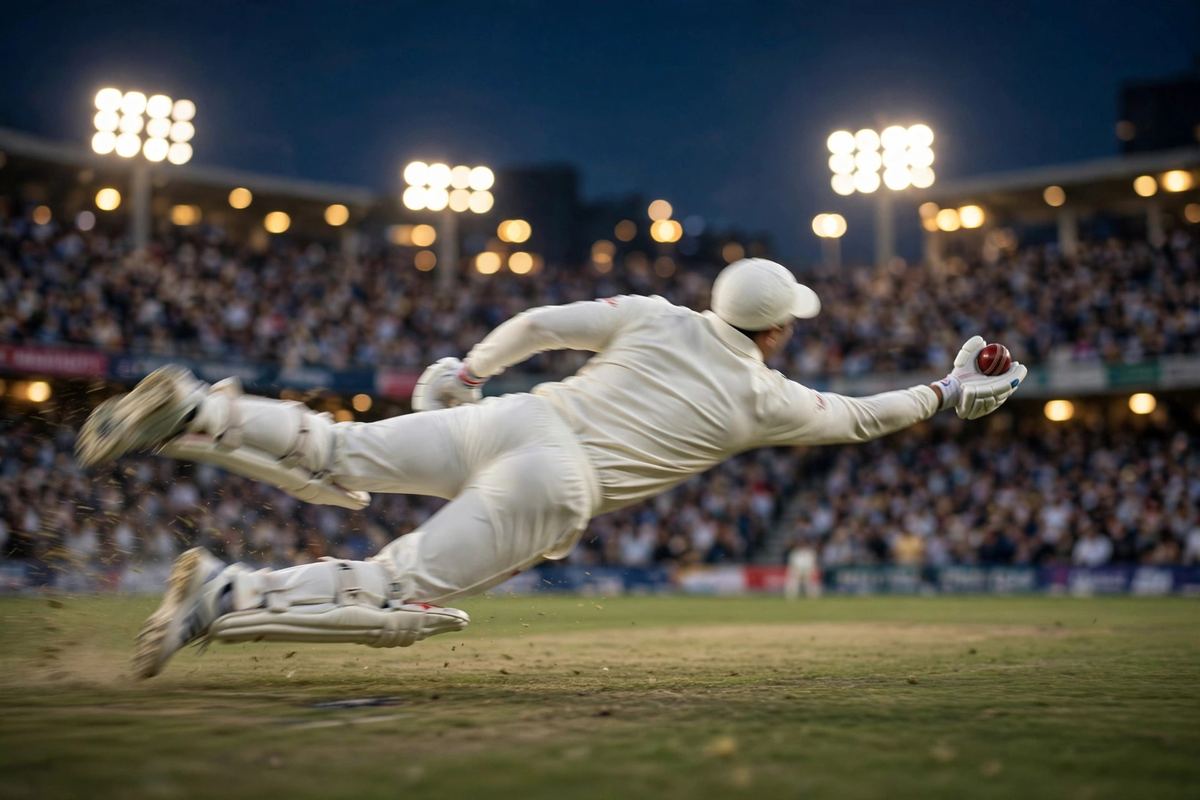
Day three of the first Test between Australia and South Africa at Kingsmead, Durban, belonged to one man and one extraordinary skill. Steve Smith, stationed at slip, produced four catches — including a full-length diving effort to dismiss David Bedingham — to set a new record for the most Test catches by a non-wicketkeeper, as Australia bowled the reigning world champions out for 284 and took a commanding position in the match.
When bad light ended play on 11 October 2026, Australia had reached 33 without loss in their second innings, stretching their lead to 139 runs with all ten wickets intact and two full days remaining. For a touring side playing its first Test series in South Africa since the infamous 2018 ball-tampering scandal, it was a day that could hardly have gone better.
Background: a series loaded with history
This is no ordinary bilateral series. South Africa arrived at Kingsmead as the reigning World Test champions, having beaten Australia in the 2025 World Test Championship final — a victory that gave the Proteas their first piece of major ICC silverware in the format and flipped the traditional power dynamic between the two sides. The World Test Championship, run by the International Cricket Council, ranks Test nations over a two-year cycle and culminates in a single final, so South Africa's crown is about as official as it gets in the longest format.
It is also Australia's first tour of South Africa since 2018, when the ball-tampering scandal in Cape Town — in which Cameron Bancroft was caught altering the ball with sandpaper during the third Test, leading to lengthy bans for Bancroft, Steve Smith and David Warner — plunged Australian cricket into its deepest modern crisis. Smith, who was stripped of the captaincy and banned for a year, has since rebuilt his career and his reputation, and there was a certain poetry in him breaking a fielding record on South African soil.
The first two days had already produced high drama. Australia were rescued from 124 for 6 by Matt Renshaw's career-best 190, a marathon innings that dragged the tourists to a competitive 390. Renshaw's rescue act on day two meant South Africa began their reply already under scoreboard pressure — and day three showed just how costly that pressure would become.
What happened on day three
South Africa resumed their first innings hoping to erase, or at least neutralise, Australia's total. Instead they were dismissed for 284, conceding a first-innings lead of 106 — a significant advantage in a low-scoring contest at a venue where the new ball traditionally does plenty.
The wickets were shared around with almost metronomic evenness, a hallmark of this Australian attack at its best. Captain Pat Cummins led the way with 3 for 54, while Josh Hazlewood (2 for 54), Mitchell Starc (2 for 63) and Nathan Lyon (2 for 58) each claimed two. When four frontline bowlers all strike and none is punished, the scoreboard has nowhere to hide.
But the bowling figures tell only half the story. The day's defining images were Smith's four slip catches: he equalled Joe Root's record of 220 with a catch to dismiss South Africa captain Temba Bavuma off Nathan Lyon, then broke it with his 221st — a diving, one-handed grab to remove the well-set David Bedingham for 49 — and went on to take Kyle Verreynne and Anrich Nortje, ending the innings with a career tally of 223 in his 126th Test. Bedingham had been South Africa's most composed batter, and his dismissal at the moment he looked capable of a defining innings broke the hosts' resistance. Nathan Lyon, who benefited directly from Smith's brilliance, could barely contain his admiration afterwards, describing his teammate as an "absolute freak" at slip.
Bedingham's 49 was the top score of the innings, which says much about South Africa's struggles. The only other meaningful resistance came from the tail: a 52-run ninth-wicket partnership between Keshav Maharaj (34) and Simon Harmer (35 not out) that repaired some of the damage and at least gave the scorecard a touch of respectability. In Test cricket, such lower-order stands can shift momentum — but 284 was still well short of par.
Australia's openers then navigated the tricky twilight period without alarm, reaching 33 for 0 before the umpires called a halt for bad light. A lead of 139 with ten wickets in hand and two days to play is the kind of position touring teams dream of.
Why Smith's record matters
To the casual viewer, a catch is a catch. To anyone who has stood at slip, it is anything but. Slip fielders stand a few metres behind the wicketkeeper, reacting to edges that travel at enormous speed off the bat, often with less than half a second to respond. The ball can swerve late, bounce awkwardly, or arrive at an uncomfortable height. Doing it once is hard; doing it hundreds of times across a career, at Test-match intensity, is one of the great specialist arts in sport.
The all-time catches record is therefore a monument to longevity, concentration and athleticism in equal measure. Most Test catches have historically been taken by slip fielders and wicketkeepers — the positions closest to the bat — and the names at the top of the list are some of the finest close catchers the game has seen. For Smith, whose batting genius has always overshadowed his fielding, the record is a fitting second legacy: proof that his hand-eye coordination and anticipation are once-in-a-generation gifts that extend well beyond the crease.
It is also worth noting how Smith's slip catching has evolved. Early in his career he was regarded as a brilliant but occasionally unorthodox fielder; over the years he has become Australia's most reliable pair of hands in the cordon, the man captains turn to when the match is on the line. Records like this are not accidents — they are the compound interest of thousands of hours of practice and an almost obsessive attention to the geometry of the edge.
Why the match position matters
A first-innings lead of 106, extended to 139 by the close, puts Australia firmly in the driver's seat. In Test cricket, the team batting last faces the deteriorating pitch — and Kingsmead surfaces have a well-earned reputation for offering the bowlers more as the match wears on. South Africa will likely have to chase something substantial on a wearing day-five pitch against Cummins, Starc, Hazlewood and Lyon. That is a daunting prospect for any side, let alone one whose batting has just been dismantled.
The broader context matters too. Sporting dominance across the Tasman has been a theme of 2026, and Australia's cricketers will be desperate to reassert themselves against the team that dethroned them as world champions. Winning the opening Test of an away series sets the tone for everything that follows; losing it, from South Africa's perspective, would turn the remainder of the tour into a salvage operation.
Key facts
- Venue and date: Kingsmead, Durban — day three, 11 October 2026, first Test of the series.
- First innings: Australia 390 (Matt Renshaw 190); South Africa 284 (David Bedingham 49; Maharaj 34, Harmer 35*). Australia led by 106.
- Bowling: Pat Cummins 3-54, Mitchell Starc 2-63, Josh Hazlewood 2-54, Nathan Lyon 2-58.
- Record: Steve Smith took four slip catches — including a diving catch to dismiss Bedingham for 49 — passing Joe Root's record of 220 Test catches with his 221st and finishing the innings on 223, in his 126th Test. Nathan Lyon called him an "absolute freak" at slip.
- Close of play: Australia 33-0 in the second innings when bad light ended play; overall lead 139.
- Series context: South Africa are the reigning World Test champions after beating Australia in the 2025 final; this is Australia's first tour of South Africa since the 2018 ball-tampering scandal.
What happens next
Day four will be about accumulation and timing. Australia will look to bat South Africa out of the game — building a lead in excess of 350 would make the contest all but unwinnable for the hosts — before declaring and giving their bowlers maximum time to take ten wickets. Expect Smith, fresh from his fielding heroics, to be central with the bat as well.
For South Africa, the equation is stark: take early wickets on the fourth morning or watch the game drift beyond reach. Their bowlers need the kind of inspired session that has defined great Proteas comebacks of the past, and their batters will need far more application second time around than they showed in the first innings.
Beyond Durban, the series moves on with the second Test in Sydney next week, and the psychological stakes are already enormous. If Australia convert this position into victory, they will have exorcised several demons at once — winning away, beating the world champions, and doing it on the ground where so much history, good and bad, has been written. It has been a newsworthy week for Australia well beyond the boundary rope, but for cricket fans, nothing will have mattered more than what happened at Kingsmead on day three.
Sources
Reporting drawn from Sky Sports, Reuters (October 2026).