
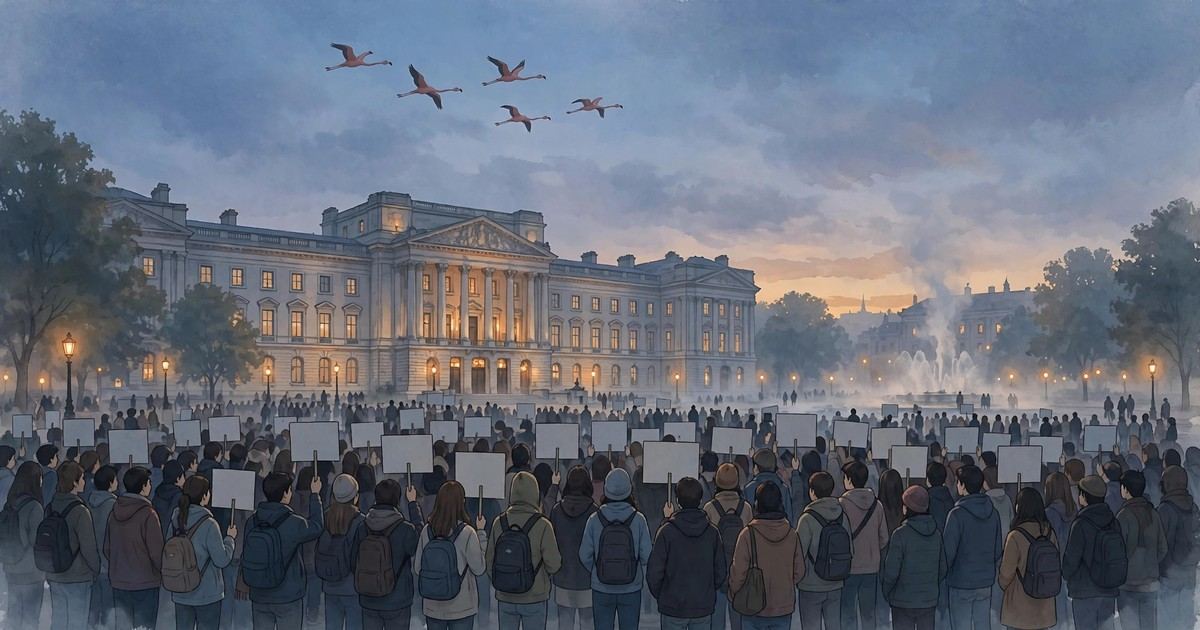
Albania's capital, Tirana, has seen three consecutive days of street clashes between student-led protesters and riot police, in what has become the most serious challenge yet to Prime Minister Edi Rama's government. On Thursday, October 15, 2026, Rama told Reuters in written responses that he would not resign, saying that governments change through democratic elections and that Albania held elections last year, not a revolution. Parliament cancelled its session as violence flared again nearby.
The protests, which are trending per news coverage across international outlets, began as a student demonstration over the cost and quality of education. They have since merged with a months-long movement known as the Flamingo Revolution, which opposes alleged corruption and a luxury resort development on Albania's southern coast linked to Jared Kushner, the son-in-law of US President Donald Trump. Together, the two strands have produced the largest wave of public dissent in Albania in years.
What happened on the third day
On Thursday, thousands of student-led protesters took to the streets of central Tirana, smashing windows and fighting running battles with riot police, who responded with water cannon and tear gas, according to Reuters reporters on the scene. Demonstrators voiced anger about perceived corruption, the cost and quality of education, and the planned coastal resort development. Many carried placards and chanted for Rama's resignation.
Parliament cancelled its session as the unrest erupted again nearby, and parts of the city centre were brought to a standstill. Police used water cannon to disperse crowds who damaged property, and the US Embassy in Tirana advised Americans to avoid demonstrations, warning of traffic disruption, detours and possible road closures. The European Union urged restraint and proportionate policing, and called for priority investigations into allegations of excessive force against protesters and journalists.
Rama, who won a fourth term in elections last year, said his responsibility was to listen, address legitimate concerns and keep Albania moving forward, and that stepping aside would betray the voters who gave him a strong mandate to complete negotiations on European Union membership. He added that he was ready to discuss the rising cost of education, but said that attacking institutions, destroying public property and threatening public safety had nothing to do with the legitimate demands of students.
How the week escalated
The current wave of unrest began on Tuesday, October 13, when students gathered outside the Ministry of Education in Tirana to protest over university conditions and costs. According to the Albanian State Police, masked individuals threw stones, concrete slabs and Molotov cocktails at officers and buildings. Protesters broke into Tirana City Hall, smashing a door and setting a fire on the ground floor. Police reported 16 arrests that day, and an Austrian embassy police attache was injured after being struck by a stone, according to Albanian broadcasters.
On Wednesday, October 14, the violence escalated and lasted eight to ten hours. Protesters damaged the ministries of Education, Justice and Finance, set fire to the Education Ministry, and encircled the prime minister's office. A nearby bank branch also caught fire. Albania's Health Ministry said 89 people were treated for injuries that day, including 61 police officers. Police said 55 people were arrested at the scene, with dozens more facing criminal proceedings. Deputy Prime Minister Albana Kociu said protesting was a legitimate right but cautioned against violence and property destruction, urging students and citizens to distance themselves from vandalism.
By Thursday, the protests had become the biggest challenge yet to Rama, who has led Albania for 13 years. Injury and arrest figures vary by source and by reporting time, and the figures cited here come from Albanian authorities as reported in news coverage. Smaller violent incidents were also reported in other cities, including stone and petrol-bomb attacks on schools in Korca.
What the students want
The students' immediate demands centre on education: lower costs, better university conditions and more support for young people. But the chants on the streets have gone well beyond campus issues. Protesters have demanded Rama's resignation, an end to what they describe as entrenched corruption, and better job prospects after graduation. One student told Reuters that the cost of living, poor job prospects and alleged corruption were the main issues, saying that finding work in your field often depended on who you knew.
Student-led protests are not unique to Albania this month. In France, high-school students have also taken to the streets over funding and conditions, a reminder that education grievances are driving young people onto the streets across Europe. You can read our coverage of the French student protests here. Protests over public services and accountability have also erupted elsewhere, including demonstrations in Delhi.
The Flamingo Revolution and the resort
The student protests have fused with a broader movement that began months earlier and has come to be known as the Flamingo Revolution. The movement started as a localised environmental campaign against plans to build a luxury resort on the uninhabited island of Sazan and within the protected Vjosa-Narta wetland ecosystem on Albania's southern coast. The wetlands are a habitat for flamingos, which gave the protests their name, and conservationists regard the area as one of Europe's key migration corridors for hundreds of bird species and dozens of endangered animals.
The resort project is backed by Affinity Partners, an investment firm associated with Jared Kushner. The proposal envisages a large investment, reported at around 1.4 billion euros, to transform a decommissioned military island and adjacent coastline into luxury hotels, villas and tourism infrastructure. In late 2024 and early 2025, the Albanian government granted preliminary approval and strategic investor status to the project, allocating hundreds of hectares, including land slated for direct development.
Protests began at coastal construction sites in late May, when demonstrators clashed with private security after fencing went up and beach access was blocked. Within days, the movement spread to Tirana and other cities, with thousands marching for weeks. On June 22, protesters formalised five demands: Rama's resignation; the formation of a 12-month non-partisan technical government; constitutional and electoral reforms, including a two-term lifetime limit for the prime minister; the repeal or reversal of disputed laws concerning strategic investments, protected areas, cultural heritage and mountain development; and a new social contract between citizens and the state.
Corruption claims and the OCCRP report
In September, a report by the Organized Crime and Corruption Reporting Project (OCCRP) broadened the protests from an environmental campaign into a national anti-corruption revolt, according to news coverage of the movement. The report said Rama had backed a 2023 law relaxing environmental restrictions on protected areas shortly before the Kushner-linked project advanced. It also reported that the project's ownership structure was concealed behind a cascade of offshore shell companies stretching to Amsterdam and Doha, and that Albania's anti-corruption agency had unfrozen 127 million dollars in related assets after facing political pressure.
Kushner has publicly defended the project, rejecting accusations of political favouritism and land grabbing. He has said the land near Zvernec was acquired through a legitimate private transaction for 230 million euros rather than through government handouts, and has argued the project could generate up to 4 billion euros in investment. Rama's government denies corruption, and Rama has said that corruption must be confronted and that, as the EU itself has recently reaffirmed, Albania is tackling it as never before.
Why it matters for Albania and the EU
The stakes go well beyond one resort. Along with Montenegro, Albania is currently leading the accession process among Western Balkan countries, and Rama has set a goal of EU entry as early as 2028. EU membership was central to his re-election campaign last year. Rama has argued that he is key to tackling corruption before a potential accession, and has suggested that some forces at home and abroad do not want Albania to succeed as a forerunner for EU membership.
The unrest puts that timeline under strain. The EU's calls for restraint and for investigations into alleged excessive force signal that Brussels is watching how Tirana handles dissent. At the same time, the protests test whether Albania's institutions can channel public anger through democratic politics rather than street confrontation. The European bloc's internal debates over budgets, energy prices and support for Ukraine show how crowded the EU agenda already is; you can read our explainer on the EU budget clash here.
What happens next
Neither side is backing down. Rama has refused to resign and has offered dialogue on education costs, while insisting that violence will not derail Albania's European future. The protesters, for their part, have shown they can sustain daily mobilisations and have expanded from a single-issue environmental campaign into a broad anti-government movement with formal political demands.
The unrest then moved into parliament. On Thursday, 29 October, opposition Democratic Party lawmakers disrupted a parliament session by letting off flares and blocking access to the podium during a vote on a Central Bank law, after weeks of violent anti-government protests. Opposition leader Sali Berisha, whose microphone was cut off, held up photos of protesters injured by rubber bullets during his speech. Days earlier, on Sunday, Rama had introduced new measures to curb violence, including fines of 500,000 lek ($6,200) for anyone who participates in a protest that turns violent, even if they do not personally commit acts of violence. Reuters reported that protests that week were mainly peaceful, with another planned for Saturday, and that Rama had again called students to dialogue and introduced economic measures including cheaper fuel and more money for poor families.
The key questions now are whether the protests stay peaceful or escalate further, whether the government offers concrete concessions on education costs and the resort project, and whether the EU increases pressure on Tirana to investigate the policing of the demonstrations. If the unrest continues, it could reshape Albania's politics well before the next scheduled elections, and it could slow the country's drive toward EU membership. For now, Tirana's streets remain the centre of one of Europe's most closely watched political crises. Anti-government anger has spilled onto the streets elsewhere too — in Tunisia, thousands marched in Tunis in the biggest protest in years against President Saied.
Sources: Reuters, Associated Press, The Times, Al Jazeera, AFP, Organized Crime and Corruption Reporting Project (OCCRP), Albanian State Police and Health Ministry statements, as reported in news coverage on October 15, 2026.