
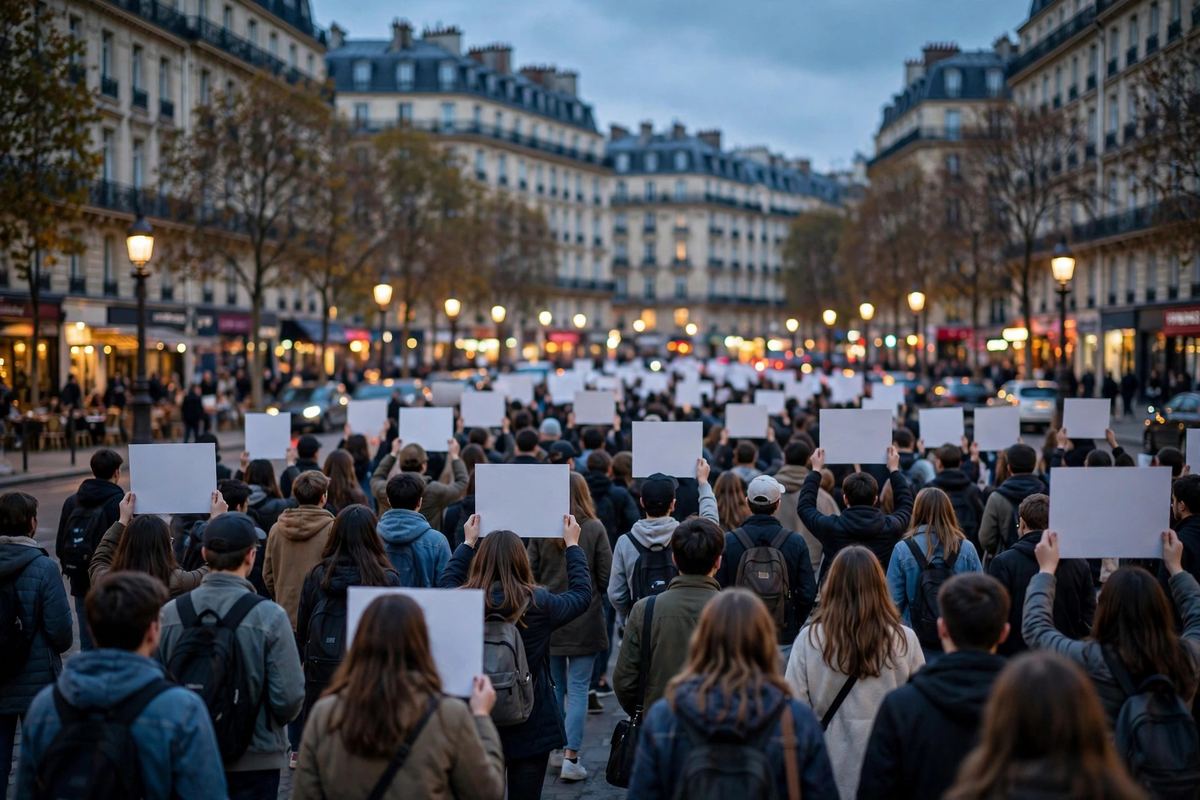
In the autumn of 2026, France has been rocked by one of the largest student protest movements the country has seen in decades. What started as a localised complaint about missing teachers at a single high school in the Paris suburbs has grown into a nationwide wave of school blockades, marches and clashes that has forced hundreds of schools to suspend classes. Trending per news coverage, the protests reveal a deep crisis in French public education — and have become a test for the government of Emmanuel Macron.
Background
France's education system is one of the most centralised in the world. The state runs nearly all secondary schools, sets the curriculum, hires the teachers and allocates the budgets. The lycée is the French upper-secondary school, attended by pupils roughly aged 15 to 18, culminating in the baccalauréat examination that determines university access. Because the system is directed from Paris, failures in staffing and funding are felt nationally — and are blamed nationally.
By the start of the 2026 school year, several pressures had converged. The 2026 budget removed roughly 4,000 teaching positions even as classrooms remained full. A government survey found that around 70 per cent of high-school classes had at least 30 pupils, while the average school building is more than 60 years old. The 2026 European heatwaves pushed classroom temperatures as high as 40°C, since many older buildings lack cooling. On top of this sits Parcoursup, France's online platform for first-year university applications, introduced in 2018, which many students and teachers criticise as opaque and stressful: teenagers feel their futures are being sorted by a system they cannot see or appeal against.
These grievances hit hardest in working-class suburbs of the Île-de-France region, such as Seine-Saint-Denis and Val-de-Marne, where student unions say investment has long lagged. Surveys by education unions found unfilled teaching posts in roughly two-thirds of schools in Seine-Saint-Denis, and parent representatives reported that at some schools entire subjects had been cancelled since September because no teachers were available. It was in this environment that the autumn's first spark landed.
What Happened
On 17 September 2026, teachers in the Créteil education authority, southeast of Paris, walked out over unfilled posts and missing resources at the start of the new school year. Four days later, on 21 September, pupils at the Lycée Antoine-de-Saint-Exupéry in Créteil took matters into their own hands and blockaded their school entrance with rubbish containers to protest vacant teaching posts and dilapidated conditions. The school's demands were met within days — but the movement did not stop, because the problem was not specific to one school.
Amplified through TikTok, Instagram and messaging networks, the protests spread first across the Paris suburbs and then to major cities including Lille, Lyon, Marseille, Nantes and Strasbourg, with solidarity demonstrations even appearing across the border in Belgium. According to conflict monitoring by the Armed Conflict Location & Event Data Project (ACLED), more than 1,000 student-led demonstrations were recorded in France between 28 September and 2 October alone. By the start of October, university students had joined too, with blockades reported at around 30 higher-education campuses.
The Interior Ministry counted protests at 1,027 high schools and full blockades at 222 of France's roughly 3,700 state lycées. On 6 October, a nationwide day of mobilisation brought students, teachers, parents and trade unions into the streets together. The Interior Ministry put the turnout at 250,000 people; student and trade unions estimated 450,000. Either way, France had not seen a high-school movement of this scale since 1990. On that day classes were suspended at 891 high schools, and no teaching took place in about 40 per cent of higher-education institutions.
The movement has also turned violent in places. The Interior Ministry reported 1,949 arrests on 1 October alone, and more than 5,000 people had been detained before 6 October, the large majority of them minors. The Justice Ministry says more than 1,800 people face prosecution, nearly 1,500 of them under 18. The most serious incident came on 5 October, when a 15-year-old in Lens lost part of his arm in an explosion involving a police grenade. A further day of marches on 8 October drew 71,500 people nationwide, including 24,500 in Paris, according to the Interior Ministry.
Student unions FIDL and MNL, together with the teachers' union FSU, have coordinated much of the mobilisation. The left-wing party France Unbowed (La France Insoumise) has openly backed the movement, while the government has accused the far left of stirring up the unrest for political gain. Fresh demonstrations were announced for 13 October in Paris and other cities, with student leaders considering further days of action.
Why It Matters
At its core, this is a dispute about what France invests in its young people. Students are not making abstract demands: they want absent teachers replaced, class sizes reduced from 32–35 pupils, crumbling buildings repaired, relief from stifling heat in classrooms, and transparency in the Parcoursup admissions system. These are concrete, budget-shaped demands — and they have collided with a government pursuing austerity. The 2026 budget cut thousands of teaching posts while public secondary schools serve around 250,000 more pupils than in 2008, which is why students frame the issue as a simple budget calculation rather than a mere school complaint.
The movement also matters politically. President Emmanuel Macron's government faces a serious crisis: the unrest joins a broader wave of discontent that includes planned protests over fuel costs, and commentators have noted the emergence of a new generation of activism — the gilets jaunes meeting the gilets jeunes. Heavy policing of minors and accusations that the far left is manipulating the movement have themselves become controversial, and how the state handles teenage dissent may shape a generation's relationship with politics.
There is an inequality dimension too. The protests began in the banlieues, the often-poor suburbs where many students feel the state is distant when resources are requested but immediately present when obedience is demanded. The movement's spread from Créteil to the whole country suggests that demand for equal educational opportunity resonates far beyond the suburbs where it began.
Key Facts
- Origin: teachers' strike in Créteil on 17 September 2026, followed by a student blockade at the Lycée Antoine-de-Saint-Exupéry on 21 September.
- 6 October mobilisation: 250,000 participants per the Interior Ministry; 450,000 per unions — the largest high-school movement since 1990.
- 8 October marches: 71,500 nationwide, 24,500 in Paris (Interior Ministry figures).
- Scale: protests at 1,027 high schools and full blockades at 222; more than 1,000 student demonstrations between 28 September and 2 October (ACLED).
- Core demands: replacement of absent teachers, class sizes of 32–35 reduced, renovated buildings, heat relief after 40°C classrooms, transparency on Parcoursup; roughly 4,000 teaching posts cut in the 2026 budget.
- Arrests: 1,949 on 1 October; more than 5,000 detained before 6 October, mostly minors; over 1,800 facing prosecution, nearly 1,500 under 18.
- Coordinators: student unions FIDL and MNL with the teachers' union FSU; backed by France Unbowed; government accuses the far left of stirring unrest.
- Next: fresh demonstrations announced for 13 October in Paris and other cities.
What's Next
The immediate question is whether the announced demonstrations of 13 October maintain the movement's momentum or mark its high point. Student leaders are weighing further days of action, possibly merged with other planned protests over fuel prices — a convergence that could significantly widen pressure on the government.
Substantively, the ball is in the government's court. Protesters want concrete commitments: replacement teachers, a reversal of staffing cuts, investment in buildings, and Parcoursup reform. So far the response has centred on policing and political accusations rather than concessions, and the serious injuries — above all the 15-year-old in Lens — have added moral pressure on the authorities.
Longer term, the movement has already forced education funding and inequality back to the centre of French political debate, and given a generation of teenagers too young to vote a formative experience of collective action. Whether that turns into lasting political engagement or lasting disillusionment will depend in large part on how the state answers the demands that brought them into the streets.
France is not alone in seeing young people mobilise over institutional failures: for another recent case of students and journalists detained during voter-roll protests in Delhi, and for how such events sit within the wider European political debate over democratic interference, see our related coverage.