
Yemen market attack: at least 30 people were reported killed and eight wounded when an attack hit the crowded al-Hadara market in Taiz province on Friday morning, 6 November 2026, according to the Houthi-run health ministry. The strike landed at about 7 a.m. local time, when the market was at its busiest, and the ministry's spokesman said the death toll was expected to rise. Both sides in Yemen's war agree that civilians were killed at a market full of Friday-morning shoppers. They agree on almost nothing else — not who fired, not how many died, and not what should happen next.
The numbers themselves are disputed. The Associated Press, which first reported the attack, put the initial toll lower: at least 20 dead and 15 wounded. Its updated report carried the health ministry's figure of 30 killed and eight wounded. Al Jazeera, citing the Houthi-run Al Masirah television channel, reported more than 30 people killed or wounded in three hits on the market. Iranian state outlet Press TV, meanwhile, put the injured at 40. No independent count exists. The Associated Press said plainly that it could not independently verify either side's claims, and Al Jazeera said the same.
Yemen Market Attack: What Happened at al-Hadara Market
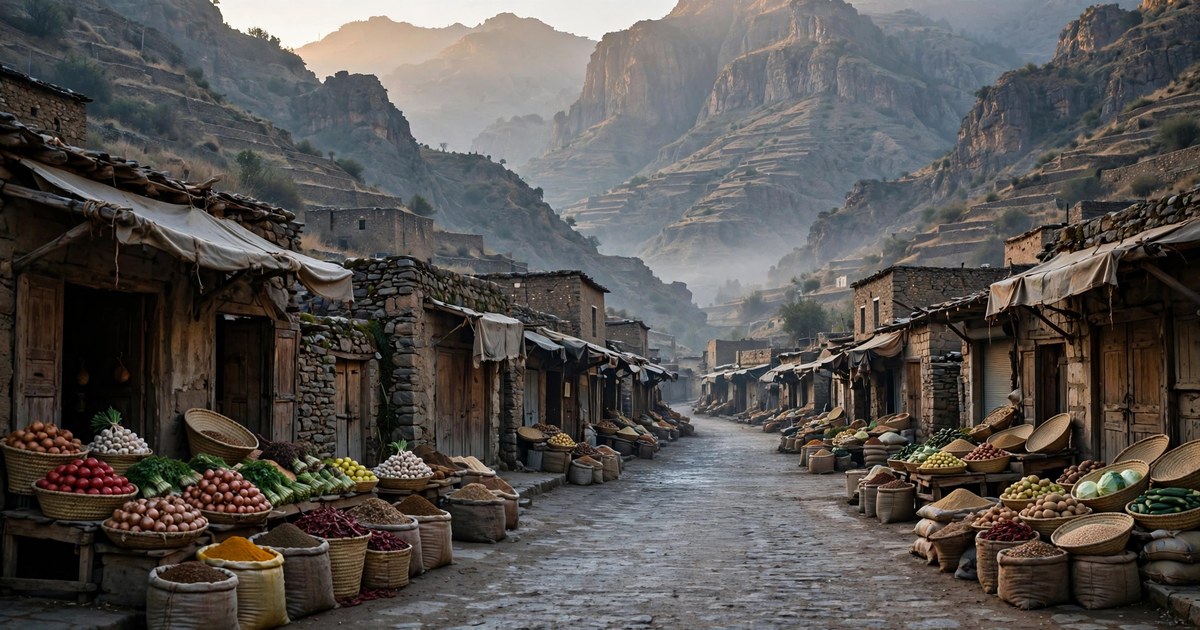
The market sits in al-Waziiya district, in the rural west of Taiz governorate in south-western Yemen. It is a vegetable market — the kind of place where farmers sell produce at first light and families shop for the week. The Houthis' military spokesman, Brigadier General Yahya Saree, said three airstrikes hit the market and blamed Saudi Arabia, claiming the warplanes had taken off from the Khamis Mushait air base in Saudi Arabia and left Taiz province around 8 a.m. Anees Alsabahi, a spokesman for the Houthi-run health ministry in Sanaa, told Al Masirah television that Saudi aircraft had targeted "the vegetable market in Al-Waziya city" with several missiles.
Friday is the week's main market day in much of Yemen, and the timing is part of why the toll is so high. Shoppers were out in force when the attack hit, and rescue teams were still searching the wreckage hours later, according to the health ministry's account. The ministry warned the toll could rise further as more bodies were found. Local authorities in Taiz acknowledged that an attack on a busy market had killed and wounded people, but they offered no toll of their own.
Two Sides, Two Stories: Who Attacked the Market?
Within hours, the two sides were blaming each other — and neither account could be checked. The Houthis say Saudi Arabia carried out three airstrikes. Their political bureau called the attack a war crime, and the movement, known as Ansarullah, vowed that it "will not go unanswered" in a statement on Friday evening.
Yemen's internationally recognised government says the opposite: that the Houthis themselves fired a ballistic missile into the market. Colonel Majed al-Nazili, the government forces' spokesperson, called it a war crime by the Houthis. Local authorities in Taiz said no airstrikes were carried out in the area at all. The Taiz provincial media office acknowledged the attack and the casualties in a Facebook statement, but gave no toll and blamed what it called "indiscriminate Houthi missile attacks".
The Saudi-led coalition, which backs the Yemeni government, did not immediately comment. Saudi Arabia's information ministry did not respond to the Associated Press's requests for comment as of the news agency's 11:10 a.m. update on Friday. No United Nations agency, no aid group such as Médecins Sans Frontières or the International Committee of the Red Cross, and no Yemeni civilian-harm monitor had issued a statement on the incident as of Saturday. Both sides say they want an independent investigation — but each names a different culprit, and no neutral body has been reported at the site.
The Associated Press called the Yemen market attack "one of the deadliest attacks since fighting resumed" between the Houthis and Saudi-backed government forces. That framing matters: this was not an isolated strike. It was the bloodiest single incident so far in a renewed round of fighting that has been building since September.
Why Taiz? The City at the Centre of Yemen's Renewed War
Taiz is Yemen's third-largest city, and one of the most contested places in a war that began in 2015. The Houthis hold most of Taiz province, but Taiz city itself remains under government control. The Houthis have surrounded the city, and the siege has effectively held for at least a month, with more than a million people struggling to live safely while battles drag on in the outskirts and strikes come from above, according to local reporting. Humanitarian groups warn of hunger, a lack of medicine and dangerous conditions.
The fighting sharpened on 5 October, when Rashad al-Alimi, head of the Presidential Leadership Council of Yemen's internationally recognised government, launched Operation Dawn of Yemen, an offensive against the Iran-aligned Houthis after they took swathes of territory along the Red Sea coast. On Friday, the same day as the Yemen market attack, government forces said they had recaptured several areas in Taiz governorate, including al-Nidani village, Shaab al-Sarari, large parts of the Sanamat area and the Ribat al-Qarn area in Dhi al-Barh.
The human cost of the escalation is already large. More than 323,000 people have been displaced in Yemen since the escalation began in August, with Taiz governorate taking in most of them, the United Nations Office for the Coordination of Humanitarian Affairs reported on Friday. The UN Human Rights Office has reported 281 civilian casualties since August, with 69 people killed and 212 injured. The market attack, if the health ministry's toll holds, would add nearly half as many deaths again in a single morning. The wider region is on edge at the same time: the United States has carried out limited strikes on Iran's Qeshm Island in the Strait of Hormuz, and Gulf shipping has come under attack in the same waters.
Yemen Market Attack Fits a Pattern: Markets Hit Again and Again
The al-Hadara attack is the latest in a series of disputed strikes on civilian areas in Taiz province, where responsibility for deadly strikes has repeatedly been contested and never conclusively established. On 27 September 2026, a strike on a market in Taiz province killed 7 people and wounded 40, according to Reuters. On 2 November, the Houthis claimed Saudi-led forces struck al-Makh'af market in the al-Misrakh district, also in Taiz, killing 8 civilians and injuring dozens, according to Press TV and the official Saba news agency. Two days earlier, a strike on a grocery store in the crowded al-Wazi'iyah market had left six people, including children, injured.
The blame game follows the same script each time. The Houthis accuse the Saudi-led coalition of bombing civilians; the government and local authorities accuse the Houthis of firing missiles and then blaming the coalition. Hours before Friday's attack, the Yemeni Network for Rights and Freedoms, a Yemeni rights group, said it had documented 66 violations by Houthi forces against civilians and civilian facilities in Taiz governorate over the previous 73 hours, leaving three people dead and 16 wounded. The pattern is what makes Taiz so dangerous for civilians: the front line runs through markets, and every strike becomes a propaganda battle before the bodies are counted. Houthi missile strikes and coalition airstrikes have both hit civilian areas before, which is why neither side's account can be taken at face value.
Diplomacy has not stopped the fighting. A UAE-Saudi cooperation pact on Yemen was signed in October, and talks between Iran and the United States over the Strait of Hormuz have been under way in Doha. None of it has reached Taiz. The offensive that began on 5 October is still advancing, the siege of the city is still in place, and the markets — the places where ordinary people have no choice but to go — are still being hit.
What Happens Next — and Why the Toll May Rise
Three things will decide what this attack becomes. First, the toll: the health ministry says it expects the number of dead to rise, and until an independent count exists the figure of 30 killed and eight wounded is one side's claim, not a confirmed fact. Second, verification: no UN agency or independent monitor has yet spoken, and the gap between the first report of 20 dead and the updated figure of 30 shows how fluid the numbers are in the first day. Third, retaliation: Ansarullah's vow that the attack "will not go unanswered" raises the risk of a Houthi response, whether against Saudi targets or against government forces in Taiz.
For the people of Taiz, the immediate question is simpler: whether it is safe to go to market. More than a million of them live under siege, with food and medicine already short. A market that was crowded on Friday morning will be quieter next Friday — not because the war has paused, but because shoppers will be afraid. Until an independent investigation establishes who fired and why, the Yemen market attack will sit in the same unresolved file as the strikes before it: dozens dead, two stories, and no one held to account.
Sources: Associated Press; Al Jazeera; Haaretz; Reuters; Deutsche Welle; The Times of Israel; Al Masirah; Press TV; United Nations Office for the Coordination of Humanitarian Affairs; United Nations Human Rights Office.