
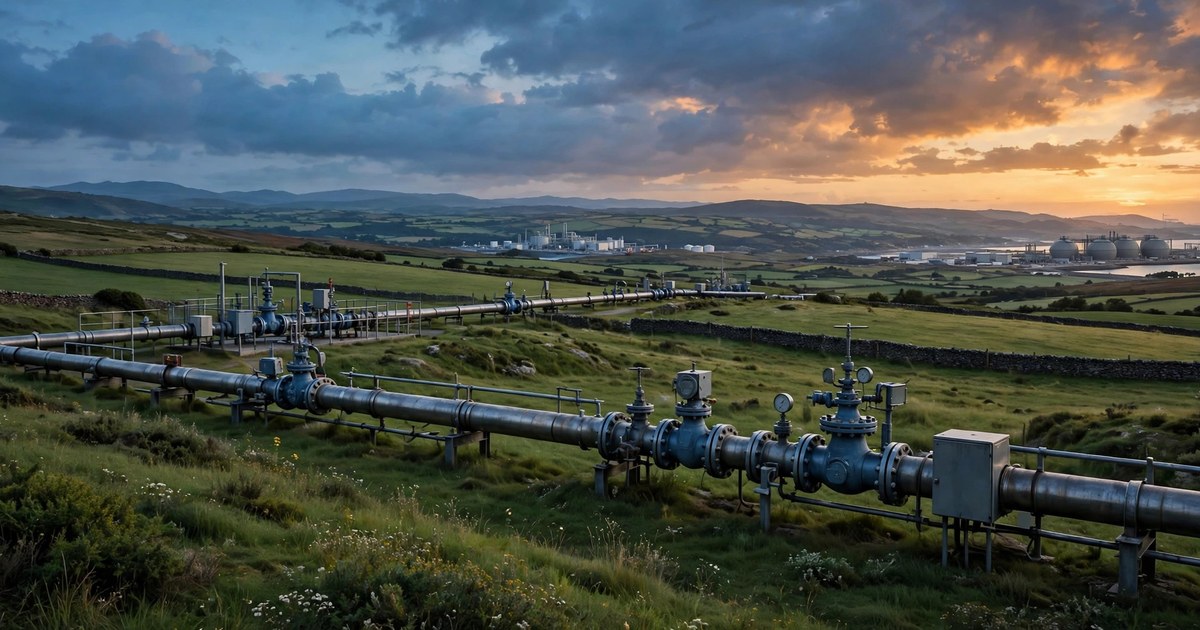
The United States is backing a rapid Russian gas return to Europe through pipelines crossing Ukraine, the Wall Street Journal reported on Sunday 1 November 2026, as part of talks aimed at securing an energy ceasefire before winter. The proposal, raised by US envoys Jared Kushner and Steve Witkoff during visits to Moscow and Kyiv in September, would reverse a central feature of European energy policy since Russia’s full-scale invasion of Ukraine in February 2022 — and it runs straight into a European Union law that requires Russian gas imports to end by 2027. Here is what the reported plan involves, how it would work, why Brussels says no, and what it could mean for winter energy prices.
What the Russian Gas Return to Europe Plan Involves
According to the Wall Street Journal, citing US, European and Ukrainian officials, the United States is backing a rapid resumption of Russian natural gas sales to Europe via pipelines running through Ukraine. The idea is part of negotiations aimed at securing an energy ceasefire before winter, and it was floated by President Donald Trump’s envoys Jared Kushner and Steve Witkoff during trips to Moscow and Kyiv in September. The report was published on Sunday 1 November and relayed by Reuters on 2 November.
Under the reported plan, Russian gas would be sold to Europe through a US intermediary, a structure intended to navigate European sanctions and restrictions on Russian energy. The Wall Street Journal also noted that the arrangement could create what it called “a lucrative opportunity for American investors.” Under one version of the plan described to the newspaper, proceeds from Russian gas sales would be deposited into an escrow account in a third-party jurisdiction to prevent Moscow from using the revenue to finance its war in Ukraine.
Washington has also discussed resuming gas supplies through the Nord Stream pipelines, according to the report. But the Ukraine route could be restarted considerably faster: the Soviet-era pipeline network that carries Russian gas from the Urengoy fields in Siberia through Ukraine to Slovakia, Austria and Germany remained operational until January 2025, nearly three years after the full-scale invasion began. Nord Stream 1 stopped delivering gas in August 2022, while Nord Stream 2 never entered commercial operation, and restarting either would take longer.
One important caveat runs through all of this. Reuters, which reported the Journal’s account, said it could not independently verify the report. No final agreement, no formal Ukrainian consent, no European regulatory approval and no confirmed restart of gas transit has been established. The White House, the Kremlin, Kyiv, Brussels and Berlin have not publicly answered the report. For now, the story stands as a reported proposal, not a confirmed policy.
The idea itself is not entirely new. The New York Times reported on 17 October that a US peace proposal required Europe to restore larger Russian gas imports, and a Reuters investigation on 8 October described contacts involving Kushner, Russian envoy Kirill Dmitriev and the possible involvement of a US investor in Nord Stream infrastructure. The 1 November Wall Street Journal report is the fullest account yet, and the first to frame the idea as a rapid, before-winter move tied to an energy ceasefire.
Why the Russian Gas Return to Europe Faces EU Opposition
The biggest obstacle is that Europe’s Russian gas phase-out is not merely an informal promise — it is law. The European Union formally adopted Regulation 2026/261 in January 2026, establishing a legally binding, staged prohibition on Russian pipeline gas and liquefied natural gas. Short-term Russian LNG contracts ended on 25 April 2026, long-term LNG imports are scheduled to end in January 2027, and long-term pipeline contracts are due to end by 30 September 2027, potentially 1 November under specified conditions. The EU has confirmed it intends to completely end Russian gas imports by the end of 2027.
EU officials have repeatedly stated there is no going back on that plan, even after the war in Ukraine ends. Energy Commissioner Dan Jorgensen has rejected renewed reliance on Moscow even after peace, and has said the ban on Russian gas imports should be permanent. On 28 October, the European Commission said the Nord Stream pipeline will not bring Russian gas into Europe after the war. Restoring substantial Russian supplies would require changes to existing EU policy or the use of legally available exceptions — and neither Washington nor Moscow can make that decision on Europe’s behalf.
The scale of the reversal under discussion is large. Russian supplies have already fallen from 45% to 11% of Europe’s gas consumption since the invasion. The proposal also sits uneasily with Washington’s own energy policy: the Trump administration has spent years pressing European countries to stop buying Russian gas and import more US liquefied natural gas instead, and Interior Secretary Doug Burgum has said the United States alone could displace all the Russian gas in Europe with what it is building. Analysts at Columbia University’s Center on Global Energy Policy have warned that restarting Russian flows would directly compete with US LNG exports and undermine the commercial case for expanding US Gulf Coast export projects.
The gas proposal is also tied to the fighting itself. According to the Wall Street Journal, the idea initially lost momentum last month after Ukraine temporarily suspended strikes on Russian oil refineries under pressure from President Trump — a pause this site covered as Kyiv weighed the request against its own energy war. Washington has presented the gas proposal to European governments as a way to lower energy prices while giving Russia a financial incentive to agree to a ceasefire covering energy infrastructure. Read more about that pause in Ukraine’s pause on strikes against Russian refineries.
What Russian Gas Returning to Europe Would Mean for Winter Prices
The core of the pitch is price. European gas just posted a monthly gain of roughly 40%, with benchmark futures above 100 euros per megawatt-hour on 30 October, Bloomberg reported. Gas storage stands at about 75% ahead of winter, with Germany in an especially vulnerable position at 61% full against a target of 80% as of 1 November. The war with Iran has increased European energy costs by 100 billion euros, according to a daily briefing of the week’s top stories. A rapid Russian gas return to Europe would add supply at the moment demand for heating rises to its seasonal peak, and the Ukraine route could resume almost immediately because the pipelines were in use until January 2025. For the price background, see why European gas prices hit 100 euros in 2026.
For Ukraine, reopening the Soviet-era pipeline network could restore revenue from transit fees. Russian gas transit through Ukraine came to a halt at the start of 2025 after Kyiv refused to renew the transit agreement between Gazprom and Ukraine’s Naftogaz when the five-year deal expired. That corridor once carried the bulk of Russia’s pipeline gas westward, and transit fees were a significant source of income for Kyiv before the war.
For the wider energy market, the picture is mixed. European countries have been the biggest buyers of Russian liquefied natural gas this year, accounting for approximately 85% of Yamal LNG’s recorded global deliveries during the first nine months of 2026 — a reminder that the phase-out is still incomplete in practice. Russian Deputy Prime Minister Alexander Novak said on Sunday that Russian petroleum products sometimes reach European markets under different labels despite EU restrictions. And the energy shock is not limited to gas: oil prices have also been driven higher by the war with Iran and by attacks on energy infrastructure, as covered in the Brent oil price outlook for November 2026 and the Strait of Hormuz tanker fires in October.
What Happens Next
Three things will decide whether this reported proposal becomes anything more. First, whether Brussels and Berlin respond on the record: so far, the push is not a pipeline, and until European governments answer, the plan stays a proposal. Second, the mid-November talks in Abu Dhabi — if Russia engages there on an energy ceasefire, the gas proposal gains a negotiating forum. Third, whether Washington confirms the Wall Street Journal’s account at all.
The Journal’s sourcing — US, European and Ukrainian officials, and people who attended the discussions — gives the report weight. But Reuters’ note that it could not immediately verify the account is a reminder that a proposal transmitted through envoys must not be confused with an authorisation to trade. No agreement has been announced, no contracts have been signed, and no gas has flowed. What the report does establish is that restoring a commercial energy relationship with Moscow has entered the diplomatic discussion at the highest level, while the war, the sanctions and the EU phase-out law all remain in force.
Sources: The Wall Street Journal, Reuters, OilPrice, Seeking Alpha, Columbia Center on Global Energy Policy, AzerNews, 10 Things Global News.