
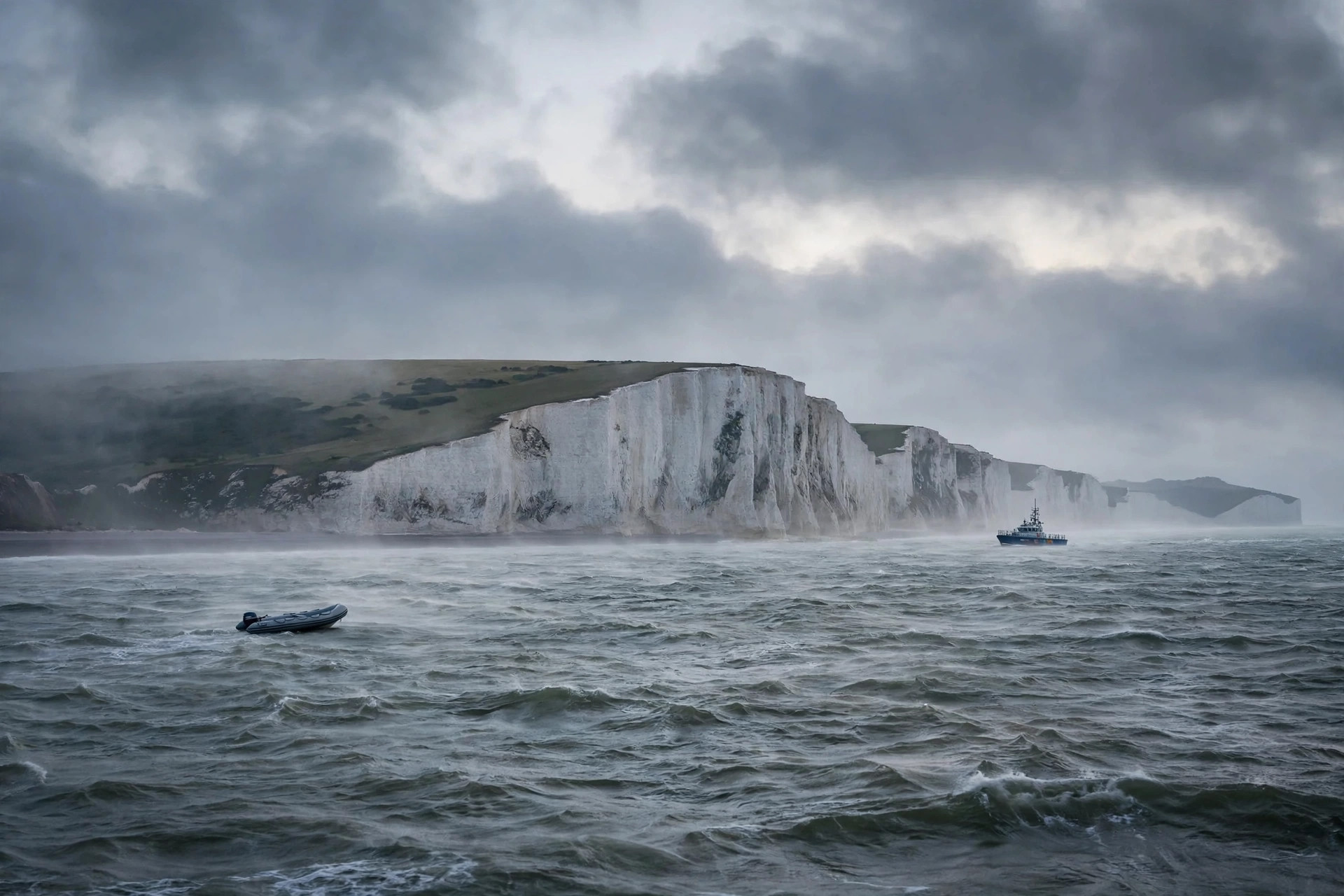
The UK Channel crossings October 2026 story changed in two days. Nearly 1,000 migrants crossed the English Channel in small boats on Thursday 29 and Friday 30 October 2026, ending a 21-day pause in arrivals that had been the longest gap without a crossing this year. Home Office figures show 263 people in three boats crossed on Thursday, and 671 people in nine boats crossed on Friday, a total of 934 people on 12 boats across the two days. The total number of arrivals for 2026 stood at 21,869 after Friday, according to the Home Office. The crossings resumed after three weeks in which high sea swell and strong wind in the Channel had made the journey too dangerous for small boats, and they arrived at a moment when the government's migration policy, and the Home Secretary's proposals to make settlement harder, were already under intense political debate.
What the UK Channel Crossings October 2026 Figures Show
The two days should be read together, because neither day on its own tells the full story. Thursday's 263 people in three boats broke the pause; Friday's 671 people in nine boats showed that the pause had ended in earnest rather than with a single boat. Together they add up to 934, which is why this article says "nearly 1,000" and not "1,000". The distinction matters: some reporting put the two-day total at over 1,000, but the Home Office-derived day-by-day figures, 263 plus 671, give 934, and that is the figure used here. The average across the two days was about 78 people per boat, which is in line with the pattern seen earlier in October, when an average of 76 people were packed into each vessel during the first week of the month. The boats are small, overcrowded and unseaworthy, and the crossing remains one of the most dangerous routes into Britain, which is why even a short spell of better weather can produce several hundred arrivals in a single day.
The Friday crossings were also marked by an incident that has been widely reported but not fully confirmed. Footage captured a man wielding a knife as he threatened migrants before boarding a dinghy on Friday, and further footage the following day showed migrants fighting on a dinghy. It is not confirmed whether the man filmed with the knife crossed to Britain, and this article does not state that he did. What the footage does show is the disorder and danger on the boats themselves, before they even reach British waters. The Border Force collected a further 38 migrants in the early hours of the following morning from a French safety boat, according to GB News, which underlines that the crossings did not stop at the end of Friday. The figures for each day are normally published by the Home Office the following day, so the totals given here are the official counts for Thursday and Friday, not estimates from footage or eyewitness reports.
The 21-Day Pause and Why Crossings Stopped
The 21-day pause was the longest spell without arrivals in 2026, and it was caused by the weather, not by enforcement. No arrivals were recorded from 8 to 28 October, after the last arrivals before the pause, 119 people in two boats, on 7 October. During those three weeks the Channel saw high sea swell and strong wind, conditions in which the small, overloaded boats used by smugglers cannot safely make the crossing. The pause shows how much the crossings depend on the weather: when the sea is rough, the boats stop; when it calms, they return quickly, as the 934 arrivals in two days demonstrate. That pattern has repeated throughout the year, with busy periods in calmer weather and quiet periods when storms cross the Channel.
The pause also created a backlog. Britain's border chief told MPs last week that almost 3,800 people were waiting in the two main camps in northern France, near Calais and Dunkirk, about double the usual number of around 2,000. That figure, given by Border Security Commander Duncan Capps to the Home Affairs Committee on 21 October, helps explain why so many boats arrived as soon as the weather improved: the people were already there, waiting for a window. It also explains why the government expects further crossings when the weather allows, even though the total for the year is well below last year's. The camps are on the French side of the Channel, and the people in them are in the hands of smuggling networks that charge for the crossing and launch boats from a stretch of coast running some 325 miles across Belgium and France, which makes the route very hard to close entirely.
UK Channel Crossings October 2026 in the Wider 2026 Picture
Set against the whole year, the two days look different. The total for 2026 stood at 20,935 up to 28 October, against 36,954 at the same point in 2025, which is 43 percent fewer, according to the Home Office time series. After Friday's arrivals the total was 21,869. The government has said crossings are down significantly, with the lowest number of summer arrivals, a period when journeys often rise in part due to warmer weather, since 2020 recorded this year. With just over two months of the year to go, and with crossings typically lower during late autumn and winter, the data suggests the total for 2026 is unlikely to surpass the figure for 2025, when more than 41,000 migrants crossed the Channel. Since 2018, a total of 213,545 people have crossed by small boat, up to 28 October, according to the Home Office.
The year-on-year fall is the government's main argument that its approach is working, and it is a real fall, not a statistical quirk: the 43 percent figure comes from the Home Office's own time series, and the Border Security Commander gave the same figure to MPs. Critics reply that the fall is partly a matter of weather, and that the test of the policy is what happens when the weather is good, as the last two days show. Both points can be true at once. The total for the year can be well down while a single spell of calm weather still produces nearly 1,000 arrivals in 48 hours, because the crossings are concentrated into the days when the sea allows them. That is why the government watches the daily figures so closely, and why a two-day total of 934 attracts far more attention than its share of the annual total would suggest. Readers who want the wider policy context can read about the UK Budget 2026 and its changes for households, which sets out the government's spending priorities in the same period.
What the Government Proposes Next
The crossings have returned to the headlines at the same time as the Home Secretary's migration proposals are being debated inside the government and the Labour Party. Under the proposals, the wait for migrants to obtain permanent residency would double from five years to 10 years, with lower-paid migrants potentially made to wait 15 years. Those are proposals, not law, and they have not been enacted. Reporting in the last two days has said the crackdown is being watered down amid a rebellion among Labour MPs, and the proposals have already been changed once before. This article therefore describes them as proposals that are reportedly being watered down, not as a settled policy, and readers should not treat the five-to-10-year change as something that has already happened. The Home Secretary is Shabana Mahmood, and the proposals are hers; the debate around them is political, and it is likely to continue in the coming weeks.
The government has also pointed to enforcement figures to support its case. A Home Office spokesperson has said that over 48,000 crossing attempts have been prevented since the election, and that the government has saved taxpayers more than one billion pounds by closing asylum hotels. Those are the government's own figures, and they are reported here as the government's claims, not as independently verified totals. The shadow home secretary, Chris Philp, has accused Labour of leaving Britain's borders wide open and failing to deliver on its promise to smash the people-smuggling gangs, a criticism the government rejects. The political argument is therefore familiar: the government points to a 43 percent fall in arrivals and to enforcement action in France, while its critics point to the 934 arrivals in two days and to the almost 3,800 people waiting in the camps, and argue that the crossings will continue as long as the smuggling networks can launch boats. The protests seen elsewhere in Europe this month show how charged the migration debate has become across the continent, including the protests in Italy in October 2026 and the protests in France in October 2026.
What Happens Next
In the short term, the next crossings will depend on the weather. If the Channel stays calm, more boats are likely, because the camps in northern France still hold almost 3,800 people waiting to cross. If storms return, the crossings will pause again, as they did for 21 days in October. In the longer term, the debate will turn on the Home Secretary's proposals and on whether the government can show that the fall in arrivals is lasting rather than seasonal. The Home Office will continue to publish daily figures, and the total for 2026 will be watched against the 2025 total of more than 41,000. The two days of 29 and 30 October will be remembered as the moment the boats came back after three quiet weeks, and as a reminder that a yearly total can fall sharply while the daily reality of the crossings remains unchanged on the days the sea allows them.