
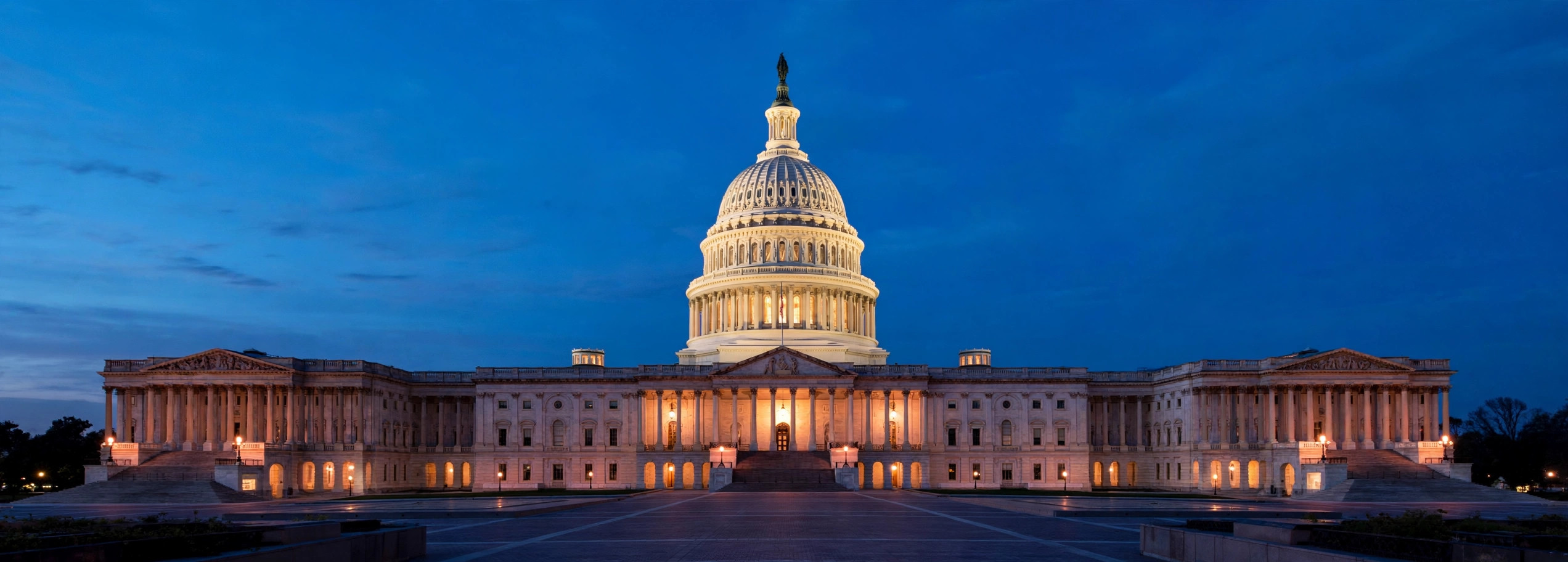
Now that voters have delivered a Democratic Congress, what happens next is the question facing Washington. Democrats won control of both the House and the Senate in the midterm elections on 3 November 2026, ending unified Republican control of the federal government. The new majority will not take office until the new Congress convenes in January, and even then it will face a Republican president with a veto pen and a Senate filibuster that needs 60 votes to break. This article explains the timetable, the first-100-hours plan, the limits on what Democrats can do, and the historic firsts from election night.
Democratic Congress: What Happens Next in January
The new Congress convenes on 3 January, and that date is when Democratic control becomes real. Until then, Republicans retain control of both chambers, giving them a final window in the lame-duck session to pursue legislation and confirmations before handing over. Hakeem Jeffries is expected to become Speaker of the House, and Chuck Schumer is expected to lead the Senate majority, subject to the formal leadership selections in each chamber. The full House still has to elect its Speaker, but Jeffries is the clear favourite for the role.
Before January arrives, there is unfinished business that could yet cause a crisis. Government funding is set to expire on 11 December, and the shutdown risk remains high unless spending bills pass soon. Republican leaders will need to use the election defeat to persuade fiscal hawks to support a reconciliation bill during the post-election session of the outgoing Congress. That bill would likely raise the debt ceiling and increase defence spending. Democrats, meanwhile, may prefer to delay budget talks until next year, when the new Congress takes office in which they regain control. Those conflicting priorities, and the short time available for talks, increase the risk of a shutdown before Christmas.
The lame-duck session will also be the last chance for the outgoing Republican majority to confirm nominees and pass favoured legislation. Once January comes, the Senate will be in Democratic hands, and that will halt the steady confirmation of Trump-nominated judges through the body. Any Cabinet nominees will need the support of at least a handful of Democrats to take their posts in a permanent capacity.
Democratic Congress: What Happens Next for the First 100 Hours
Democrats say that in their first hundred hours, they want to restore enhanced Affordable Care Act health insurance subsidies and reverse Medicaid cuts that Republicans passed last year in the One Big Beautiful Bill Act and that are about to take effect. They also want to reassert Congress's authority over tariffs and try to force an end to the Iran war by bringing new votes on war powers resolutions. Those are the headline promises, and they go directly to the two messages Democrats hammered throughout the campaign: lower costs, and a check on presidential power.
Behind those headlines sits a wider affordability agenda. House Democrats spent the autumn organising working groups to work out how to address the costs of gas and groceries, utilities, housing and caregiving. Democrats could also address affordability through raising the minimum wage, investigating corporate price-setting techniques, and extending healthcare subsidies, though they are likely to face Republican opposition on each of those. The party's central campaign promise was that putting Democrats in charge would mean Congress taking action to lower costs and stamp out corruption, and the first hundred hours are when that promise will first be tested.
Investigations will also be a major focus for Democrats now emboldened by subpoena power. The incoming House Oversight chair, Representative Robert Garcia of California, has already sent a two-word message to the administration: "Lawyer up." Democrats have signalled an ambitious agenda, with potential inquiries into the independence of agencies such as the Justice Department and Homeland Security, and into the business interests of the president and his family. For the full results behind this follow-up, see our report on the Democrats winning Congress in the 2026 midterms.
The Night's Historic Firsts
The midterm results were historic in ways that went beyond the change of control. Democrats won the House, with 249 seats called and counting still under way, and the Senate, with 52 seats plus two independents who caucus with the Democrats. They flipped seven Senate seats: in Iowa, Kansas, Maine, North Carolina, Ohio, South Carolina and Texas. It was a sweep that outperformed most expectations, winning seats in states that President Trump had won by large margins.
Texas delivered one of the night's biggest stories. It was the first statewide Democratic win in Texas since 1994, with James Talarico beating Ken Paxton in what became the most expensive Senate race in US history, and Gina Hinojosa beating Greg Abbott for governor. In Kansas, Adam Hamilton became the first Democratic senator from the state since 1932. In Michigan, Abdul El-Sayed became the first Muslim US senator. In Maine, Susan Collins was ousted. And in Georgia, Keisha Lance Bottoms became the first Black woman governor in the state's history.
Those firsts matter because they show how broad the Democratic gains were. The party did not only win in the places it usually wins. It won Senate races in deep-red states, it broke droughts that had lasted for decades, and it elected candidates who had never before held the offices they won. That breadth is part of why the result is being described as a rout, and it is also why the new Congress will look different from the ones that came before it.
The Limits: Vetoes and the Filibuster
For all the scale of the victory, there are hard limits on what a Democratic Congress can do. Most legislation still needs 60 votes to avoid a filibuster in the Senate, and the Democrats' majority of 52 seats plus two independents falls well short of that. President Trump also retains his veto power, and he has said plainly that he will use it, telling reporters before the election that he would become "Mr. Veto" if Democrats took control. That means most Democratic legislation will need his support to become law, and the party's affordability agenda may ultimately become a messaging tool for the 2028 election season rather than a near-term change in Americans' everyday lives.
The result therefore points to more political friction than policy transformation. Democrats have won a majority, but not one large enough to pass laws on their own, and not one large enough to override a presidential veto. What they have won is the power to set the agenda in both chambers, to run investigations, to block confirmations, and to force votes that put Republicans on the record. Investors and analysts have already begun to price in that reality: the market reaction to the results, covered in our report on US stocks surging after the midterm results, was followed within a day by a sharp pullback, which we covered in why the stock market fell the next day.
Congress also has other tools. It can withhold funding for the war through the appropriations process, which is must-pass legislation that will require some compromise across the aisle despite Democrats now being in the driver's seat. And on war powers, Democrats will have to build a bipartisan coalition to pass a resolution restricting the conflict with Iran. None of that is straightforward, and all of it will test whether a divided government can still govern.
What to Watch Next
Three things will decide how the next two months play out. The first is the funding deadline on 11 December, and whether the lame-duck Congress can pass spending bills or whether the government shuts down. The second is the formal leadership elections, which will confirm Jeffries as Speaker and Schumer as Senate majority leader, and the committee assignments that follow, which will decide who runs the investigations. The third is the final count: some ballots are still being counted, and a small number of races remain too close to call, so the exact size of the Democratic majorities may still move slightly.
Beyond that, the real test is whether the new Congress and the president can find anything to agree on. President Trump has said he can cooperate with Democrats on "many things", and Jeffries has promised "bold, dramatic change". The gap between those two statements is where the next two years of American politics will be fought, and it will be fought in the open, with subpoenas, vetoes, funding deadlines and the 2028 presidential election already in view. For now, the one certainty is that divided government has returned to Washington, and the country is about to find out what that means in practice.
Sources: AP, CNN, USA Today, Le Monde, NPR, November 2026