
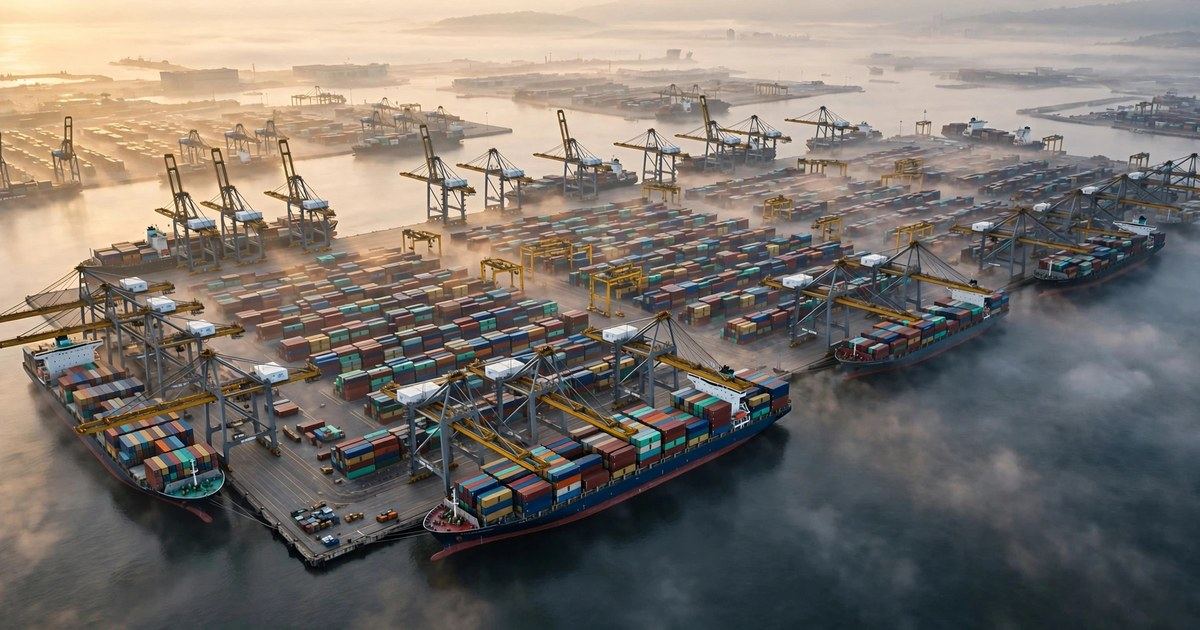
The world's two largest economies stepped back from the edge of a full-blown trade war this weekend. After two days of high-level talks in Kuala Lumpur, Malaysia, the United States and China announced a "basic consensus" on their trade disputes — and the American threat of an additional 100% tariff on Chinese goods is, for now, off the table. The breakthrough is trending per news coverage across international outlets, with markets and governments around the world watching what comes next.
Here is what was agreed, what was avoided, and what still has to be decided before Presidents Donald Trump and Xi Jinping meet face to face.
What happened in Kuala Lumpur
On the sidelines of the ASEAN summit in Kuala Lumpur, U.S. Treasury Secretary Scott Bessent and U.S. Trade Representative Jamieson Greer sat down with Chinese Vice Premier He Lifeng and top Chinese trade negotiator Li Chenggang for two days of closed-door discussions, held on October 25–26, 2026.
Chinese Vice Premier He Lifeng described the discussions as "candid, in-depth, and constructive," and said both sides had reached a "basic consensus" on how to handle their respective trade concerns. The talks covered tariffs, export controls, trade in agricultural products, and cooperation on fentanyl-related enforcement. Li Chenggang, China's top trade negotiator, said a preliminary consensus had been reached on a range of issues, including the extension of the trade truce, fentanyl and export controls — though he provided few specific details.
Bessent struck an even more confident tone. Appearing on NBC's "Meet the Press" on Sunday, he said Washington and Beijing had reached a "very substantial framework" that would prevent the U.S. from imposing 100% tariffs on Chinese goods and allow for a deferral of China's rare earths export controls. In a separate interview with CBS News, Bessent said Trump's threat of an additional 100% tariff on Chinese goods "has gone away."
President Trump arrived in Malaysia on Sunday for the ASEAN summit and expressed confidence that a deal was within reach, ahead of his scheduled meeting with Xi Jinping.
The 100% tariff threat — and why it is gone (for now)
The tariff threat had been hanging over the global economy for weeks. In response to Beijing's expanded export controls on rare earth minerals and magnets, Trump had threatened to impose an additional 100% tariff on Chinese imports starting November 1 — a triple-digit duty stacked on top of tariffs already in place.
Such a move would have hit American industries hard. Chinese imports feed U.S. supply chains for electronics, machinery, consumer goods and the very rare earth materials many manufacturers depend on. Economists had warned that the tariffs could raise prices for American consumers and deepen the economic strain already visible in earlier tariff rulings that rattled trade policy.
After Kuala Lumpur, that threat has receded. "I would expect that the threat of the 100% has gone away, as has the threat of the immediate imposition of the Chinese initiating a worldwide export control regime," Bessent told CBS News. On NBC, he said the proposed tariffs were "effectively off the table."
There is an important caveat. Bessent stressed that final terms will be decided by Trump and Xi themselves, and both sides must still go through their respective internal approval processes. The framework is preliminary — a direction of travel, not a signed treaty.
Rare earths: the leverage at the heart of the standoff
Rare earth minerals and the high-performance magnets made from them are among the most strategically important materials in the modern economy. They are essential components of smartphones, electric vehicles, wind turbines, defense systems and the hardware that powers artificial intelligence.
China dominates the processing of these materials. Analysts cite International Energy Agency figures putting China at roughly 91% of global refined rare earth output and about 94% of permanent magnet production. That dominance is what made Beijing's expanded export controls such a powerful lever — and what made Washington's 100% tariff threat the counterweight.
Under the Kuala Lumpur framework, China was expected to defer its rare earth export controls, removing the immediate prospect of a worldwide export control regime that could have choked supply to manufacturers in the U.S., Europe, Japan and beyond. Bessent said he expected China to delay its licensing scheme for rare earth minerals and magnets by a year while the policy was reconsidered; Chinese officials gave no details on the outcome. How long the deferral lasts and exactly what it covers therefore remain open questions — details the two sides will have to pin down.
Soybeans, fentanyl and TikTok: the other pillars of the deal
Beyond tariffs and rare earths, the framework reaches into several other fronts of the U.S.-China relationship.
Soybeans and farm goods. The framework includes large-scale Chinese purchases of American soybeans and other agricultural products. China had already committed under last year's Busan agreement to buy 25 million metric tons of U.S. soybeans annually through 2028, and Chinese purchases approached 1 million metric tons in early September alone. For American farmers — a politically important constituency — steady Chinese demand is one of the most tangible wins in the framework.
Fentanyl. Both sides agreed to cooperate on fentanyl-related enforcement. The opioid crisis has been a persistent point of friction, with Washington pressing Beijing to do more to stop the flow of precursor chemicals, and the framework puts joint action on the agenda.
TikTok. The talks also addressed the restructuring of the social media app TikTok to avoid a U.S. ban — a long-running saga at the intersection of trade, technology and national security.
The package reflects how the U.S.-China relationship now spans far beyond simple trade in goods: agriculture, drugs, technology platforms and advanced materials are all part of the same negotiation.
From Busan to Kuala Lumpur: how we got here
The Kuala Lumpur framework is the latest chapter in a trade standoff that has swung between escalation and truce for over a year.
In October 2025, Trump and Xi met in Busan, South Korea, and agreed to pause the trade war's escalation — suspending retaliatory tariffs and Chinese export controls in what became known as the Busan agreement. That truce rolled back most of the two countries' tariffs and set purchase targets for agricultural products and other goods.
Then came September 24, 2026: Xi's first visit to Washington in roughly a decade, hosted by Trump at the White House. Just ahead of that summit, Bessent announced the truce would be extended to January 10, 2027 — but only for two months, a deliberately short window that USTR Greer described as "compliance periods" in which Washington would assess whether Beijing was delivering on its promises. Soybeans and rare-earth access were the named tests.
The Washington summit also produced a roughly $30 billion reciprocal tariff carve-out for non-sensitive goods — consumer products, farm goods, medical devices and the like — plus new military crisis-communication channels and an AI dialogue mechanism. A separate US-China AI safety agreement set rules of the road for the two AI superpowers.
But rare earths remained unresolved, and when Beijing expanded its export controls, Trump answered with the 100% tariff threat — the crisis Kuala Lumpur has now defused, at least temporarily.
What happens next
The path forward runs through two leaders and two deadlines.
The Trump-Xi meeting. The South Korean national security adviser has announced that Trump and Xi will hold talks on October 30 on the sidelines of the APEC summit in Gyeongju, South Korea — with state visits planned around the October 31–November 1 APEC leaders' meeting. Final terms of the Kuala Lumpur framework are expected to be decided by the two presidents there.
The internal approvals. Both sides must run the preliminary consensus through their own internal processes, a step Li Chenggang explicitly flagged. Until that happens, the framework remains a promise, not a policy.
The open questions. The duration and scope of the rare earth deferral are unclear. The $30 billion tariff carve-out could expand — or stall. And the January 10, 2027 truce deadline still looms: if compliance falters, the cycle of threats could restart.
Why it matters for the global economy
The U.S.-China trade relationship is valued at roughly $660 billion a year, and it anchors supply chains on every continent. When the two countries threaten each other with triple-digit tariffs and export controls, the shockwaves reach far beyond Washington and Beijing.
Asian allies are watching closely. Japan, South Korea and Southeast Asian nations — many of them gathered at the very ASEAN summit where this deal was struck — depend on both markets. Europe has its own parallel trade diplomacy with Beijing, including a recent landmark deal capping Chinese hybrid car imports into the EU, while Washington has been pursuing trade frameworks with partners like India — where the first phase of a US-India trade deal is now in legal drafting.
For investors, the framework offers short-term relief. Gold and silver have been setting all-time highs as investors hedge against geopolitical risk, and any genuine de-escalation between the world's two biggest economies eases the fear premium. But relief is not resolution. As one lesson of the past year shows: in this trade war, truces are measured in months, and the next deadline is always on the calendar.
How long the relief lasts may depend on the health of China's own economy, where third-quarter growth of 4.4% is expected to fall short of Beijing's target.