
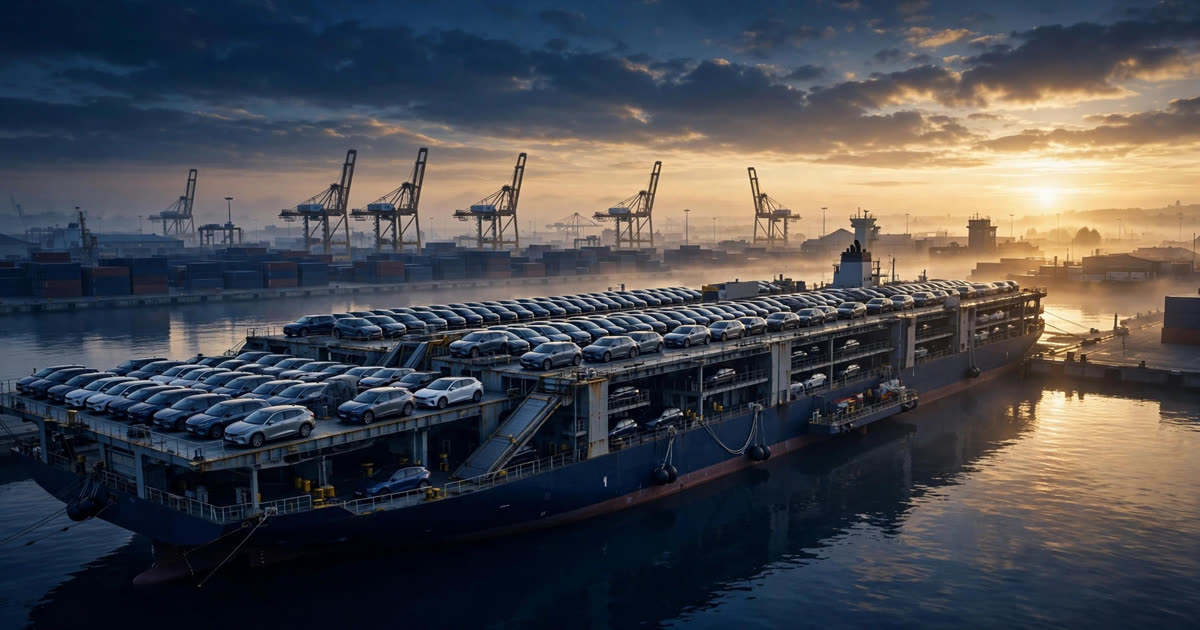
On Monday, 12 October 2026, Brussels drew its clearest line yet in the trade battle with Beijing over cars. Senior European Commission officials announced that the European Union has secured China's agreement to limit imports of Chinese-built hybrid cars to 350,000 vehicles a year — a four-year “safeguard” measure expected to take effect in early December. The cap would more than halve the current flow of Chinese hybrids into Europe, which officials estimate is on course to reach 800,000 vehicles this year — a development trending per news coverage from Reuters and Bloomberg to Yonhap and the Dow Jones newswires.
The deal closes a loophole that opened when the EU imposed heavy additional tariffs on Chinese-made electric vehicles in 2024, accusing Beijing of unfair state subsidies. Chinese manufacturers simply pivoted: with pure-electric models penalised, they redirected their export machine toward conventional hybrids and plug-in hybrids instead — categories the EV tariffs never touched. Within two years, the trickle became a flood.
What the deal actually says
Under the terms briefed on Monday, the EU will cap annual imports of hybrid and plug-in hybrid vehicles from China at 350,000 units for four years, with the quota rising 6% each year from the second year. By year four, the cap would grow to roughly 417,000 vehicles. The measure is most likely to take effect in early December 2026, according to the Commission briefing reported by Reuters.
Crucially, the cap is not framed as a China-only restriction. To comply with World Trade Organization non-discrimination rules, the safeguard formally applies to hybrid imports from all sources — but the quota allocated to China will be “no less than” that of any other importing country, meaning Beijing effectively gets the full 350,000 allocation while other origins get no more.
Beijing's own account of last week's talks in the Chinese capital was conspicuously vaguer: China's commerce ministry spoke only of an “understanding on hybrid vehicle trade in a WTO-consistent manner,” with no volumes, no baseline and no timeline. Brussels, in effect, wrote the numbers in itself — a detail first reported from a document seen by Bloomberg.
Why Brussels acted now
The numbers explain the urgency. Chinese customs data shows exports of hybrid vehicles to the EU tripled to US$7.5 billion in the first half of 2026, up from US$2.5 billion a year earlier. Eurostat figures cited by Asia Times put imports at roughly 378,000 Chinese hybrids in just the first seven months of 2026 — an annualised pace of about 650,000 vehicles. Beijing's own figures trace the arc: 107,000 hybrids shipped to Europe in 2024, 302,000 in 2025, and now a trajectory toward 800,000 in 2026.
For Europe's car industry, the surge could not have come at a worse moment. European automakers are struggling with delayed transitions to electric models and weakening overall demand, making the influx of affordable Chinese hybrids an added competitive squeeze. The safeguard is expected to cut the market share of Chinese-built vehicles in Europe from around 12% today to about 6%, according to the Commission's briefing.
What China gets in return
The deal is not one-sided. As part of the broader understanding, China agreed to reduce tariffs on certain European goods, including automotive parts and olive oil — concessions worth at least €225 million (about $252 million) in tariff relief for European exporters, according to the EU's account. Beijing framed the outcome as protecting its industry while avoiding an escalation of trade frictions, and insisted that no measures should target Chinese products exclusively.
The olive oil detail is telling: it is a flagship export for southern European economies, and its inclusion suggests Brussels bargained with domestic political arithmetic in mind — much like the fractious EU budget politics that recently saw France and Germany clash over the bloc's €2 trillion spending plans.
Is it legal? The WTO question
Trade lawyers will be watching the mechanism closely. A “safeguard” is an emergency import restriction permitted under WTO rules when a sudden surge of imports threatens domestic producers — distinct from the anti-subsidy tariffs the EU applied to Chinese EVs in 2024, and distinct from the tariff battles playing out in the United States, where the Supreme Court has struck down Trump-era tariffs.
By applying the cap to all origins rather than China alone, Brussels hopes to stay on the right side of the WTO's non-discrimination principle. Whether Beijing — or other exporters caught in the net — accepts that framing in practice is another matter. China has already said the EU's measures must not specifically target its products or discriminate against its firms.
The bigger picture: Europe's trade arsenal
The hybrid cap is only the opening move in a wider European trade offensive. According to Reuters, the Commission plans to lay out further trade-defence measures in December: a new instrument to limit companies' reliance on a single source for certain critical supplies, and support for industries or regions hit by trade measures imposed from outside. EU leaders will discuss China as the first item at their summit starting Thursday, and again at the end-of-year summit on 17–18 December.
A senior Commission official was blunt about the direction of travel: “Dialogue needs to deliver and it has delivered results,” the official said on Monday. “But dialogue alone looks unlikely to deal with this structural problem of unsustainable imbalances that we have with China.” Deutsche Bank analysts, in a note reported by Bloomberg, have mapped what they see as the remaining rungs on Europe's “escalation ladder” of trade weapons — suggesting Brussels is prepared to climb further if the cap does not rebalance the flow.
What it means for car buyers
For European consumers, the immediate effect is likely to be less choice and firmer prices in the hybrid segment. Chinese brands had been undercutting European and Japanese rivals on price; with supply capped at roughly 45% below this year's run rate, that discount pressure eases. Manufacturers may also shift strategy — assembling more vehicles inside Europe to sit outside the quota, or steering buyers back toward the fully electric models the EU still wants to promote.
For Chinese automakers, the cap is a setback but not a rout. A 350,000-unit quota still leaves a large European market open, and the 6% annual uplift gives them a growth path. The bigger question is whether other markets follow: Brussels' move will be watched closely in the UK, Canada and Australia, where Chinese car exports are also surging.
What to watch next
Three things will determine whether the deal holds. First, enforcement: the quota starts, most likely, in early December, and how Brussels counts and allocates the 350,000 units will matter enormously. Second, Thursday's EU leaders' summit, where heads of government will assess the deal and decide whether further action is needed. Third, Beijing's patience: China's commerce ministry has already signalled that the quota must not discriminate against Chinese firms — any sign that it does could send the two sides back to the negotiating table, or to the WTO.
The hybrid cap marks a new phase in the world's biggest trade relationship — one where Brussels negotiates first and legislates second, and where negotiated agreements with Beijing, like the recent US-China AI safety pact, are becoming the template for managing economic rivalry. Whether 350,000 becomes a ceiling that holds or a floor that gets renegotiated will be one of the defining trade stories of 2027.
Brussels is redrawing its trade map on multiple fronts: Andorra and San Marino's new EU association agreements change what their citizens and businesses can do across the bloc.
Sources: reporting from Reuters (12 Oct 2026), Bloomberg via ZeroHedge (12 Oct 2026), Yonhap News Agency via Aju Press (12 Oct 2026), HK Businesswire (12 Oct 2026), AutoTech News (12 Oct 2026) and Dow Jones Newswires via Morningstar (12 Oct 2026).
Security concerns over Chinese vehicles are hardening elsewhere too: the US military has banned BYD cars from its Kadena Air Base in Japan.