
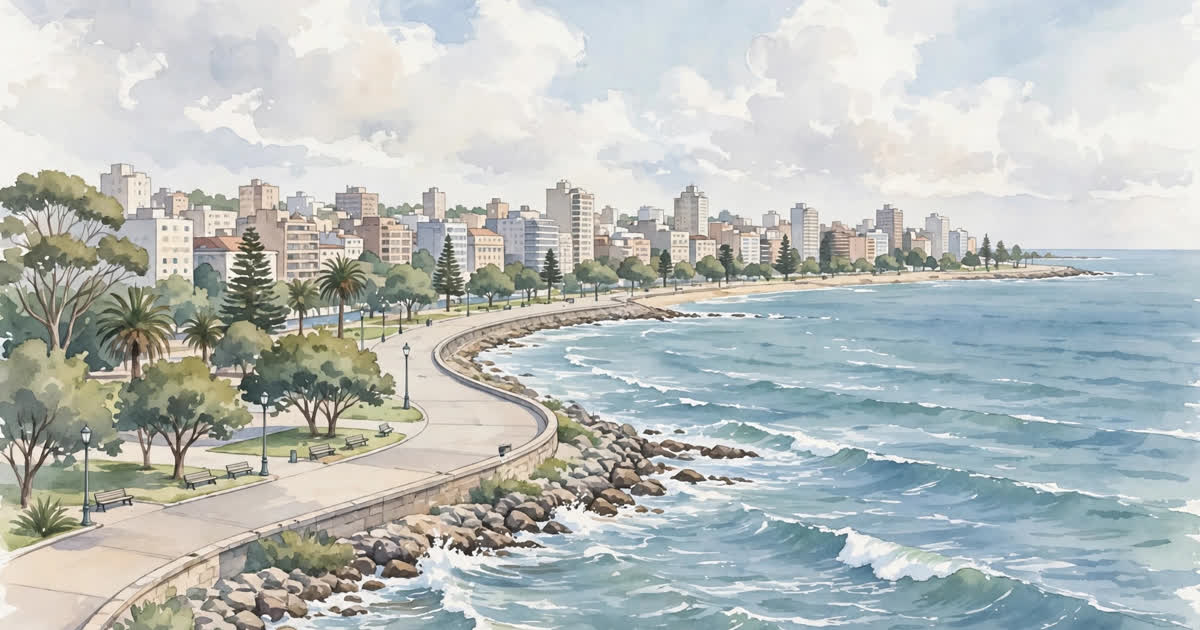
Uruguay weather Montevideo is the forecast most visitors and new residents check first, because the capital sits on the Río de la Plata estuary and its weather sets the tone for much of the coast. Montevideo has four distinct seasons, mild summers, cool winters, and wind that can change how a day feels far more than the thermometer suggests. This guide to Uruguay weather Montevideo explains seasons, coastal differences, rain and wind, and how to plan beach days, city walks and trips to Punta del Este and Colonia.
Uruguay is a small country, but its coast still varies. Montevideo faces south across a wide estuary, Punta del Este juts into the Atlantic at the meeting of river and ocean, and Colonia del Sacramento, to the west, is more sheltered. Checking Uruguay weather Montevideo for the capital alone will not tell you exactly what Punta del Este will feel like on a windy day, so this guide compares the main coastal spots and shows which forecast details matter most for each activity.
Uruguay Weather Montevideo: The Four Seasons
Uruguay weather Montevideo follows a southern hemisphere calendar. Summer, from December to February, brings warm days often in the high 20s, with occasional heat above 30°C, and long evenings that suit the rambla, outdoor dining and beach trips. Autumn, from March to May, is mild and often pleasant, with cooler nights and changing light that suits city walking and wine regions. Winter, from June to August, is cool rather than bitter, with daytime temperatures often in the low to mid-teens and nights dropping toward single figures. Spring, from September to November, warms gradually, with variable days that can feel summery or wintry within the same week.
Rain is spread through the year rather than concentrated in a single monsoon, so there is no fully dry season to rely on. Summer thunderstorms can arrive quickly, winter rain can be steady and grey, and spring showers are common. The practical lesson is to check the forecast for your exact days and to carry a layer and a light rain jacket in every season, even in summer, because a coastal breeze after sunset can make a warm afternoon feel cool by evening.
Uruguay Weather Montevideo: Wind, Humidity and the Rambla
Wind is the defining feature of Uruguay weather Montevideo. The city is exposed to southerly winds, including the cold, dry pampero and the humid sudestada, which can bring rain, rough seas and a sharp drop in perceived temperature. A forecast of 20°C with strong wind feels very different from 20°C on a calm day, so check wind speed and direction alongside temperature, especially for beach plans, cycling along the rambla, or boat trips. Wind also affects the estuary: rough conditions can close beaches for swimming even when the air feels warm.
Humidity in Montevideo is moderate to high for much of the year, which makes summer heat feel heavier and winter cold feel damper. Homes without central heating can feel cold indoors in winter, so visitors staying in apartments should check heating arrangements and pack warm layers for evenings at home as well as outdoors. For outdoor plans, the best Montevideo days are often calm, sunny days in late spring or early autumn, when temperatures are comfortable and the rambla is at its most enjoyable.
Uruguay Weather Montevideo: Punta del Este and the Atlantic Coast
Uruguay weather Montevideo differs from Punta del Este in ways that matter for beach holidays. Punta del Este has two sides: the Brava side faces the Atlantic with bigger waves and wind, popular for surfing and dramatic coastal walks, while the Mansa side faces the estuary with calmer, warmer water, better for families and swimming. On the same day, one beach can be rough and the other calm, so check beach-specific conditions and lifeguard flags rather than a single resort forecast. Summer, from December to February, is peak season, with warm sea temperatures, crowded beaches and higher prices.
Outside summer, Punta del Este quiets considerably, with many seasonal businesses closing or reducing hours, though the town remains beautiful for walks, seafood and whale watching in season. Autumn and spring offer mild weather and far fewer visitors, but sea swimming becomes less appealing and some services are limited. If you visit out of season, confirm accommodation, restaurant and transport availability in advance, and plan for wind and changeable days. For beach safety in any season, respect flag warnings and avoid swimming alone in rough surf.
Uruguay Weather Montevideo: Colonia, the West and Inland Differences
Colonia del Sacramento, west of Montevideo, is generally a little more sheltered than the Atlantic coast, with calmer river beaches and a historic quarter that suits walking in most seasons. Summer days are warm and the town fills with day-trippers from Buenos Aires, while winter visits are quieter and cooler, with misty mornings that suit the old town's atmosphere. Inland Uruguay, including wine regions around Canelones and the rolling countryside, has greater temperature swings between day and night than the coast, with hotter summer days and colder winter nights.
That inland-coastal contrast matters for road trips. A route from Montevideo to Punta del Este to Colonia can cross several microclimates in a day, so check Uruguay weather Montevideo plus each destination separately. For driving, fog and rain are the main hazards, especially on rural roads in winter mornings. For countryside stays, pack for cool nights even in summer, because rural temperatures drop faster after sunset than in the city, and farm stays may have limited heating.
Uruguay Weather Montevideo: How to Read INUMET Forecasts
Uruguay weather Montevideo forecasts come principally from INUMET, the Instituto Uruguayo de Meteorología, which publishes city forecasts, warnings and radar. A typical forecast gives maximum and minimum temperatures, rain probability, wind and sky conditions, and warnings use colour levels for wind, rain, storms and other hazards. Pay attention to warnings for wind and storms, especially for coastal activities, because a yellow or orange warning can mean beach closures, ferry delays or dangerous surf even if the headline temperature looks pleasant.
For practical planning, check the forecast the evening before and again in the morning, because coastal wind and thunderstorms can change quickly. Use the hourly forecast for beach and boat plans, and the daily forecast for city sightseeing. If a storm warning is in force, keep indoor alternatives ready and avoid exposed coastal walks. Uruguay's weather is generally benign compared with tropical storm regions, but wind, sudden storms and cold snaps still deserve respect, particularly for visitors unfamiliar with southern Atlantic conditions.
Uruguay Weather Montevideo: Best Times and Packing List
The best time for Uruguay weather Montevideo depends on your goal. For beaches and nightlife, December to February is peak, with the warmest sea and the liveliest resorts, but also the highest prices and crowds. For city culture, food and wine, March to May and September to November offer pleasant temperatures, fewer tourists and good light for photography. For budget travel, winter brings lower prices and quiet towns, though beach swimming is out and some coastal services close.
Packing for Montevideo in any season should include layers, a windproof jacket, comfortable walking shoes, sun protection, and a light rain layer. In summer add swimwear, sandals and strong sunscreen, because UV is high even on cloudy days. In winter add a warm coat, scarf and closed shoes, and check indoor heating. With layers and a daily forecast check, Uruguay weather Montevideo rarely ruins a trip; it simply asks you to plan for wind and change. For wider trip planning, see how to travel on a budget, travel insurance explained, and Uruguay football and national team guide.