
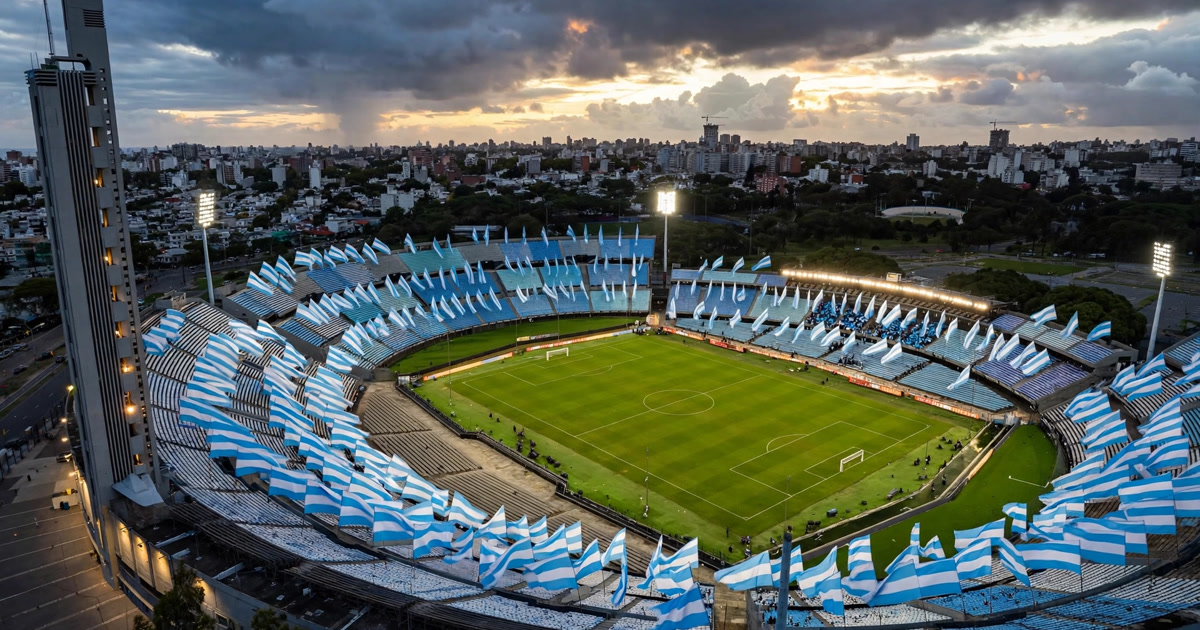
Uruguayan football punches far above its weight, and the Uruguay Primera División fixtures and results are the weekly heartbeat of that tradition. Uruguay, a country of only a few million people, has won the World Cup twice, produced generations of world-class players, and sustains a passionate domestic league centred on Montevideo. This guide explains how the Uruguay Primera División fixtures and results work, who the big clubs are, how the season is structured, and how the national team, La Celeste, fits around club football.
Following the Uruguay Primera División fixtures and results is rewarding because the league is compact, intense and full of history. Most top-flight clubs are based in or around Montevideo, derbies are frequent and fierce, and young players regularly break through before moving to larger leagues in Argentina, Brazil or Europe. For a new follower, the Uruguay Primera División fixtures and results offer a manageable entry point into South American football without the scale and complexity of Brazil's much larger league.
How the Uruguay Primera División fixtures and results are structured
The Uruguay Primera División fixtures and results are organised around a season divided into tournaments, traditionally the Apertura and Clausura, whose winners can meet in a championship play-off, alongside an annual aggregate table that also decides relegation and continental qualification. Exact formats have changed over the years, so the most reliable approach is to check the current season structure at the start of each campaign rather than assuming last year's format still applies to the Uruguay Primera División fixtures and results.
The annual table matters enormously in the Uruguay Primera División fixtures and results. It determines which clubs qualify for the Copa Libertadores and Copa Sudamericana, and which clubs face relegation based on average points over recent seasons. That averaging system means a single bad season does not automatically relegate a historic club, but sustained poor form over two or three seasons becomes very difficult to escape, adding long-term tension to every round of the Uruguay Primera División fixtures and results.
Most matches in the Uruguay Primera División fixtures and results are played at weekends, with some midweek rounds for cup ties or catch-up games. Kick-off times are usually shown in Montevideo local time, and fixtures can move for television, weather or stadium availability. As with other South American leagues, re-checking the Uruguay Primera División fixtures and results on matchday is wise, especially for matches involving clubs also playing in continental competition during the same week.
Nacional, Peñarol and the Uruguay Primera División fixtures and results
No discussion of the Uruguay Primera División fixtures and results can ignore Nacional and Peñarol, Uruguay's two giants. Both are based in Montevideo, both have enormous histories in domestic and South American football, and their derby, the Clásico Uruguayo, is one of the oldest and most intense rivalries in world football. When Nacional and Peñarol meet, the Uruguayan league takes on a significance far beyond three points, and the whole country follows the build-up.
Beyond the big two, the Uruguayan league feature clubs with proud identities of their own, including Defensor Sporting, Danubio, Liverpool Montevideo, Wanderers, River Plate Montevideo and Boston River. These clubs are famous for youth development, and their matches against Nacional and Peñarol are often the best test of emerging talent. A strong season for a smaller Montevideo club can bring continental qualification and a place in South American football history.
For visitors, the Uruguayan league can shape a Montevideo trip beautifully. The Estadio Centenario, Uruguay's national stadium and a historic World Cup venue, hosts major matches and is worth visiting even outside matchdays. Tickets, stadium access and matchday safety vary by fixture, so use official club channels and local advice, and plan the practical side of a football trip with our guide on how to travel on a budget and our explainer on what travel insurance covers.
Uruguay national team: La Celeste and the club calendar
The Uruguay national team, La Celeste, is inseparable from the Uruguayan league. Domestic players dream of a national-team call-up, and strong league form is a proven route into the squad, especially for young players. Uruguay's national identity is closely tied to its football history, including World Cup victories in 1930 and 1950 and a long record of Copa América success, and that history gives even ordinary league matches a sense of belonging to a larger story.
International breaks pause the Uruguayan league, as they do in other countries, for World Cup qualifiers, Copa América and friendlies. South American World Cup qualifying is famously gruelling, with long travel, high-altitude away matches and intense home fixtures in Montevideo. When La Celeste plays, domestic attention shifts entirely to the national team, and club fixtures resume only after the international window closes.
For followers abroad, the simplest habit for the Uruguayan league is to follow the league table weekly, watch the Clásico when it arrives, and track which young players earn national-team attention. Broadcast availability varies by country, so check local sports services before each season, and use live-scores services and club accounts for line-ups and results when a match is not televised in your region.
How to follow the Uruguay Primera División fixtures and results
To follow the Uruguayan league well, start with the table, then the fixtures for the coming round, then the results from the last round. That three-step routine gives you the title race, the relegation picture and the form of each club in a few minutes each week. Add a note of upcoming derbies and continental matches, and you will quickly understand why a seemingly ordinary fixture matters to supporters.
Context also improves the Uruguayan league. A draw away to a title rival, a win with a rotated squad before a Libertadores tie, or a late goal that lifts a club out of the relegation averages all mean more than the scoreline alone suggests. Reading match reports, even briefly, turns a list of scores into an understanding of momentum, injuries and managerial changes.
Finally, enjoy the scale of Uruguayan football. The Uruguayan league describes a league where supporters, players and stadiums are close together, where history is visible in every derby, and where a small country continues to shape world football. Follow it weekly, learn the clubs beyond Nacional and Peñarol, and you will discover one of South America's most distinctive football cultures.