
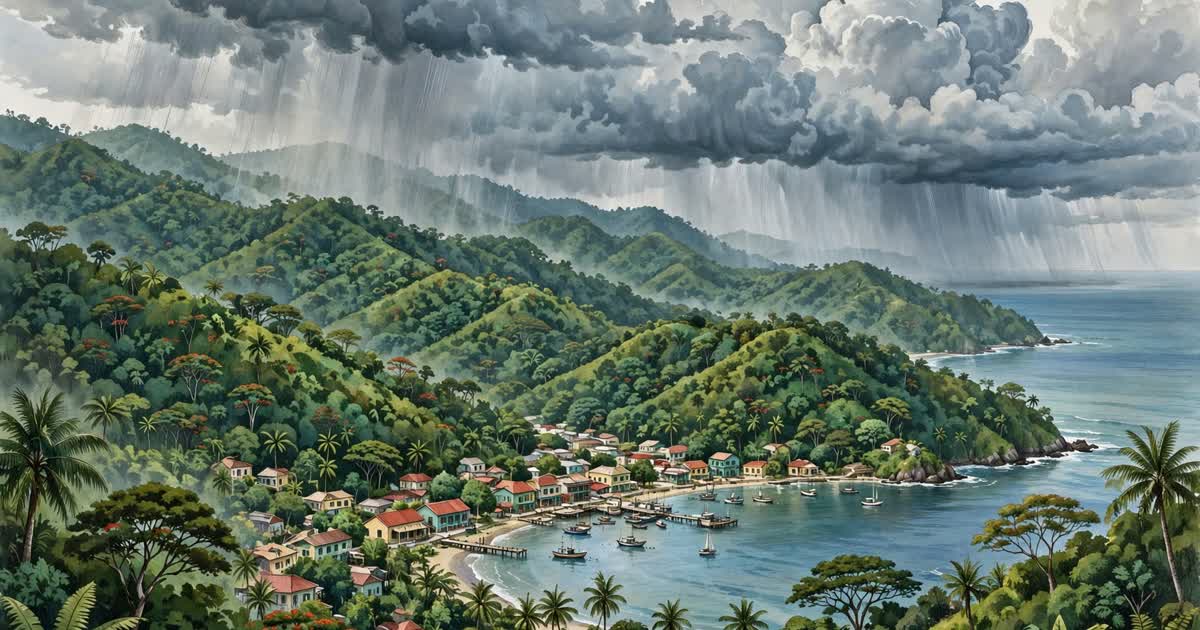
Trinidad and Tobago weather is tropical, warm, and wetter than many visitors expect, with two distinct seasons rather than four. Temperatures stay high all year, but rainfall, humidity, and storm risk change dramatically between the dry season and the rainy season, and the two islands, Trinidad and Tobago, do not always share the same weather on the same day.
This guide explains Trinidad and Tobago weather clearly: the seasons, month-by-month patterns, hurricane risk, flooding, and how to read forecasts from the national meteorological service. Whether you are visiting for Carnival, planning a move, or simply curious, understanding the climate will help you time trips and stay safe.
Trinidad and Tobago Weather Seasons: Dry and Rainy
weather across both islands divides into a dry season from roughly January to May and a rainy season from June to December, with the wettest months usually between June and November. Dry season days are sunny, breezy, and relatively comfortable, with lower humidity and little rain, which is why it hosts Carnival and peak tourism. Rainy season days still bring sunshine, but afternoon showers and thunderstorms become frequent, and humidity climbs noticeably.
The transition between seasons is gradual rather than sudden, and the islands climate in May and December can feel like either season depending on the year. Farmers, event planners, and construction projects all plan around this cycle, since heavy rain can halt outdoor work for days. Visitors should treat the season, not just the temperature, as the key planning factor for any trip.
Trinidad and Tobago Weather by Month
January to March offers the most reliable weather across both islands, with warm days, cool evenings by tropical standards, and the lowest rainfall. April and May grow hotter and more humid as the rainy season approaches, though Carnival season crowds have usually departed by then. These months suit beach trips, hiking, and outdoor festivals, with rain rarely disrupting a full day.
June through August brings the rainy season proper, with intense but often brief afternoon downpours, lush green landscapes, and warm seas. September to November is the wettest and most unsettled stretch of the islands climate, with higher flood risk and occasional tropical waves. December improves quickly as drier air returns, making it a popular month for visitors seeking sunshine without peak-season prices.
Hurricanes and Storms in Trinidad and Tobago Weather
Trinidad and Tobago sit at the southern edge of the hurricane belt, which gives them lower hurricane risk than islands further north, but the risk is not zero. Tropical storms and hurricanes have affected both islands, and tropical waves, which are less organised than hurricanes, regularly bring heavy rain and flooding during the rainy season. The official Atlantic hurricane season runs June to November, overlapping the rainy season.
Residents and visitors should follow the Trinidad and Tobago Meteorological Service during Trinidad and Tobago weather threats, since it issues local watches, warnings, and flood advisories. A tropical storm warning means storm conditions are expected within 36 hours, while a flood warning means flooding is occurring or imminent in specific areas. Never drive through flooded roads, which are a leading cause of storm deaths across the Caribbean.
Flooding, Heat and Everyday Trinidad and Tobago Weather Hazards
Flooding is the most common Trinidad and Tobago weather hazard, especially in low-lying parts of Trinidad after intense rainfall overwhelms drains and rivers. Flash floods can develop within an hour of a heavy downpour, closing roads and damaging homes, so residents in flood-prone areas keep sandbags, raised storage, and evacuation plans ready. Tobago, being smaller and hillier, faces landslip risks on steep roads during prolonged rain.
Heat is the quieter hazard in Trinidad and Tobago weather, with high humidity making midday temperatures feel far hotter than the thermometer shows. Drink water regularly, wear light clothing and sun protection, and schedule strenuous outdoor work for morning or evening. Saharan dust, blown across the Atlantic in summer, periodically hazes the sky and worsens asthma and allergies, so sensitive people should monitor air quality advisories during dusty periods.
Reading Trinidad and Tobago Weather Forecasts
The Trinidad and Tobago Meteorological Service is the authoritative source for Trinidad and Tobago weather forecasts, publishing daily outlooks, marine forecasts, and warnings. Its forecasts give temperature, rainfall probability, wind, and sea conditions, which matter greatly for fishing, boating, and beach safety. Private apps repackage this data with global models, but local expertise matters for tropical rainfall, which global models often misplace by hours or kilometres.
When reading a Trinidad and Tobago weather forecast, focus on rainfall timing rather than just daily totals, since a forecast of showers may mean a dry morning and a wet afternoon. Marine forecasts deserve attention even for beachgoers, because rough seas and strong currents can make swimming dangerous on days that look perfect on land. Recheck forecasts on the day of outdoor plans, since tropical weather changes faster than temperate forecasts.
Best Time to Visit for Trinidad and Tobago Weather
The best Trinidad and Tobago weather for most visitors falls in the dry season, January to May, when sunshine is reliable and Carnival fills February or March with energy. Hotel prices peak around Carnival, so travellers seeking value often choose January, April, or May, when weather remains good but crowds thin. Beach conditions are excellent in the dry season, with calmer seas on the Caribbean coast and good visibility for snorkelling around Tobago.
Rainy season travel suits visitors who accept afternoon showers in exchange for lower prices, lush scenery, and quieter attractions. Pack a light rain jacket, waterproof bag for electronics, and flexible plans that move indoors during downpours. Whatever the season, Trinidad and Tobago weather rewards travellers who check the forecast daily and build buffer time into outdoor itineraries.
Microclimates add further variety within each island, with the Northern Range of Trinidad creating cooler, wetter conditions in its valleys than on the surrounding lowlands, and Tobago eastern windward coast receiving more rain than its sheltered western beaches. Farmers in the Northern Range and central Trinidad plan planting around these patterns, while hikers choose trails based on recent rainfall and river levels. Understanding these local differences turns a general forecast into genuinely useful knowledge for daily life.
For related guidance, see Barbados weather and hurricane season guide, Grenada beaches and sailing guide, Japan weather forecast and typhoon warnings guide.
Sources: Trinidad and Tobago Meteorological Service (metoffice.gov.tt), Caribbean Institute for Meteorology and Hydrology, National Hurricane Center (nhc.noaa.gov).