
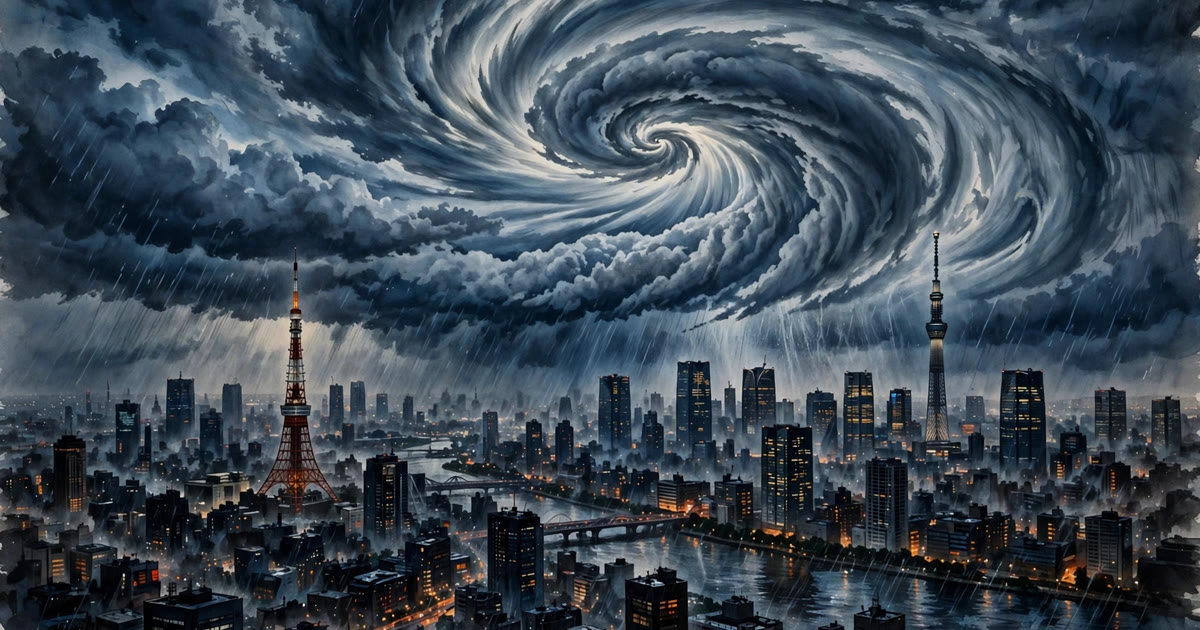
A Japan weather forecast is essential reading for anyone living in or visiting the country, because Japan's weather changes fast and varies enormously from Hokkaido's snowfields to Okinawa's subtropical coast. A single archipelago spans several climate zones, and the same week can bring cherry-blossom sunshine in Tokyo, heavy rain in Kyushu and a typhoon warning in the south. Learning to read the official forecast — and, just as importantly, the warning levels behind it — turns weather from a source of anxiety into a planning tool.
This Japan weather forecast guide explains where to get reliable forecasts, how the Japan Meteorological Agency grades typhoons and heavy rain, what each alert level means for your plans, and how the seasons shape travel. It also covers practical steps: what to pack, when to change train or flight plans, and what to do if a warning is issued while you are out. Forecasts change, so treat this guide as your framework and always check the live forecast before you go.
Japan Weather Forecast: Where to Get a Reliable Forecast
The Japan Meteorological Agency, known as JMA, is the authoritative source for a Japan weather forecast, and its website and app publish forecasts, radar, typhoon tracks and warnings in English as well as Japanese. Commercial weather apps and travel sites repackage JMA data with friendlier interfaces, but when a storm is approaching, go straight to the official source: third-party apps can lag, simplify warning levels or show different model outputs. For hyper-local planning, check the forecast for your exact city rather than a regional summary — Tokyo and the mountains an hour west can differ by ten degrees and by rain versus snow.
A Japan weather forecast typically shows temperature highs and lows, precipitation probability, wind speed and direction, and, in winter, snowfall amounts. Precipitation probability deserves special attention: a 50 percent chance of rain in Japan often means rain somewhere in the area during the period, not a coin flip over your head, so pack a compact umbrella whenever the figure passes 30 percent. In summer, also watch the heat index and heatstroke warnings, which JMA and local governments issue on dangerously hot days, especially for children, older people and anyone working outdoors.
Japan Weather Forecast by Season: What to Expect
Spring brings mild temperatures and cherry blossoms, but also changeable weather, with warm days interrupted by cold snaps and rain fronts sweeping from the west. Early summer brings the rainy season, called tsuyu, when humid, overcast days and prolonged rain affect most of the country except Hokkaido, usually from June into July. A Japan weather forecast during tsuyu will show days of continuous drizzle rather than dramatic storms, so waterproof shoes and a rain jacket matter more than a storm plan.
Summer after the rainy season is hot and humid, with temperatures frequently above 30 degrees and sudden afternoon thunderstorms, followed by typhoon season from roughly July to October. Autumn is widely considered the most comfortable season, with clear skies, cooler air and autumn leaves, although early autumn still carries typhoon risk. Winter brings dry, sunny cold to Pacific-side cities like Tokyo and Osaka, heavy snow to the Sea of Japan side and Hokkaido, and powder conditions that draw skiers from around the world. Knowing which season you are in is the first step to reading any Japan weather forecast sensibly.
Japan Weather Forecast and Typhoon Warnings Explained
Typhoons are the most serious weather hazard in a Japan weather forecast, and JMA tracks each storm with a forecast track, intensity category and wind radii. JMA describes typhoons by intensity — from a basic typhoon up to a violent typhoon — based on maximum sustained wind speeds, and publishes the expected track with a cone of uncertainty that widens further into the future. Do not fixate on the centre line: damaging winds, heavy rain and storm surge can extend far from the centre, and the storm's path can shift. Check updates at least twice a day when a typhoon is within a few days of your area.
Alongside typhoon information, JMA issues warnings and advisories for heavy rain, floods, storm surges, high waves and strong winds. A warning means conditions are expected to reach dangerous levels and you should take protective action, while an advisory means caution is needed. Municipalities add evacuation information on a five-level scale, where level 3 advises older people and others who need more time to evacuate, level 4 orders evacuation for everyone in the affected area, and level 5 means a disaster may already be happening and you should take immediate action to protect your life. Understanding this scale before a storm arrives is far better than learning it during one.
Japan Weather Forecast: Heavy Rain, Snow and Earthquakes
Heavy rain deserves as much respect as typhoons in a Japan weather forecast, because intense rainfall can trigger landslides and river flooding even without a named storm. JMA issues special warnings for heavy rain when rainfall far exceeds normal levels, and publishes real-time risk maps for landslides, inundation and flooding that show danger by neighbourhood. If you are in a mountain valley, near a river or in a low-lying area during prolonged heavy rain, move to higher ground early rather than waiting for water to arrive — roads can flood faster than forecasts suggest.
In winter, a Japan weather forecast for Hokkaido, Niigata, Nagano and other snow regions focuses on snowfall amounts, blizzard risk and avalanche warnings. Heavy snow can halt trains and close roads for hours, so build buffer days into winter itineraries and check transport operator updates alongside the forecast. One more distinction matters: JMA also issues earthquake and tsunami information, which is separate from weather warnings. A strong earthquake can trigger a tsunami warning even on a calm, sunny day, so visitors should know their nearest high ground and evacuation route regardless of the weather.
Japan Weather Forecast: Practical Tips for Travellers
For travellers, the smartest Japan weather forecast habit is a twice-daily check: once when planning the day and once in the evening for tomorrow. Save the JMA English pages and your train operator's status page before you travel, and set your phone to receive emergency alerts, which in Japan are broadcast to phones in affected areas even without a local SIM. If a typhoon warning covers your travel day, expect train suspensions and flight cancellations, contact your airline or hotel early, and avoid travelling into the storm's path to 'beat it' — services often stop before the worst weather arrives and resume only after safety checks.
Packing follows the forecast, not the season label. A compact umbrella, a light waterproof jacket and shoes you can walk in when wet cover most of Japan's rain; layers cover spring and autumn temperature swings; and in summer, sun protection, water and a plan for shade matter as much as rain gear. Finally, remember that a Japan weather forecast is a probability statement, not a promise — if conditions look worse than forecast, trust your eyes, follow local instructions and change plans early. The cost of a missed sightseeing day is small; the cost of ignoring a warning can be very large. If you want a cultural companion for indoor rainy days, see a beginner's guide to Japanese animation, and for trip protection, what travel insurance covers.
Sources: Japan Meteorological Agency (JMA); general guidance only — always check the latest official JMA forecast and local authority instructions before travelling.