
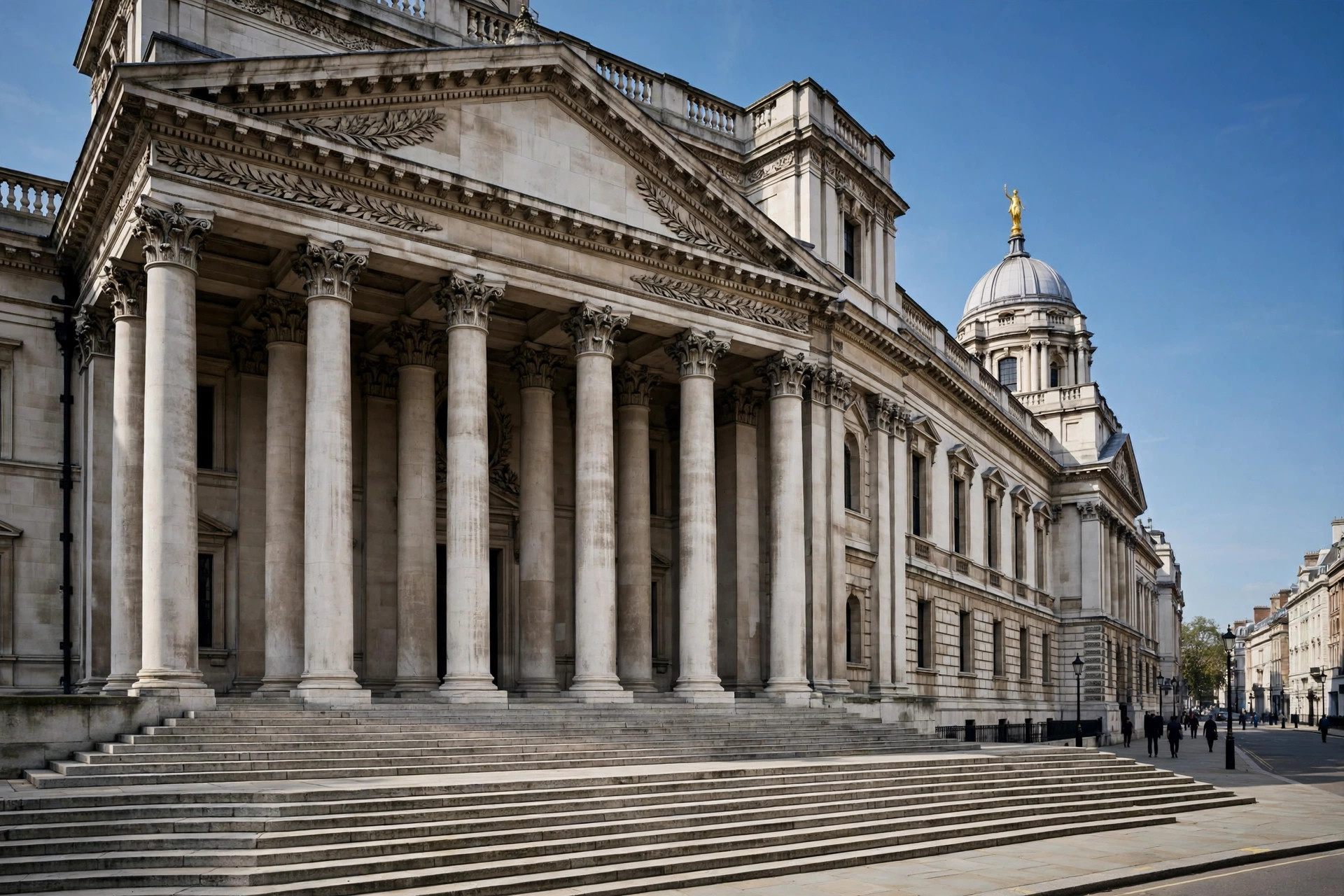
The Trinidad buggery law ruling arrived on Tuesday, 10 November 2026, from a courtroom in London. The Judicial Committee of the Privy Council ruled unanimously, 5–0, that sections 13 and 16 of Trinidad and Tobago's Sexual Offences Act 1986 cannot constitutionally apply to private, consensual sexual relations between adults of the same sex. Lord Sales delivered the judgment in the case of the Attorney General of Trinidad and Tobago v Jason Jones. It is the first time the Privy Council — which remains Trinidad and Tobago's final court of appeal — has ruled on laws of this kind, and the decision will be read far beyond the two islands.
The ruling ends a legal fight that began in 2017, reverses a Court of Appeal decision from 2025, and restores a High Court ruling from 2018. It also turns on a dry-sounding legal question — whether a 1986 law counts as "new" — that decided everything. What the court decided, why it decided it that way, and what it deliberately did not decide are all worth understanding separately.
What the Trinidad buggery law ruling decided
Section 13 of the Sexual Offences Act 1986 makes buggery an offence, defined as sexual intercourse per anum by a male person with a male person, or by a male person with a female person. Section 16 makes serious indecency an offence, but excludes acts done in private between a husband and wife, or between a man and a woman who are both at least sixteen and both consent. Same-sex couples get no such exclusion. The result, in the Board's words, is that these sections criminalise private, consensual sexual relations between same-sex couples.
The Board held that sections 13 and 16 infringe the constitutional right to respect for private and family life, and must be read so that they do not criminalise private, consensual sexual relations between adults of the same sex. The court's conclusion, quoted by Global Voices, was that the two sections had been shown by Jason Jones "not to be reasonably justifiable in a society that has a proper respect for the rights and freedoms of the individual." Under the provisions as they stood, a person convicted of buggery faced up to five years in prison, while serious indecency carried a two-year sentence, according to AZP News.
The five judges — Lord Reed, Lord Briggs, Lord Sales, Lord Burrows and Lady Rose — were unanimous. The judgment was delivered by Lord Sales. Outright International, which welcomed the decision, noted that it was the first time the Privy Council had ruled on the constitutionality of laws of this kind. The case reference is [2026] UKPC 38.
The savings clause question at the heart of the case
The decisive argument was about the savings clause. Trinidad and Tobago's constitution protects some old laws from constitutional challenge — laws that existed before independence and were carried over. The state argued that sections 13 and 16 were protected in that way, because they echoed much older offences. The Court of Appeal accepted that argument in March 2025, holding that much of the law was protected because it echoed statutes older than the constitution.
The Privy Council disagreed. It found that sections 13 and 16 of the 1986 Act were entirely new laws: they went beyond repealing and re-enacting, with modifications, the old provisions in sections 60 to 62 of the Offences Against the Person Act 1925. Because Parliament had written the offences out again in its own hand in 1986, the new provisions could not hide behind the savings clause. As one analysis of the judgment put it, old prohibitions do not get to hide from constitutional scrutiny once Parliament has written them out again. The Board also rejected the state's argument that the laws were protected by a special parliamentary majority under section 13 of the constitution.
That reasoning is why the ruling matters beyond Trinidad and Tobago. Several Commonwealth Caribbean states have similar savings clauses and similar laws, and the Board's approach — that a re-enacted law is a new law open to challenge — gives litigants in those countries a route the savings clause was thought to block. The judgment also recognised same-sex partnerships under the protection of "family life," affirming that constitutional rights must be effective "in the present day, not in the past," according to AZP News.
The long road to the Trinidad buggery law ruling
Jason Jones, a human rights defender from Trinidad and Tobago, challenged the two sections in 2017. In 2018, High Court Justice Devindra Rampersad ruled that sections 13 and 16 were unconstitutional — a landmark judgment that made headlines across the Caribbean. The state appealed, and on 25 March 2025 the Court of Appeal overturned the 2018 judgment, restoring the laws. Jones vowed to take the case to the Privy Council, and on 10 November 2026 — eight years and nearly seven months after the High Court ruling — the Board agreed with him and denied the Attorney General's cross-appeal.
The setting carries its own irony, noted by Global Voices: a colonial-era law was struck down by British law lords in London, the city whose Parliament first wrote laws like these for its colonies. Trinidad and Tobago still uses the Privy Council as its final court of appeal, as do most of the former British colonies in the Caribbean. For Jones, the wait was personal as well as legal — he was born in Port of Spain in 1964 and has been openly gay since he was 16, according to reporting on the judgment — and the ruling closes a case that has defined almost a decade of his life.
What the Trinidad buggery law ruling does not do
The ruling is narrower than some headlines suggest, and the limits are part of the story. It does not establish marriage equality in Trinidad and Tobago, and it does not automatically introduce comprehensive protections against discrimination. The judges decided the criminal question only: whether the state can prosecute private, consensual sexual relations between adults of the same sex. Other questions — about marriage, about discrimination in employment or services, about legal recognition of same-sex relationships — were not before the court and remain undecided.
The remedy is also unfinished. The judges have delivered the substantive judgment, but the precise wording of the final legal order is still to be settled: the Board will take further written submissions before making its final order, though its provisional view is that the High Court's 2018 order should stand. Until that order is issued, the exact form of the fix — whether sections 13 and 16 are read down, struck out in part, or reworded — remains open.
For the Caribbean, the precedent is the point. The Privy Council has now said, for the first time, that laws criminalising private consensual same-sex intimacy cannot stand where a constitution protects private and family life — and that re-enacting an old law does not shield it. Campaigners in other jurisdictions will cite Jones. Governments in those jurisdictions will now have to decide whether to wait for their own case or act first. Trinidad and Tobago's twin islands, known to many visitors for Carnival and for their music and food, have just produced a judgment that could reshape the law across the region — and the next chapter will be written in the courts and parliaments that follow it.