
Trinidad soca music is the sound of Carnival, a fast, joyful fusion built for dancing in the streets, and it is inseparable from the island twin-island culture that created it. Born from calypso and African, Indian, and European influences, soca powers the Parade of the Bands, fills fetes for months, and carries Trinidad identity around the world through diaspora communities and global Caribbean festivals.
This guide traces Trinidad soca music from its roots to its modern stars, explains its close cousin chutney music, and explores steelpan, calypso, and the cultural world that makes Trinidad music unlike any other. Whether you are a new listener or a Carnival veteran, the story behind the sound deepens every song.
Origins of Trinidad Soca Music
soca emerged in the 1970s when Lord Shorty, later Ras Shorty I, fused calypso with East Indian musical elements and created a new rhythm he called soca, short for soul of calypso. The new sound was faster and more dance-oriented than traditional calypso, with driving percussion, brass, and call-and-response vocals designed for street parades. It quickly became the dominant Carnival music, since its tempo matched the energy of masqueraders dancing for hours.
Earlier traditions shaped the island soca sound profoundly. Calypso provided its witty lyricism and social commentary, African drumming supplied its rhythmic foundation, and Indian instruments such as the dholak and harmonium contributed melodic colour. That fusion mirrors Trinidad society itself, where African, Indian, European, Chinese, and Middle Eastern communities have blended for generations, and soca remains a living symbol of that mixing.
Power Soca, Groovy Soca and Trinidad Soca Music Styles
Modern soca divides broadly into power soca and groovy soca, categories formalised in the Soca Monarch competition. Power soca is fast, usually above 150 beats per minute, built for jumping and waving in Carnival bands, with anthemic choruses and high-energy drops. Groovy soca is slower and more melodic, suited to wining, radio play, and parties beyond Carnival season, and it often crosses over to international audiences more easily.
Within the island soca sound, substyles keep evolving: Afrosoca blends African pop rhythms, soca-house merges electronic dance production, and traditional soca keeps brass and live-band arrangements central. Producers release hundreds of new soca songs each Carnival season, competing for the Road March title, awarded to the song played most often at judging points during the parades. That competition drives relentless creativity and keeps the genre fresh year after year.
Chutney Music and Indo-Trinidadian Culture
Chutney music, the Indo-Trinidadian cousin of soca, blends Bhojpuri folk songs with soca rhythms, English lyrics, and modern production. Artists such as Sundar Popo pioneered chutney in the twentieth century, singing in a mix of Hindi and English about village life, love, and humour, and the genre has since grown into chutney-soca, a faster, Carnival-ready fusion that dominates its own competitions and fetes.
Chutney-soca stars such as Rikki Jai, Drupatee Ramgoonai, and Ravi B have carried the sound to diaspora audiences in North America, Europe, and beyond, while chutney competitions during Carnival season draw huge crowds. For many Indo-Trinidadians, chutney music is a core expression of identity, preserving language and memory while embracing modern Caribbean pop. Together, the island soca sound and chutney tell the story of a nation built from migration and mixing.
Steelpan, Calypso and the Roots of Trinidad Soca Music
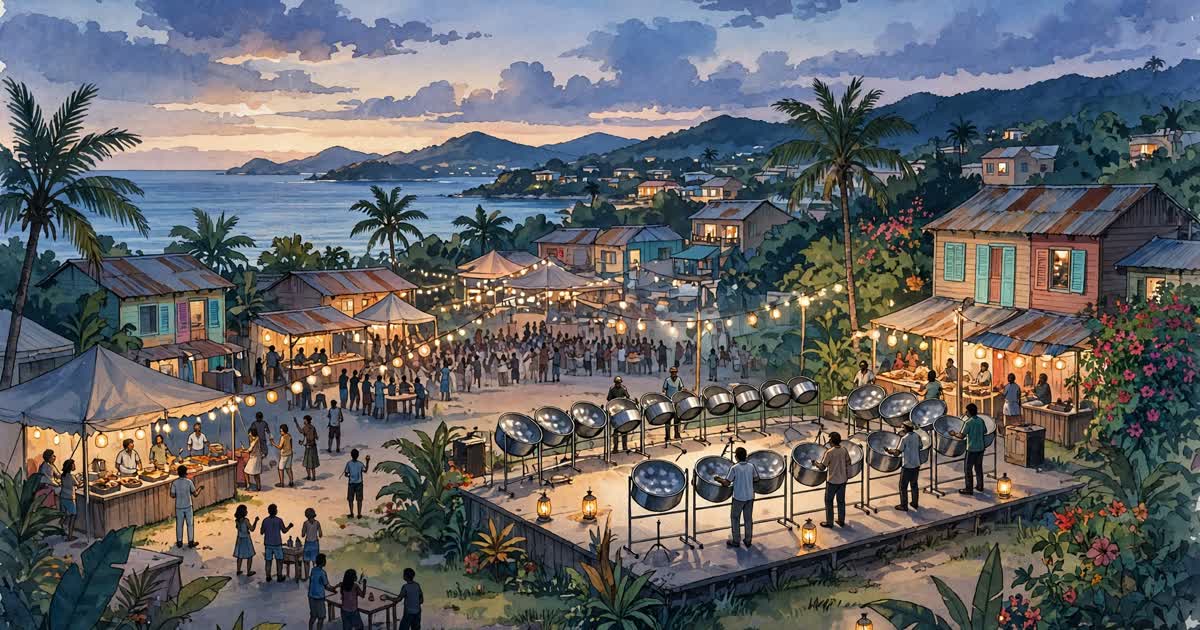
Steelpan, the national instrument of Trinidad and Tobago, is inseparable from Trinidad soca music and Carnival. Invented in the twentieth century when banned African drums were replaced by discarded oil drums tuned into melodic instruments, the steelpan is the only acoustic instrument invented in that century. Panorama competitions showcase steel orchestras performing complex arrangements of soca and calypso, proving that a so-called street instrument commands serious musicianship.
Calypso remains the elder tradition behind Trinidad soca music, with its kaiso roots in West African griot storytelling and French Creole carnival traditions. Calypsonians such as Lord Kitchener, Mighty Sparrow, and Calypso Rose used wit, double meaning, and social critique to comment on politics and daily life, and their songs remain standards. Modern soca artists still honour calypso through Dimanche Gras and calypso tents, keeping the lineage alive within Carnival.
Trinidad Soca Music Artists to Know
Essential Trinidad soca music artists span generations. Machel Montano, the genre most enduring superstar, has dominated Carnival for decades with hits that become road marches and global anthems. Bunji Garlin brought raw energy and international collaborations, Kes the Band blends soca with pop and rock for broad appeal, and younger stars such as Voice, Nailah Blackman, and Patrice Roberts carry the sound to streaming-era audiences.
Beyond the headliners, Trinidad soca music thrives through producers, songwriters, and session musicians whose riddims shape each season. Women artists have grown ever more prominent, from Calypso Rose pioneering days to modern soca queens commanding fete stages. Exploring artist catalogues beyond the current season hits reveals the depth of Trinidad soca music, from classic 1980s anthems to experimental fusions released this year.
Where to Hear Trinidad Soca Music Live
The best place to hear Trinidad soca music is Trinidad itself during Carnival season, when fetes, calypso tents, Panorama, and Soca Monarch fill January to March with live performances. Outside Carnival, soca plays in clubs, bars, and beach parties year-round, and radio stations keep new releases in rotation. The Queen Park Savannah, the National Academy for the Performing Arts, and community venues host concerts across the year.
Globally, Trinidad soca music travels with the diaspora to Caribbean carnivals in London, Toronto, New York, and Miami, where Trinidad artists headline and soca sets anchor street parades. Streaming playlists and soca radio stations make the genre accessible anywhere, but live Trinidad soca music, with its call-and-response, flag-waving, and collective dancing, remains an experience recordings can only hint at. Plan a Carnival trip, or find your nearest Caribbean festival, to hear it properly.
For related guidance, see Play Whe results Trinidad guide, Grenada beaches and sailing guide, Barbados weather and hurricane season guide.
Sources: National Carnival Commission of Trinidad and Tobago, Trinidad and Tobago Music Company, Caribbean music histories and artist archives.