
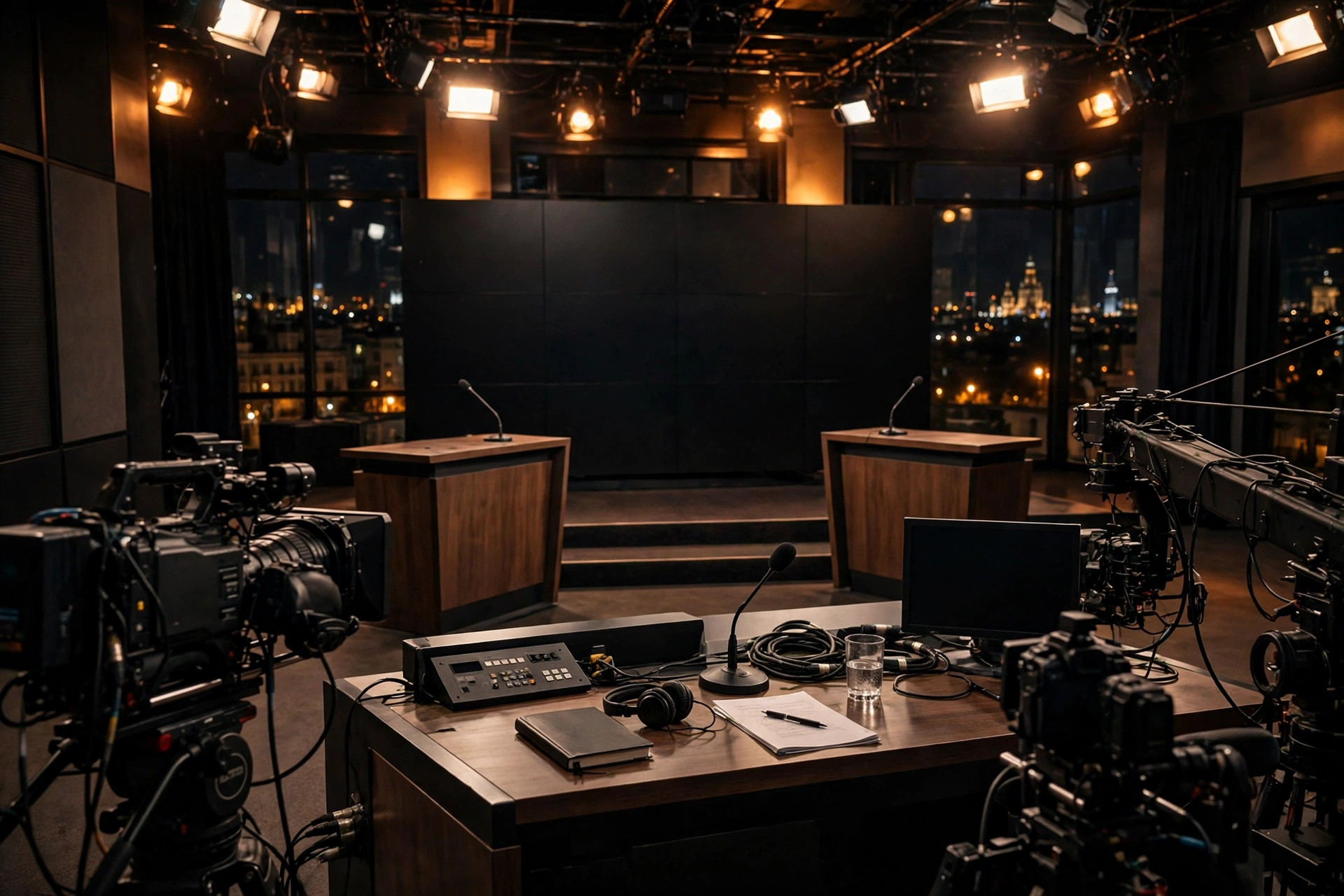
The Sánchez Feijóo debate, the only head-to-head meeting between the two main candidates before Spain's general election on 29 November, produced its defining moment on Thursday 19 November 2026, when Pedro Sánchez apologised to the families of the victims of the Adamuz and Urda rail crashes after Alberto Núñez Feijóo challenged him to do so. The debate, held at 22:00 CET in Studio A at Madrid Content City and organised by the Academia de la Televisión with María Casado as moderator, ran through five blocks — housing, economy and taxation, social policy and public services, corruption and democratic regeneration, and migration and foreign policy. Feijóo opened the Sánchez Feijóo debate and Sánchez closed it, and across the evening the two men set out sharply different accounts of Spain's economy, its pensions and its public life.
How the Sánchez Feijóo Debate Opened in Madrid
The exchange that most viewers will remember came when Feijóo turned to the two rail accidents at Adamuz in Córdoba and Urda in Toledo, in which 115 people died. He challenged the prime minister to apologise to the families of the victims, and he criticised Sánchez for not attending the funeral at Urda and for attending a PSOE rally two days later. Sánchez accepted the challenge directly. "If I have to ask for apologies and forgiveness from the families of the victims of the accident in Adamuz and of Urda, of course I will ask," he said. It was the most personal moment of the night, and it came in the opening stages, before the debate settled into its long arguments over pensions, wages and tax.
The setting underlined how much was at stake. This was the only direct confrontation between Sánchez, leader of the PSOE, and Feijóo, leader of the Partido Popular, before voters go to the polls on 29 November — a debate that had been previewed earlier in the day as the night's decisive encounter. The Academia de la Televisión organised the event, and María Casado moderated from Studio A at Madrid Content City. With Feijóo opening and Sánchez closing, each man had the chance to frame the night on his own terms, and each used it. Coverage afterwards split along familiar lines: centre-left outlets stressed Sánchez's discipline under pressure, while right-leaning coverage framed him as overwhelmed by Feijóo's attacks. No official winner was declared, and none should be claimed from the coverage alone.
The five blocks gave the Sánchez Feijóo debate a clear shape. Housing came first, then the economy and taxation, then social policy and public services, then corruption and democratic regeneration, and finally migration and foreign policy — the last of which comes as five European nations prepare for peace talks in Dublin. That order meant the night moved from the cost of living to the condition of Spanish democracy itself, and the tone hardened as it went on.
The Apology That Defined the Night
The apology in the Sánchez Feijóo debate mattered because it was not offered in the abstract. Feijóo named the two accidents and the two places — Adamuz in Córdoba and Urda in Toledo — and put a specific demand to the prime minister: apologise to the families. He also tied the demand to Sánchez's own conduct, criticising him for not attending the funeral at Urda while attending a PSOE rally two days later. Sánchez's answer accepted the demand in full, and his words were among the most quoted of the night.
In the Sánchez Feijóo debate's corruption and democratic regeneration block, Feijóo pressed Sánchez on the state of public life, in line with the aggressive approach that several outlets noted in their coverage of the evening. Particle News described Sánchez as keeping calm while Feijóo launched an aggressive assault, and that contrast — a challenger pressing hard and a prime minister holding his line — ran through much of the debate. The apology, though, cut across the partisan framing: it was a moment in which the challenger set the terms and the prime minister met them, in front of a national audience, ten days before the election.
Pensions, Wages and Tax: The Policy Clash
If the apology was the Sánchez Feijóo debate's most human moment, pensions were its most concrete policy argument. Sánchez proposed a constitutional reform to index pensions to the consumer price index, a change that would write the link between pensions and inflation into Spain's constitution. He said the average pension had risen by about €6,000 since 2018, and he pointed to a Social Security Reserve Fund of €5,000 million as evidence that the system could be sustained. The proposal was designed to present the PSOE as the guarantor of pensioners' purchasing power, and to force Feijóo to say where he stood.
In the Sánchez Feijóo debate, Feijóo answered with a different set of numbers. He said Social Security runs a deficit of €100,000 million, and he told Sánchez that he "has no votes even to approve the Budgets" — a reminder that the prime minister governs without a parliamentary majority for his spending plans. On the minimum wage, Sánchez proposed a law under which the SMI would rise every year until it reached 60% of the average wage, and he challenged Feijóo to back the link. Feijóo did not clarify whether he backs the 60% link, though he said he favours raising the minimum wage. That gap — a specific commitment from one side and a general statement of support from the other — is likely to be picked over in the days before the vote.
Tax in the Sánchez Feijóo debate produced a similar divide. Sánchez said 10 million citizens had benefited from income-tax cuts, and he also proposed taxing vulture funds. Feijóo proposed restoring zero VAT on food while Spanish inflation stays above the eurozone average, a measure aimed directly at household shopping bills — the same cost-of-living pressure that brought 106,000 protesters onto the streets in France on 14 November, the fifth Saturday in a row, according to the Interior Ministry. On housing, Sánchez asked Feijóo not to repeal the Housing Law, framing the law as a protection that the Partido Popular would remove — a clash that follows the PSOE's pledge to spend 1% of GDP on social housing. Each of these exchanges followed the same pattern: Sánchez defending his government's record with figures, Feijóo attacking it with his own.
What the Sánchez Feijóo Debate Means for the 29 November Vote
The polls published before the Sánchez Feijóo debate suggest a tight race with the Partido Popular ahead. A Sigma Dos poll for El Mundo, conducted between 11 and 16 November with 3,759 interviews, put the PP at 30.7%, worth between 123 and 129 seats. A 16-poll average put the PP at 31.4%, the PSOE at 27.0%, Vox at 19.0% and Frente Amplio at 6.2%. Several polls show the PP and Vox together above the absolute majority of 176 seats in the 350-seat Congress. Those figures frame the stakes: Sánchez needs to close a gap of roughly four points, while Feijóo needs to hold his lead and keep a workable majority in reach.
Whether the Sánchez Feijóo debate can move those numbers is an open question. The apology gave Sánchez a moment of visible humility, and his pension proposal gave him a concrete promise to carry into the final ten days. Feijóo, for his part, kept Sánchez on the defensive over the rail crashes, the Social Security deficit and the absence of approved budgets, and he put the prime minister's record under sustained attack. Post-debate coverage split along partisan lines, which suggests that viewers largely saw what they expected to see — but in a race this close, even a small shift in the final days could decide the outcome. The next test comes at the ballot box on 29 November.