
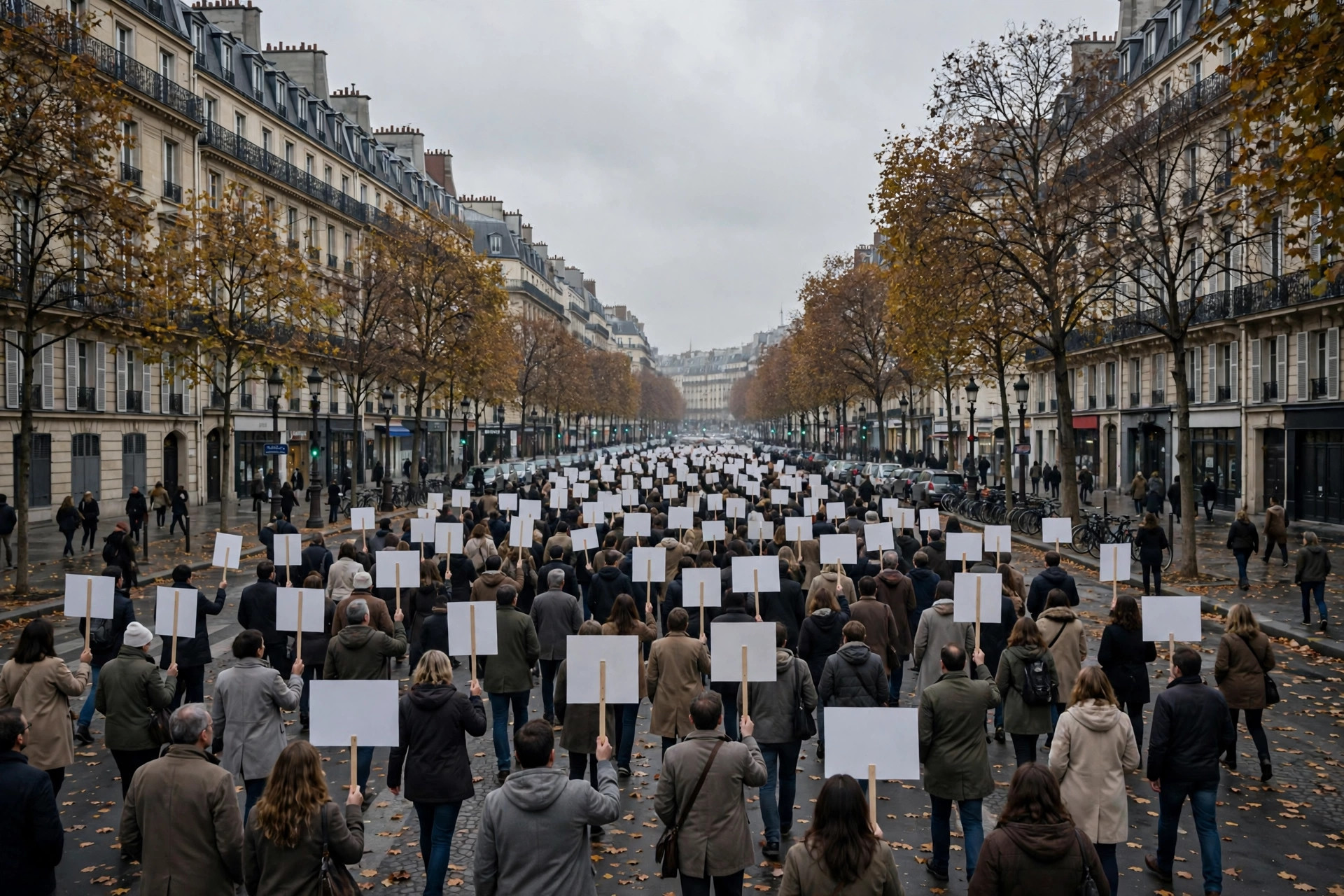
The France cost of living protests reached a fifth consecutive weekend on Saturday 14 November 2026, with the Interior Ministry counting 106,000 marchers across the country, including 24,000 in Paris. The figure was down from 146,000 the previous weekend, but the movement showed no sign of winding down. Unions have called a strike for Tuesday 17 November after rejecting the government's proposed 0.6% rise in the minimum wage, which they dismissed as "crumbs". Police detained 219 people, according to the Interior Ministry, and 70,000 police officers and gendarmes were deployed nationwide. Tear gas was used in Paris, Bordeaux and Nantes. Student unions put the turnout far higher, at about 200,000, and that gap between the official count and the organisers' count has become part of the story itself.
France cost of living protests: how the fifth weekend unfolded
Demonstrations took place in cities across France on Saturday 14 November 2026, the fifth Saturday in a row of nationwide protests. Interior Minister Laurent Nuñez said 50 to 60 marches were expected around the country, according to France 24, while the Yellow Vests coordination group, which has helped organise the demonstrations since 17 October, had listed 338 planned events on its website by Friday afternoon. In Paris, the main march left Place de la République at 1pm and headed towards Place de la Nation via Bastille, a route planned so that families could leave before the dispersal. Police in the capital had forecast 30,000 to 60,000 participants, including 300 to 600 people considered high-risk, France 24 reported. The marches were organised by Yellow Vest groups, students and education unions, and the crowds chanted against declining affordability, the government, police violence and poor conditions in schools. Tear gas was fired at demonstrators in Paris, and local authorities also used tear gas in Bordeaux and Nantes. The Interior Ministry said the situation was broadly under control, and 219 people were detained across the country.
Why the turnout figure is disputed
The two counts of Saturday's turnout do not agree, and neither side has backed down. The Interior Ministry put the national total at 106,000, with 24,000 in Paris. Student unions put the national total at about 200,000, with nearly 100,000 in Paris, according to reports of the day. The gap is not new — organisers' counts have run higher than the ministry's at every stage of this movement — but it matters because the trend is now part of the argument. On the ministry's count, turnout fell by about 40,000 from 146,000 the previous weekend. On the unions' count, the movement is still drawing crowds on the scale of its earlier weekends. Both figures were reported side by side in coverage of the day, and the ministry's figure is the one used for comparison with the previous weekend. What is not in dispute is the direction on the official count: five weekends in, the marches are smaller than they were, while the organisations behind them insist the support is still there. The disagreement over numbers is now a regular feature of French protest reporting, and it leaves the public with two very different pictures of the same Saturday.
From school conditions to a wider cost-of-living movement
The protests began in mid-September 2026 over conditions in schools, and they have widened since then into a broader protest about the cost of living. France has been rocked by school blockades and protests for more than a month, Euronews reported, and the fifth weekend's marches carried a long list of grievances: rising prices, school funding, child protection and a proposed bill giving police more legal cover when using firearms. The Yellow Vest movement, which began in late 2018 over fuel prices, has joined the marches from the start, alongside students and education unions. The core of the movement centres on socio-economic frustration about inflation and the standard of living, issues that have fuelled weekly unrest since the autumn. The demonstrations are aimed squarely at the government of President Emmanuel Macron, and protesters have chanted against the government itself as well as against declining affordability and police violence. The movement has now lasted five consecutive weekends, a run that shows how a protest that started in schools has become a weekly fixture of French public life.
France cost of living protests: the Tuesday strike and the 0.6% wage offer
The next test for the movement comes on Tuesday 17 November, when unions have called another day of strike action. The trigger was the government's promise to raise the minimum wage by 0.6%, an offer the unions rejected as inadequate, calling it "crumbs". The strike call moves the protest from the streets at the weekend into workplaces on a weekday, and it follows a pattern already seen in this movement: Euronews noted that the largest protest in recent weeks took place on a Thursday, during a union-led strike, rather than on a Saturday. That matters because it suggests the unions, rather than the Saturday marches alone, may now be the sharper instrument. The 0.6% figure is small in itself, but it has become a symbol in the dispute — for the unions, proof that the government is not taking the cost-of-living complaint seriously, and for the government, a figure it evidently regards as affordable. The Tuesday strike will show whether the anger that brings tens of thousands onto the streets at weekends can also stop work on a weekday.
The numbers behind the fifth weekend
The figures behind Saturday tell the story in brief. The Interior Ministry counted 106,000 marchers nationwide, including 24,000 in Paris, down from 146,000 the previous weekend. Student unions counted about 200,000 nationwide, including nearly 100,000 in Paris. Police detained 219 people, and 70,000 police officers and gendarmes were deployed across the country, a level similar to that used for the previous three weekends, according to France 24. Between 50 and 60 marches were expected by the authorities, while the Yellow Vests coordination group had listed 338 planned demonstrations. The protests have now run for five consecutive weekends since mid-September, and the unions' next move, a strike on Tuesday 17 November, is already fixed. Taken together, the numbers describe a movement that is smaller on the official count than it was a week ago, still large in absolute terms, and now shifting its focus from Saturday marches to a weekday strike over a 0.6% pay offer.
What happens next
The immediate date to watch is Tuesday 17 November, when the unions' strike will test whether the movement can carry its weekend energy into the working week. Organisers have not yet said whether a sixth Saturday of protests will be called, and no date for a further round has been given. The wider political backdrop is also moving: the protests are unfolding ahead of next year's presidential election, and the far right is leading the polls for that election, according to Reuters, which gives the government a reason to want the unrest settled and the opposition a reason to keep the cost-of-living question in the headlines. For now, the movement's demands remain the same ones it has carried since mid-September — help with the cost of living, better funding for schools, and a response to the police bill — and the government's answer, a 0.6% minimum-wage rise, has been rejected outright. Whether the Tuesday strike or a sixth Saturday follows will show whether this fifth weekend was a peak that has passed, or a pause before the next round. Readers can follow related European developments in Europe's Ukraine peace talks in Dublin and Italy's fine against Meta.