
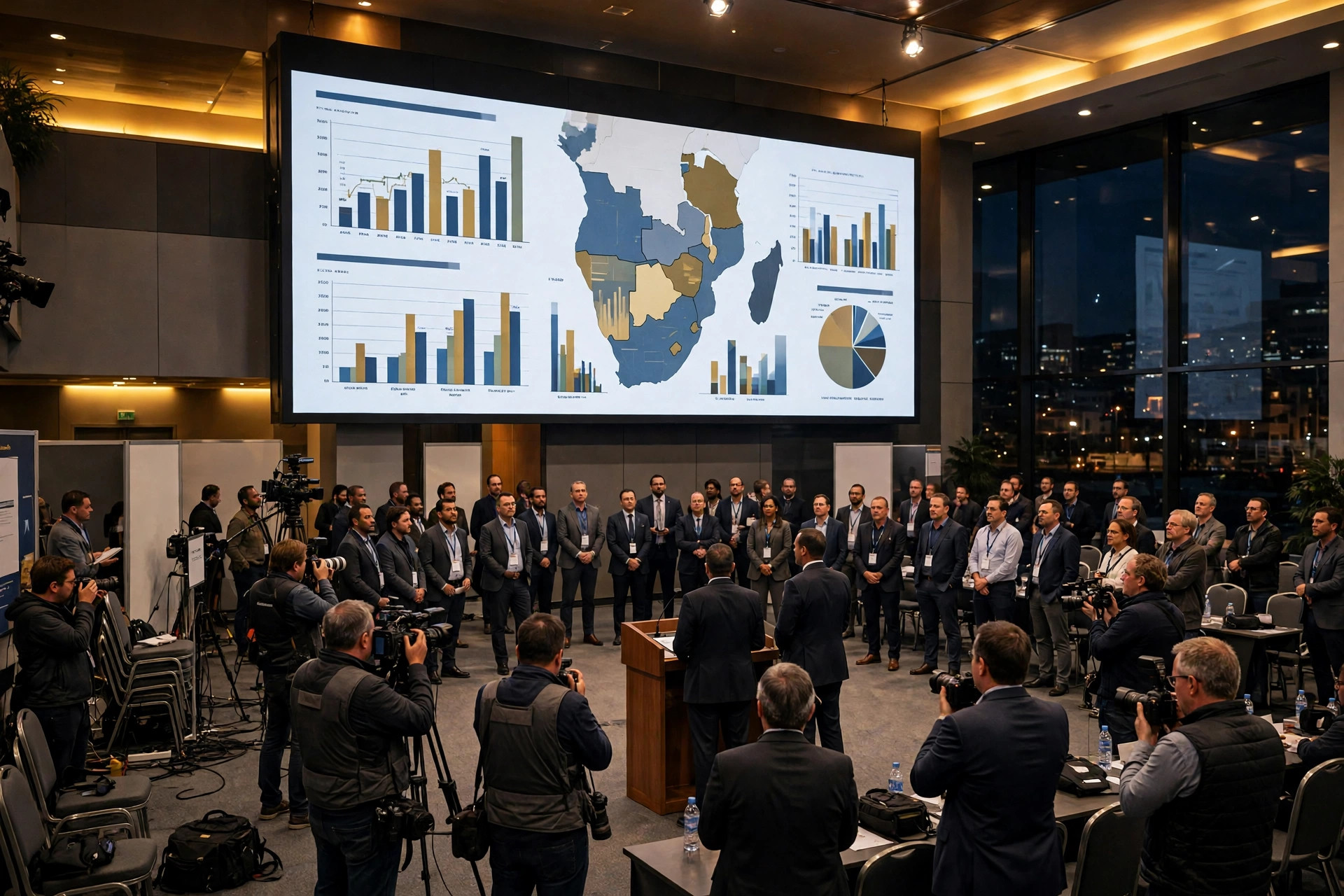
The South Africa election results 2026 are now final. On Sunday evening, 8 November 2026, the Independent Electoral Commission (IEC) formally declared the 2026 local government elections free and fair, closing the count for a vote that has redrawn the map of local power across the country. The declaration, delivered by IEC Chairperson Mosotho Moepya at the National Results Operations Centre at the Gallagher Convention Centre in Midrand, confirmed the African National Congress (ANC) at 30.76% of the vote and 3,246 council seats. That figure is the party's worst-ever election result, down sharply from about 45.6% in 2021, and it sets up a long period of negotiation before new councils can be formed. President Cyril Ramaphosa attended the declaration, underlining how much this municipal vote matters for the national picture.
The final numbers leave no single party in control of the story. The Democratic Alliance (DA) finished second with 24.64% of the vote and 1,695 seats, while uMkhonto weSizwe (MK Party) took 9.76% and 785 seats, the Economic Freedom Fighters (EFF) took 6.22% and 588 seats, ActionSA took 5.67% and 313 seats, and the Inkatha Freedom Party (IFP) took 4.69%. Other parties and independent candidates shared the remaining 22.97% of the vote. About 29.2 million voters were registered for the election, and about 14.9 million cast ballots, giving a turnout of 52%, up from 45.9% in 2021. More people voted, in other words, and they spread their votes more widely than ever before.
South Africa election results 2026: the national picture
The national picture in the South Africa election results 2026 is one of fragmentation. A total of 521 political parties and 636 independent candidates contested 10,526 council seats, and the final count shows that support is now spread across a much wider field than in past municipal elections. The ANC remains the largest party nationally, but its share has fallen far enough that it achieved outright control in only 53 municipalities and is the leading party in 128. The DA achieved outright control in 12 municipalities and is leading in 32. Only 74 of the 213 municipal councils produced a single-party majority, which means that most councils will need some form of agreement between parties before they can elect a mayor, pass a budget, or take the ordinary decisions that keep water, electricity, refuse collection, and roads running.
The scale of the change is clearest in the comparison with 2021. The ANC's move from about 45.6% then to 30.76% now is a fall of roughly fifteen percentage points in a single municipal cycle, and the IEC's final declaration makes it official rather than provisional. The earlier provisional piece on this site covered the first count as it came in; this article records the final declaration and the final figures. Turnout also moved in the other direction. At 52%, up from 45.9% in 2021, more registered voters took part, and the count of about 14.9 million ballots cast from about 29.2 million registered voters shows a contest that drew a larger share of the electorate even as it delivered a more divided result.
How the vote unfolded
Voting was held on Wednesday 4 November, with special voting on 2 and 3 November for voters who had arranged to cast their ballots early. The count then ran through to the formal declaration on the evening of Sunday 8 November at the National Results Operations Centre at the Gallagher Convention Centre in Midrand. IEC Chairperson Mosotho Moepya delivered the declaration, with President Cyril Ramaphosa in attendance, and the IEC's finding was that the elections were free and fair.
That finding matters because it is the formal seal on the result. An Elections Satisfaction Survey by the Human Sciences Research Council, carried out around the vote, found that 95% of voters were satisfied with IEC services and that 91% queued for no longer than 30 minutes. Those two figures describe the experience of voting itself: short queues for most people, and a high level of satisfaction with how the election was run. The survey does not change any seat count, but it gives context to the declaration of a free and fair election, and it helps explain why the result, however divided, has been accepted as the basis for forming councils.
There was one serious disruption to the count. The IEC ordered the result in ward 3 of Siyancuma Municipality, at Douglas in the Northern Cape, to be revoked, with a fresh vote to follow, after supporters stormed the counting station and destroyed ballot papers. That ward result will therefore be decided again, separately from the national declaration. The incident stands out precisely because the rest of the count proceeded to a formal declaration, and it is the one place where the IEC had to set a result aside and order voters back to the polls.
What the South Africa election results 2026 mean for the metros
The South Africa election results 2026 are sharpest in the big cities. The ANC failed to achieve an outright majority in any metro, which is a first of its kind in the final results and the clearest sign of how far the party's municipal support has fallen. In the metros, the largest party is now a local question rather than a national one. The DA is the largest party in Cape Town, Ekurhuleni, Johannesburg, Nelson Mandela Bay, and Tshwane. The MK Party came out on top in eThekwini, while the ANC came out on top in Buffalo City and Mangaung.
That spread has practical consequences. A metro council without a single-party majority cannot simply carry the programme of one party. It must find enough agreement across parties to choose a mayor and a speaker, to agree a budget, and to keep services running. The DA being the largest party in five metros, including Johannesburg and Tshwane, gives it the strongest starting position in those councils, but largest does not mean majority, and each of those councils will still need votes from other parties to function. In eThekwini, where the MK Party came out on top, and in Buffalo City and Mangaung, where the ANC came out on top, the same arithmetic applies: the leading party must negotiate, and the parties that finished behind it hold real bargaining power.
The position in the smaller municipalities is different in degree but not in kind. With the ANC in outright control in 53 municipalities and leading in 128, and the DA in outright control in 12 and leading in 32, there are many councils where the leading party is close to a majority and many where it is far from one. Only 74 of the 213 municipal councils produced a single-party majority. That single figure explains why the weeks after the declaration matter so much: in most of the country, the election decided who leads the negotiation, not who governs alone.
Why the ANC result matters
The ANC result matters because of what it ends. At 30.76% and 3,246 seats, the party that has led South African politics since the end of apartheid has recorded its worst-ever election result in a municipal contest, and it has done so while turnout rose. The fall from about 45.6% in 2021 is not a narrow loss in a few places. It is a national move, visible in the party's failure to win an outright majority in any metro and in its need to negotiate in most of the 128 municipalities where it leads.
The result also matters for the other parties, because each of them now has a clearer claim to a share of local power. The DA's 24.64% and 1,695 seats put it in second place nationally and in the leading position in five metros. The MK Party's 9.76% and 785 seats, in a municipal election, make it the third-largest party by vote share and the leading party in eThekwini. The EFF, at 6.22% and 588 seats, and ActionSA, at 5.67% and 313 seats, both hold seat totals that can decide a council where no party has a majority. The IFP, at 4.69%, and the other parties and independent candidates who shared 22.97% of the vote, add to a field in which small margins carry real weight. With 521 parties and 636 independent candidates contesting 10,526 seats, the ballot itself was crowded, and the final count rewarded breadth as well as size.
Readers following the wider story should also read our earlier coverage of the first count, South Africa municipal election results, and for a different recent vote, New Zealand election results with no winner in the preliminary count. For background on the services many of these councils touch, see our guide to SASSA social grants in South Africa.
Coalitions, councils and what happens next
What happens next is set by a timetable. Parties have 14 days to negotiate before new councils are formed, and that fortnight is when the final results turn into actual governments. In each council without a single-party majority, the parties must agree who will hold the mayoral chain, who will chair the committees, and how a budget can pass. Those talks will run council by council, because the arithmetic differs from place to place, and a deal that works in one metro may not work in another.
The 14-day window is short for the number of councils involved. With only 74 of 213 councils producing a single-party majority, most councils need an agreement of some kind, and the leading party in each place will have to decide whether to seek a formal coalition, a looser working agreement, or a vote-by-vote arrangement. The ANC, leading in 128 municipalities, faces that choice in the largest number of places. The DA, leading in 32, faces it in the metros where it is largest, including Cape Town, Ekurhuleni, Johannesburg, Nelson Mandela Bay, and Tshwane. The MK Party, leading in eThekwini, and the smaller parties whose seats can tip a vote, will be part of those conversations in the councils where their numbers matter.
One item on the calendar is already fixed: the fresh vote in ward 3 of Siyancuma Municipality at Douglas in the Northern Cape, ordered by the IEC after supporters stormed the counting station and destroyed ballot papers. That vote will be run again, and its result will decide that ward separately from the national declaration. Beyond that, the next steps are the council meetings themselves, where the negotiations of the next 14 days will be tested in public votes for mayors and speakers.
Key facts
The final national results are: ANC 30.76% and 3,246 seats; DA 24.64% and 1,695 seats; MK Party 9.76% and 785 seats; EFF 6.22% and 588 seats; ActionSA 5.67% and 313 seats; IFP 4.69%; and other parties and independents sharing 22.97%. About 29.2 million voters were registered, about 14.9 million cast ballots, and turnout was 52%, up from 45.9% in 2021. The ANC achieved outright control in 53 municipalities and is the leading party in 128; the DA achieved outright control in 12 and is leading in 32. Only 74 of the 213 municipal councils produced a single-party majority. The ANC failed to achieve an outright majority in any metro. The DA is the largest party in Cape Town, Ekurhuleni, Johannesburg, Nelson Mandela Bay, and Tshwane; the MK Party came out on top in eThekwini; the ANC came out on top in Buffalo City and Mangaung. Voting was held on Wednesday 4 November, with special voting on 2 and 3 November, and the IEC declared the elections free and fair on Sunday evening, 8 November 2026. A total of 521 political parties and 636 independent candidates contested 10,526 council seats. The Elections Satisfaction Survey by the Human Sciences Research Council found 95% of voters satisfied with IEC services and 91% queued for no longer than 30 minutes.
Sources
IEC (gov.za official declaration); Africa Daily; NOW in SA; Daily Investor. November 2026.