
Malaysia Rahmah cash aid is the centrepiece of the country's welfare system, a direct cash-transfer programme for lower-income households that sits alongside cashless food aid through MyKasih and a targeted fuel subsidy for eligible motorists. Together, these schemes touch millions of Malaysian families, and understanding how each one works — who qualifies, how payments arrive, and how to check your status — can make a real difference to a household budget. This guide explains all three in plain language.
Malaysia's welfare landscape changes regularly as budgets are revised, so this guide describes the established structure of each scheme and the most recent major design, with a clear warning: amounts, quotas and eligibility details shift between budgets. Always verify your own status on the official portals before acting on any figure quoted here.
Malaysia Rahmah Cash: Sumbangan Tunai Rahmah Explained
Malaysia Rahmah cash aid is delivered through Sumbangan Tunai Rahmah, universally known as STR, which replaced earlier cash-aid programmes as the government's main direct transfer to lower-income Malaysians. STR payments are made in phases through the year to eligible households and individuals, with amounts tiered by household income category and number of children, and additional payments for certain groups such as single parents and senior citizens. Applications and updates are handled through the MySTR portal, and payments are typically credited to bank accounts or made available for cash collection at Bank Simpanan Nasional branches for those without accounts.
Eligibility for Malaysia Rahmah cash aid centres on household income and household composition, with the B40 lower-income group as the main target and some support extending to the lower M40 middle-income group. Applicants must be Malaysian citizens, and the system cross-checks income and household data against government records, which is why keeping your MySTR profile, bank details and household information up to date matters so much. If your application is rejected, an appeal window usually follows each phase, with guidance on the documents needed to support your case.
Malaysia Rahmah Cash and MyKasih: Cashless Food Aid
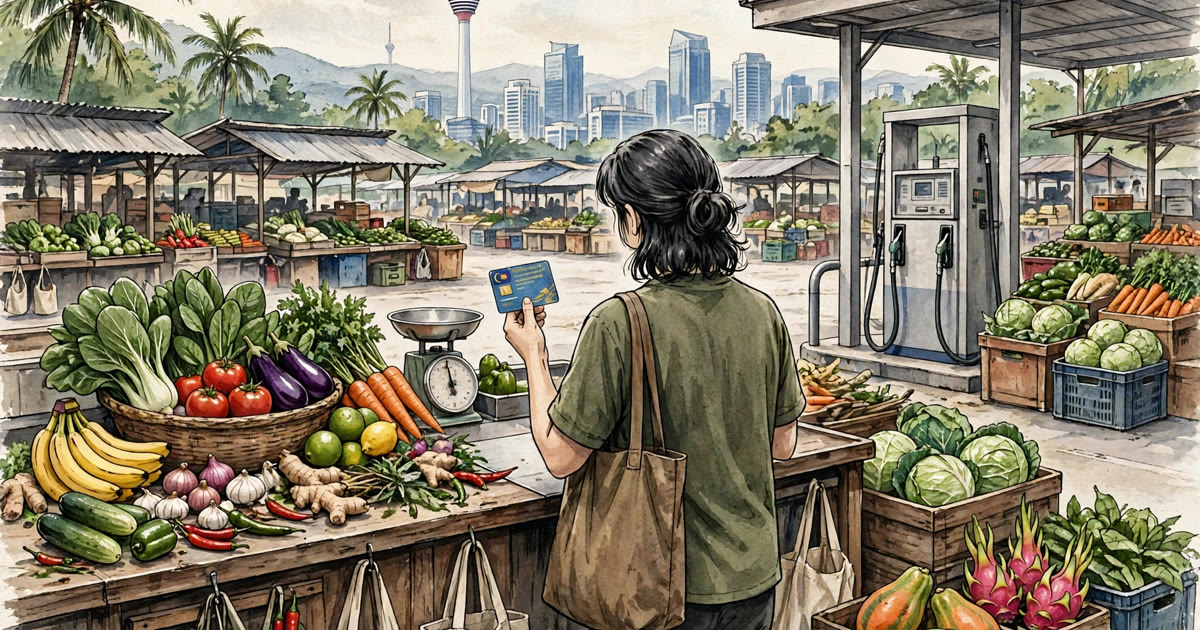
Alongside Malaysia Rahmah cash aid, the MyKasih programme delivers targeted assistance through a cashless system: eligible recipients receive a monthly credit on their MyKad, the national identity card, which can be spent on essential goods at participating shops. The SARA component — Sumbangan Asas Rahmah — extends this cashless aid to a wider group of STR recipients, allowing them to buy basic necessities such as rice, cooking oil, eggs and other essentials without handling cash. The design aims to ensure aid reaches household essentials directly, while supporting local retailers.
Using MyKasih and SARA is straightforward once you are enrolled: check your balance and participating outlets through the official channels, present your MyKad at a participating shop, and select eligible items up to your monthly credit. Balances do not roll over indefinitely, so recipients should use their monthly allocation within the period. The list of eligible items and participating retailers changes, so check the current list before shopping, and keep your MyKad safe — it is effectively your aid card, and losing it means a replacement process before you can spend again.
Malaysia Rahmah Cash, Fuel Subsidies and BUDI95
Fuel subsidies are the third pillar of Malaysia's welfare system, and their design has changed fundamentally in recent years. Under the BUDI Madani RON95 scheme, known as BUDI95, eligible Malaysian citizens pay a subsidised price for RON95 petrol — RM1.99 per litre in the scheme's design — while others pay the unsubsidised market price, which is revised weekly. Eligibility is verified at the pump or counter with a MyKad and an active driving licence, and citizens can check their eligibility and remaining monthly quota through the official Budi Madani portal, banking and fuel apps.
The BUDI95 monthly allocation for ordinary citizens has been set at a basic quota — initially 300 litres a month, later revised — with enhanced allocations for verified e-hailing, taxi and logistics drivers based on mileage. This targeted design replaced the old blanket subsidy, under which everyone, including visitors and high-income motorists, paid the same subsidised price. For households, the practical lesson is to check your BUDI95 status before assuming the subsidised price applies, track your monthly quota, and remember that exceeding the quota means paying market price for the rest of the month.
Malaysia Rahmah Cash: Checking Status, Appeals and Scams
Checking your status across Malaysia's welfare schemes is a single habit worth building. For Malaysia Rahmah cash aid, log in to the MySTR portal with your identity-card number to see your application status, payment phases and bank details. For MyKasih and SARA, check your MyKad balance through official channels or at participating outlets. For fuel subsidies, check BUDI95 eligibility on the Budi Madani portal by entering your identity-card number. If any status looks wrong, use the official appeal or enquiry channel for that scheme rather than third-party agents.
Scams are a serious problem around Malaysian welfare schemes, and the warning signs are consistent: messages claiming your STR payment is blocked and asking you to click a link, callers requesting banking passwords or one-time codes, and agents offering to 'speed up' applications for a fee. Official schemes never ask for your password or one-time code, never charge application fees, and only use official portals and hotlines. If a message looks suspicious, go directly to the official portal yourself rather than clicking the link, and report the scam to the authorities.
Malaysia Rahmah Cash: Getting the Most from Welfare Support
Finally, think of Malaysia Rahmah cash aid, MyKasih and fuel subsidies as one household-support system rather than three separate schemes. A family that qualifies for STR should check MyKasih and SARA eligibility too, since the programmes overlap by design, and a motorist who qualifies for BUDI95 should track the quota alongside the household budget. Keep your government records consistent — income, household members, bank account and address — because mismatches between databases are the most common cause of rejected applications and delayed payments.
Welfare schemes exist to ease the cost of living, and they work best when recipients stay informed: check official portals after each budget announcement, update your details when your household changes, and help older relatives navigate the online systems, since many eligible seniors miss out through digital barriers rather than ineligibility. Malaysia Rahmah cash aid and its sister programmes are substantial support — claiming them fully and correctly is worth the small effort of staying up to date.
Sources: Malaysian Ministry of Finance; Sumbangan Tunai Rahmah portal; Budi Madani portal; general guidance only — amounts, eligibility and quotas change, so verify current rules on the official portals.
Cash help stretches further with a plan: the 50/30/20 budget rule explains a simple split for everyday money, and saving money on groceries lists practical ways to cut the weekly shop.