
The Steinmeier Xi meeting in Beijing on 30 October 2026 was billed as the start of a new chapter in relations between Germany and China, and the language from both sides was warm. Chinese President Xi Jinping told German President Frank-Walter Steinmeier that China was prepared to write a new chapter in the two countries' all-dimensional strategic partnership, and he urged Germany to pursue what he called a "rational, pragmatic and friendly" policy towards China. Steinmeier, on a five-day state visit to China from 27 to 31 October, said Germany firmly upheld the one-China policy and was willing to work with China for global peace and development, to back free trade and World Trade Organization rules, and to resist protectionism and trade wars. But no new trade agreement was announced, and the disagreements that brought the two leaders together remain unresolved. This is what was actually said, and what it does and does not change.
Steinmeier Xi Meeting: What Was Said in Beijing
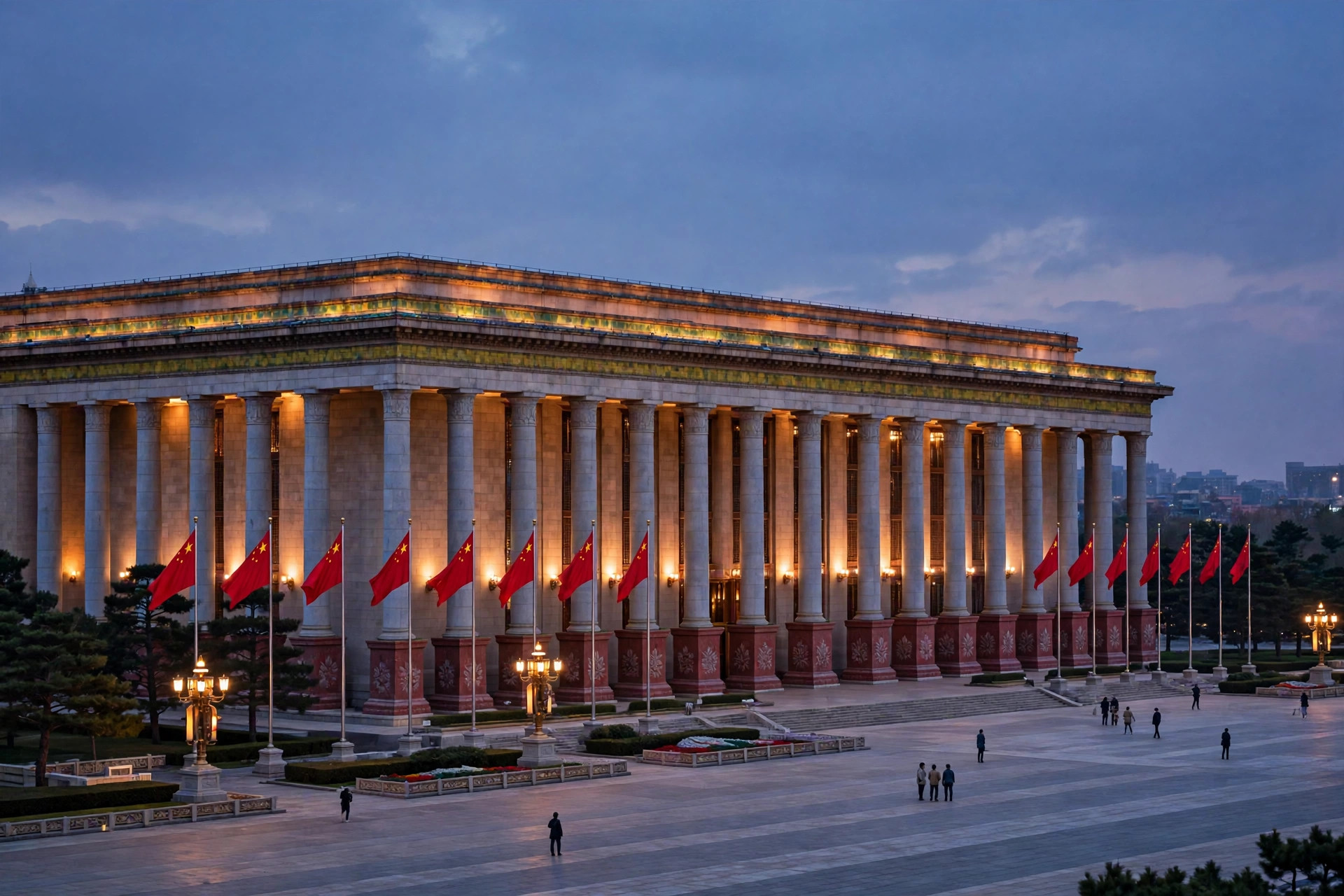
Xi received Steinmeier at the Great Hall of the People in Beijing on the afternoon of Friday 30 October. According to China's Foreign Ministry and the official Xinhua news agency, Xi said China and Germany ranked as the world's second and third largest economies, and he called for stronger communication and coordination to create a new model of cooperation marked by equality, mutual benefit and strategic stability. "This new paradigm sends a positive signal to the world: we favour openness over closure, and cooperation over confrontation," Xi told Steinmeier. He expressed the hope that Germany would view China's development and cooperation with China with an open and positive attitude, uphold a rational, pragmatic and friendly policy, and adhere to mutual respect and equal treatment. He also called for expanded cooperation in artificial intelligence, green technologies, digital industries and services, and said China was glad to see Germany play a greater role in European and international affairs.
Steinmeier's message was different in emphasis. He described the relationship as close, mutually beneficial and vibrant, but he stressed the need for China to help preserve the international order, referring to the rules-based global governance system based on the United Nations Charter. "We both bear responsibility for the international order and for the conditions under which states in this world maintain and shape their relations," he said. The day before the meeting, Steinmeier had warned that China's drive for greater economic self-sufficiency should not come at the expense of other markets. The two leaders were therefore talking about the same relationship from opposite sides of the same problem: China wants Germany to be open to Chinese development, and Germany wants China to play by rules that protect other countries' markets.
The Trade Deficit Behind the Warm Words
The meeting came against the backdrop of growing trade tensions between China and the European Union. Brussels has warned that it will use every possible means to remedy its widening trade deficit with China, and Germany, along with France, has proposed that the EU enact a new rapid-action measure against countries that harm it, with China likely in focus. The visit is part of a broader Chinese diplomatic push to shore up ties with European countries as Beijing faces mounting scrutiny over its trade practices, and analysts said the diplomatic efforts may do little to reverse increasingly sceptical views of China in Europe. Neither government announced a new trade agreement following the talks, leaving the broader disagreements between China and Europe unresolved.
There were, however, small practical signs of engagement around the visit. A day before Steinmeier arrived to visit Volkswagen's plant in the eastern city of Hefei, the German carmaker's China unit said it had obtained a permit to conduct Level 3 autonomous-driving road tests in the city, a key step towards its 2027 target for Level 3 readiness. The permit matters because it shows that, whatever the arguments about trade, German companies are still being allowed to do advanced work in China. For the economic background, see our report on China's third-quarter growth and our explainer on the fifth plenum, and for Germany's wider foreign policy, our report on the GCAP fighter programme.
Steinmeier Xi Meeting: The Ukraine Surprise
The most striking detail to emerge after the meeting was not about trade at all. In an interview with the German television channel ARD broadcast on 1 November, Steinmeier said he had personally raised the idea of a possible trilateral summit between the United States, Russia and China to discuss ending the war in Ukraine. According to Steinmeier, Xi was surprised by the reports of possible talks, and his face showed signs of irritation. Xi did not confirm that any such summit was being prepared. "In his view, there are no preparations on the horizon for a summit on Ukraine involving the US, Russia and China," Steinmeier said, relaying Xi's position. The Chinese side's official statement after the 30 October talks made no mention of a trilateral summit on Ukraine.
Steinmeier also said Xi had made it clear that European countries should be involved in negotiations to bring about a cessation of hostilities, and that Ukraine's future should not be discussed exclusively within a framework of the US, Russia and China. "He made it clear that this is a European conflict, in which Europeans must also be present at the negotiating table," the German president said. A meeting between the three leaders has been discussed in the run-up to the Asia-Pacific Economic Cooperation summit, scheduled for 18 to 19 November 2026 in Shenzhen, China, but as of 1 November there was no confirmation of a separate trilateral meeting, and Steinmeier did not rule out the possibility that the three leaders might meet during the APEC summit, while adding that the war in Ukraine should not be the subject of such a meeting.
What It Does — and Does Not — Change
The Steinmeier Xi meeting changes the tone of the Germany-China relationship more than its substance. The warm language — a new chapter, an all-dimensional strategic partnership, openness over closure — gives both governments something to point to, and it signals that neither side wants a break. But the structural disagreements are untouched: the EU's trade deficit with China is still widening, Brussels is still preparing measures to remedy it, and no trade deal was announced in Beijing. Germany's position, as Steinmeier stated it, is that China must help preserve the international order and that its self-sufficiency drive must not come at the expense of other markets. China's position, as Xi stated it, is that Germany should take a rational, pragmatic and friendly view of Chinese development. Those two positions can coexist in a single meeting, but they point in different directions, and the test will come in the months ahead: in the EU's trade measures, in the APEC summit in Shenzhen, and in whether the warm words of 30 October produce any concrete agreement at all.