
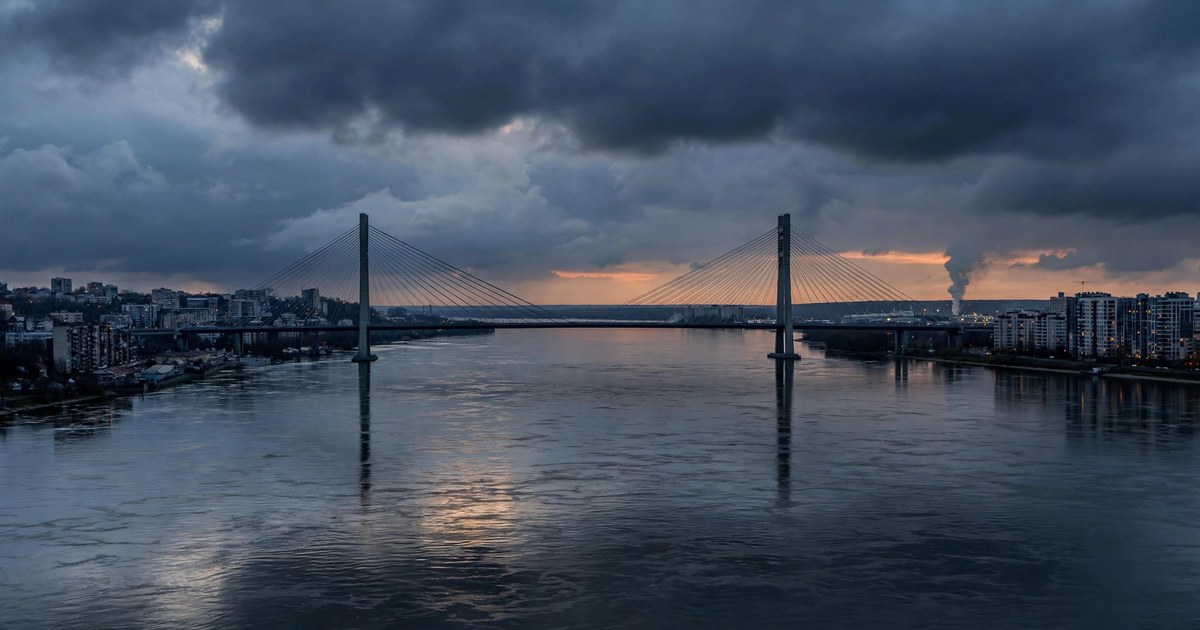
Russian strikes hit two of the Kyiv bridges over the Dnipro River late on Monday, 16 November 2026, Kyiv Mayor Vitali Klitschko said, cutting water, heating and power in parts of the Ukrainian capital. The mayor wrote on Telegram at about 11:45 p.m. local time that preliminary information pointed to hits on the North and South bridges, the two Kyiv bridges that carry daily traffic between the city's left and right banks. Reuters, which carried the mayor's statement, said it could not immediately independently confirm the strikes, and no casualty figures or damage assessment had been released by early on Tuesday morning. The attack came hours after President Volodymyr Zelenskyy warned that Russian intelligence showed Moscow preparing a heavy night of strikes, and on the same day Ukraine hit the bridge linking Russia to occupied Crimea.
What happened to the Kyiv bridges on Monday night
"According to preliminary information, there have been hits on the North and South bridges in the capital," Klitschko wrote on Telegram, in the wording carried by Reuters. He added later that there were water and power cuts in parts of the city, and in a further update that some districts had interruptions to water and heating. Reuters witnesses in Kyiv reported a series of loud explosions during the attack. The mayor's account was the only official confirmation available in the first hours; the scale of the damage to the Kyiv bridges and the number of people affected had not been established. No casualty figure for Kyiv had been given by early Tuesday.
The strikes were part of a wider Russian attack. Moscow sent drones and missiles across other parts of Ukraine on the same night, and local officials said a Russian missile attack injured three people in the Cherkasy region. Zelenskyy had warned earlier on Monday that Ukrainian intelligence indicated Russia planned attacks for Monday evening and throughout Tuesday, and told residents to expect a heavy night. Ukrainian air defences stayed on high alert through Tuesday on the back of that warning.
The Kyiv bridges that were hit
Kyiv sits on both banks of the Dnipro, and its bridges are the seams holding the city together. The Northern Bridge, known in Ukrainian as Pivnichnyi, is an 816-metre cable-stayed crossing opened on 3 December 1976. It forms part of Kyiv's Small Ring Road and links the left-bank districts of Troieshchyna, Voskresenka and Obolon with the government centre on the right bank. The Southern Bridge, Pivdennyi, is the other principal road crossing in the south of the city. Together with six other major bridges, they carry commuters, buses, freight and military logistics across the river every day.
Neither of the Kyiv bridges is a stranger to attack. The Southern Bridge has been hit several times since 1 October, with the worst damage coming from a ballistic missile on 27 October, according to Censor.net. The Northern Bridge was struck on 3-4 October and again on 7 November, when Russian ballistic missiles damaged its road surface, trolleybus wires and a power line and closed it in both directions. Traffic resumed with restrictions the next day. In the 7 November attack, five people were injured in Kyiv, including a 14-year-old girl, two of whom were taken to hospital. Zelenskyy said six ballistic missiles were fired at the crossing that night and four reached their target.
Why Russia keeps striking the Kyiv bridges
The campaign against the Kyiv bridges began in early October and has not let up. Russia's defence ministry has said the Kyiv bridges are used to move Ukrainian troops and military equipment, a claim that has not been independently verified. Ukrainian officials read the pattern differently. On 10 November, Zelenskyy told the Financial Times that "Russia is trying to divide Ukraine along the Dnipro River and make life as difficult as possible for people, for our cities and villages." Retired Lieutenant General Ihor Romanenko, a former deputy chief of the general staff, said on 12 November that destroying a bridge outright is not the point: damage alone disrupts movement, and repeated hits keep the crossings unreliable.
The weapons have changed, too. Ukrainian presidential adviser Serhii Beskrestnov said on 9 November that Russia has fitted its Iskander ballistic missiles with optical and radar homing heads that scan the terrain seconds before detonation, letting the missiles adjust course and strike within metres despite Ukrainian electronic-warfare jamming. The Telegraph reported the same upgrade, noting that the new seekers were used in the recent bridge strikes. Maksym Beznosiuk, an associate fellow at the think tank GLOBSEC, has described the wider effort as "islanding", breaking Ukraine's power grid into isolated pockets that cannot share electricity. The strikes on the Kyiv bridges fit that logic: cut the crossings and the power lines that run with them, and the two halves of the country stop supporting each other.
Winter sharpens the effect. The winter of 2026-27 is the fifth since Russia's full-scale invasion began on 24 February 2022, and the targeting of power, heating and water has been a feature of every one of them. On the night of 7 November, overnight temperatures in Kyiv fell to 0 degrees Celsius while heating and electricity were cut. Residents have taken to crossing the damaged Kyiv bridges on foot in cold rain and mist, and buses now take up to an hour to cross the Northern Bridge, according to a 13 November report. One resident told The Telegraph he hoped transport would be fixed before December, "because walking here won't be possible in the winter."
The same night, Ukraine hit the Crimea bridge again
The Kyiv strikes came on a day when the bridge war ran in both directions. Ukraine struck the Kerch Bridge linking Russia with occupied Crimea early on Monday in a 1,336-drone barrage, the largest overnight drone attack of the war according to Russian defence ministry figures, restricting traffic for most of the day. Early on Tuesday, Ukraine hit the 19-kilometre crossing a second time in less than 24 hours. The Russian-installed head of Crimea, Sergey Aksyonov, confirmed the second strike on Telegram at about 12:38 a.m. local time, and traffic was suspended again. Monitoring channels reported at least 15 hits on the bridge; the extent of the new damage could not be independently verified, and Ukraine has not officially claimed responsibility. Russia said only minor damage followed the first strike.
The exchange sits against a diplomatic clock. A planned meeting between Donald Trump, Xi Jinping and Vladimir Putin in Shenzhen on 19 November is now three days away, and Trump said on Monday he might also meet North Korea's Kim Jong Un in China this week. US envoy Jared Kushner said progress had been made in Ukraine talks, and Zelenskyy has welcomed Europe into the next round of negotiations. The bridge strikes, in both directions, are a reminder of what those talks would have to stop.
What happens next for the Kyiv bridges
Kyiv is already building around the damage. The city has approved 1 billion hryvnias, about $22 million, for temporary Dnipro crossings and access roads, and Infrastructure Minister Mykola Kalashnyk said the first new crossings would open at the start of the year. The national government has announced plans for 21 alternative bridge crossings, and the capital has introduced free surface public transport while the bridges are disrupted. None of that helps on a night when the missiles are still falling: Zelenskyy's warning was that the strikes would continue through Tuesday, and the city's air defences remain on alert.
The immediate questions are practical ones. How badly are the two Kyiv bridges damaged, and how long will repairs take? Will traffic resume, with restrictions, as it did after the 7 November strike, or will one of the crossings stay closed? And will the pattern hold through the winter, with each cold snap met by another night of strikes on the Kyiv bridges and the power lines beside them?
Why it matters
A bridge is easy to dismiss as concrete and steel. In Kyiv it is also the morning commute, the bus to work, the route an ambulance takes, and the cable that carries power from one bank to the other. The Kyiv bridges serve a city of millions, and every closure pushes hours of traffic onto the ones left standing. That is the campaign's logic: not to flatten a crossing, which the engineers say is unlikely, but to make the city harder to live in, harder to move through, and harder to heat as winter sets in. The test of the next few days is whether the two bridges hit on Monday night are back in use quickly, as they were after 7 November, or whether this time the damage, and the winter, make the crossing stay shut.
Sources
- Reuters, 16 November 2026 — Klitschko's Telegram statement on the North and South bridge hits; water and power cuts; no independent confirmation yet.
- The Telegraph — upgraded Iskander missiles with optical and radar homing heads used in the bridge strikes; residents crossing damaged bridges on foot.
- Financial Times, 10 November 2026 — Zelenskyy: "Russia is trying to divide Ukraine along the Dnipro River."
- Vanguard East, 13 November 2026 — buses taking up to an hour to cross the Northern Bridge; 1 billion hryvnias approved for temporary crossings.
- Censor.net — Southern Bridge worst damage from a ballistic missile on 27 October.
- h.ua, 9 November 2026 — Serhii Beskrestnov on Iskander guidance systems; Kyiv's plan for 21 alternative bridge crossings.