
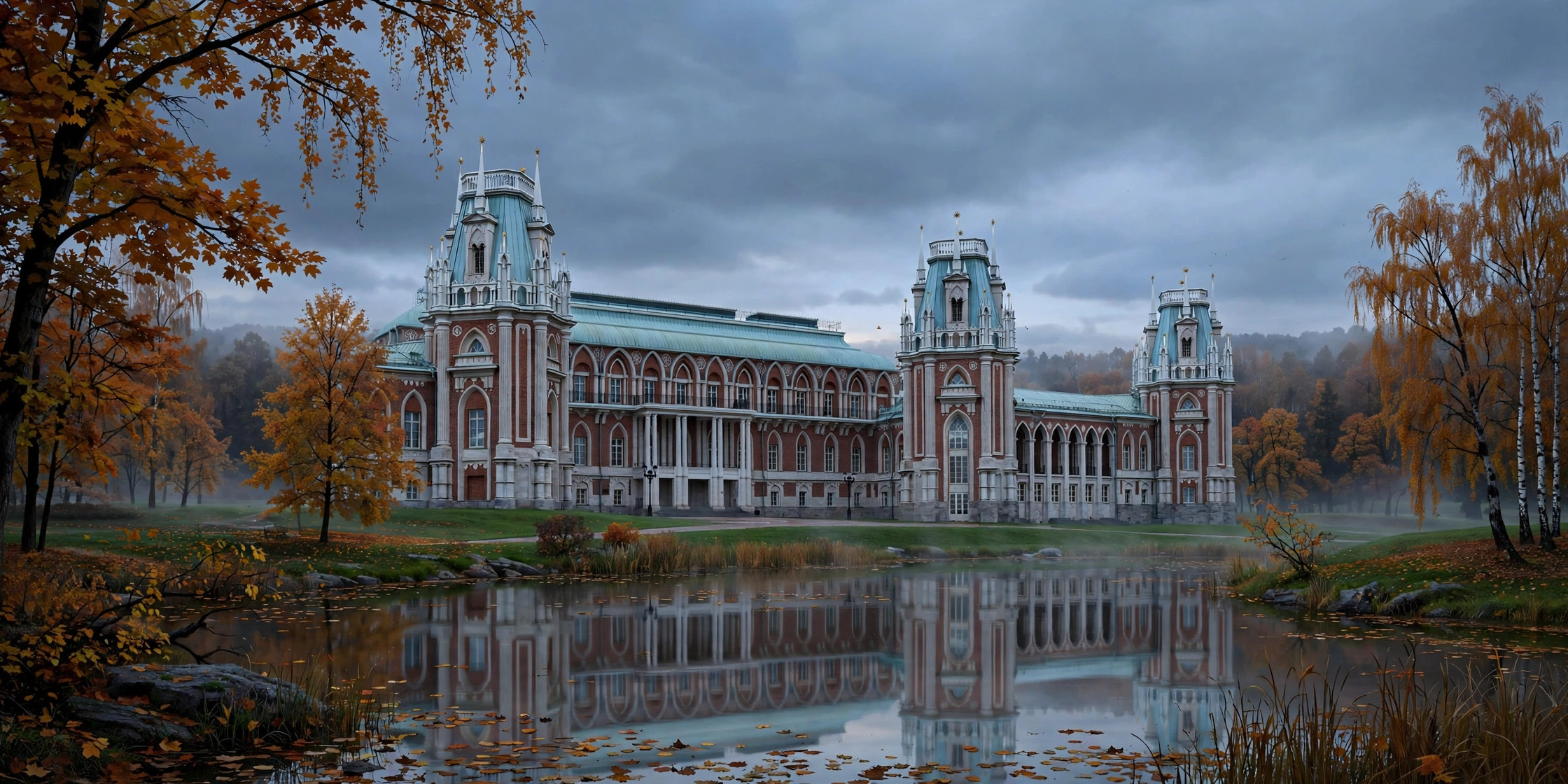
The United States warned Russia on 31 October 2026 of a credible Moscow terror threat at the Tsaritsyno Museum Reserve, a palace and park complex in southern Moscow, telling Americans to stay away from the site that day. Russia's Federal Security Service (FSB) confirmed it had received the American information through established channels and said it was taking action, in a rare public exchange between the two countries' security services. As of the evening of 31 October, no attack had been reported at the site and no suspects had been named — but the warning carried extra weight because the United States issued a similar alert in March 2024, and gunmen attacked a Moscow concert hall two weeks later, killing more than 140 people.
What the US Embassy's Moscow terror threat warning said
The US Embassy in Moscow published a security alert on Saturday 31 October 2026 stating that it was "aware of a credible threat of a mass casualty event TODAY October 31, at the Tsaritsyno Museum Reserve in Moscow at Dolskaya Ulitsa 1, Moscow, Russia 11569". The alert said the US government was "coordinating with appropriate Russian authorities on a response" and advised American citizens to avoid the Tsaritsyno grounds on 31 October, stay away from the surrounding area and crowds, and keep their mobile phones charged. The embassy's alert also listed its assistance line, +7 495 728-5577, for Americans in Russia who needed help.
The Moscow terror threat warning was unusually specific: it named a single location and a single day. It did not say who was behind the threat, and it did not describe how an attack might be carried out. Canada issued a parallel warning to its citizens, according to reports, making this a joint allied alert rather than a US-only notice. The warning came as a surprise to many observers because public security cooperation between Washington and Moscow has been rare since Russia's full-scale invasion of Ukraine, yet the information moved through what the FSB described as established partner channels.
What is the Tsaritsyno Museum Reserve?
The Tsaritsyno Museum Reserve is a palace museum and park complex in southern Moscow, one of the capital's best-known historic sites. It was founded in 1775 as the summer residence of Empress Catherine II, and its Grand Palace was built between 1786 and 1796. Today the reserve combines the restored palace buildings with landscaped parkland and ponds, and it draws visitors throughout the year as both a museum and a public park. That combination — a famous landmark that is also a crowded public space on a Saturday — is what made it the kind of location a mass-casualty warning would single out.
The site sits well away from the Kremlin in the south of the city, but it is a major tourist destination in its own right, and its grounds are open to the public. Russian state media reported that the museum was temporarily closed and access to the park restricted after the warning, citing law enforcement agencies. The park administration, however, told the Telegram channel Mash that the complex was operating as normal, so accounts of the closure differed on the day itself.
How Russia responded to the Moscow terror threat warning
Russia's Federal Security Service confirmed on 31 October that it had received the American warning. "We have received information from the US through established channels of cooperation about preparations for a terrorist attack in Moscow. Appropriate action is underway," the FSB said in a statement quoted by the state news agency TASS. The RIA Novosti news agency published the statement at 6:04 p.m. Moscow time, and the news was also reported by Reuters and the Russian outlet Meduza.
The FSB did not disclose details of the security measures it was taking, and it did not confirm the arrest of any suspects linked to the threat. It also did not say whether the information it received concerned Tsaritsyno specifically, or a different location in Moscow, and it did not describe what the information contained. As of the evening of 31 October, no reports of detentions or other FSB operations at the site had emerged, and no incident at the reserve had been reported. The sequence — a specific US warning, a same-day FSB confirmation, and a temporary closure — was nonetheless remarkable, because Moscow rarely acknowledges receiving intelligence from Washington in public.
The March 2024 Crocus City Hall warning — and what happened next
The reason the Moscow terror threat warning was taken so seriously is the precedent from March 2024. On 7 March 2024, the US Embassy in Moscow warned that "extremists have imminent plans to target large gatherings in Moscow, to include concerts", and advised Americans to avoid mass events for 48 hours. Two weeks later, on 22 March 2024, gunmen attacked the Crocus City Hall concert venue outside Moscow, opened fire on the crowd and set the building ablaze, killing more than 140 people and wounding hundreds.
After the Crocus City Hall attack, Russian officials acknowledged that the United States had shared information in advance. The head of Russian foreign intelligence, Sergei Naryshkin, said the FSB had received information from US intelligence that an attack was possible, but that it lacked enough detail to identify the attackers. FSB chief Alexander Bortnikov later said the US information "was of a general nature". The episode left a lasting lesson on both sides: American warnings about Moscow are rare, specific, and — as March 2024 showed — worth heeding even when they carry no names and no method.
What happens next, and what travellers should know
The warning was dated to a single day, 31 October, and as of the morning of 1 November no attack at the Tsaritsyno Museum Reserve had been reported. That does not by itself close the matter: the FSB has said only that appropriate action is underway, and neither government has said whether the threat has passed or whether the people behind it have been found. If the pattern of March 2024 repeats, the days after a warning matter as much as the day itself, which is why the closure and the security measures around the site will be watched closely.
For travellers, the practical picture is unchanged and stark. The United States still lists Russia at Level 4, "Do Not Travel", citing terrorism among other risks, and its consulates in Vladivostok and Yekaterinburg remain suspended, so consular help inside Russia is limited to the Moscow embassy. The warning is also a reminder of the wider context: even while the war in Ukraine continues and US-Russia relations remain frozen — the two sides were still talking, as the Witkoff-Putin meeting in Moscow showed — the established intelligence channel between the two countries still functions when lives are at stake. The fighting itself goes on, with Ukraine's reported pause in strikes on Russian refineries and the UN report on Russian energy strikes in Ukraine both part of the same conflict, but the Moscow terror threat warning was a separate event: a security alert, not a battlefield development, and its significance lies in what it says about the threat inside Russia itself.