
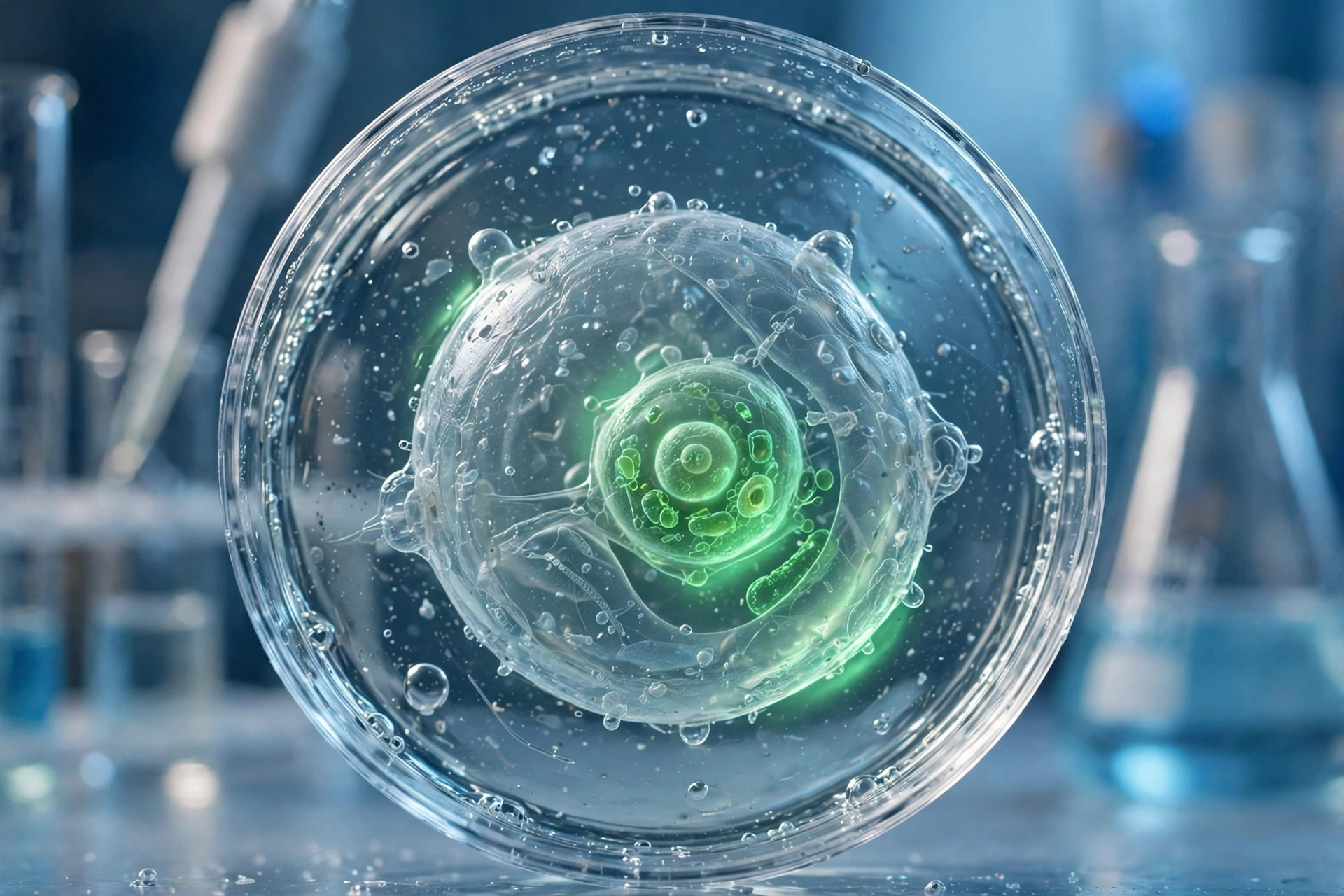
A Japanese research team has built something biology textbooks treated as a thought experiment: animal cells carrying nearly the whole genome of a photosynthetic alga. The planimal cells Japan study, described in the journal Nature Communications on 12 November 2026, comes from the University of Tokyo, the Institute of Science Tokyo and Kindai University. The result is a stable hybrid, not a working photosynthetic animal cell — and that distinction matters, because some early coverage suggested the cells could already be grown using photosynthesis. They cannot. What the team actually achieved is a different and still remarkable thing: proof that an animal cell can hold, copy and pass on almost an entire foreign genome for more than 150 generations.
Planimal Cells Japan: What the Team Actually Built
Planimal cells Japan is the name the researchers gave to hybrid cells made by fusing a tiny red alga, Cyanidioschyzon merolae, into cultured animal cells. The team, led by the University of Tokyo with the Institute of Science Tokyo, Kindai University and other partners, used two kinds of animal cells: Chinese hamster ovary cells, specifically the CHO-K1 line, and human HT-1080 cells. According to the Japan Times, all of the alga's DNA was integrated into the animal cells' chromosomes. The scale of that transfer is the headline finding. In one hamster-derived cell line, about 16.3 million base pairs of algal nuclear DNA were retained, including intact chromosomes and sequences from all 20 of the alga's chromosomes, according to the University of Tokyo's announcement of the study, reported by Phys.org. The study, titled "Epigenetic gatekeeping enables genome-scale horizontal gene transfer in eukaryotic cells", was published in Nature Communications on 12 November 2026, with the digital object identifier 10.1038/s41467-026-78753-w. Its senior author is Professor Sachihiro Matsunaga of the University of Tokyo's Graduate School of Frontier Sciences, who first proposed the idea of creating such a hybrid in 2018. The word "planimal" combines plant and animal, and the planimal cells Japan paper describes the cells as the first of their kind in the world.
How the Fusion Worked: Epigenetic Gatekeeping
The planimal cells Japan team tried two ways of getting algal material into animal cells: fusing the two cell types together, and letting the animal cells engulf the algae. Cell fusion produced stable hybrid cells far more efficiently than engulfment, according to the University of Tokyo's account of the experiments. The researchers then used live-cell imaging and genome sequencing to track what the host cell did with the foreign DNA over many generations. The answer is the mechanism named in the paper's title: epigenetic gatekeeping. The animal cell chemically marks the incoming algal DNA and suppresses most of its activity, which is how a cell can accommodate such a large amount of foreign genetic material without breaking down. More than 95 per cent of the transferred algal genes were silent, according to the university announcement. That silencing is what makes the hybrid stable, and it is also what limits what the cells can do. The work was inspired by an ancient event: more than one and a half billion years ago, a cell engulfed a photosynthetic bacterium that became the chloroplast, the structure that carries out photosynthesis in present-day algae and plants. The planimal cells Japan team set out to test, in the laboratory, how far that kind of genome-scale transfer could be pushed in a eukaryotic cell.
The 150-Generation Test: How Stable Are Planimal Cells?
A hybrid that falls apart after a few divisions would be a curiosity. The planimal cells Japan hybrids kept going. The hybrid cells continued to divide and multiply for more than 150 generations, and algal DNA remained detectable through 155 cell generations, according to the University of Tokyo. Substantial portions of the algal DNA persisted for 95 generations without antibiotic selection, the technique normally used to isolate genetically modified cells and generate stable cell lines. "Remarkably, our planimal cells retained nearly an entire algal genome over many generations," the researchers wrote in the study, as quoted by Phys.org. That persistence is the core result of the planimal cells Japan study. The cells are not a one-off fusion that the host quickly discards; they are a lineage that carries the algal genome forward as it divides. For researchers studying horizontal gene transfer — the movement of genetic material between organisms other than by parent-to-offspring inheritance — that stability gives them a living system in which to watch how a eukaryotic cell manages a second genome, rather than a snapshot of a single fusion event.
Why Planimal Cells Cannot Photosynthesise Yet
This is where the planimal cells Japan story needs careful reading. The hybrid cells are, in terms of function, animal cells. The algal DNA was suppressed, and the chloroplasts — the structures that conduct photosynthesis — were degraded during fusion, the Japan Times reported. Without working chloroplasts, and with more than 95 per cent of the algal genes switched off, the cells cannot carry out photosynthesis. That means they cannot use light to make oxygen from water or to turn carbon dioxide into sugars, which is what photosynthesis does in plants and algae. Some early summaries of the research described the cells as if they could already be cultured using photosynthesis; the study does not show that, and the researchers are clear that it is the next goal, not the current result. Professor Matsunaga said the team hopes to introduce chloroplasts and activate the algal genes "to generate oxygen through photosynthesis", in his words to the Japan Times. Until that step works, the planimal cell is a genetic hybrid with an animal cell's behaviour — a platform for research, not a photosynthetic organism.
What Planimal Cells Japan Could Do One Day: Drugs, Meat and Oxygen
The reason the planimal cells Japan work has drawn attention beyond biology is what it could make possible, and here every claim is conditional. If cells that produce useful animal and plant proteins can be cultured in large quantities using photosynthesis, the Japan Times reported, it could provide a new means of producing drugs and cultured meat. The same logic extends to medicines and food ingredients made with help from light, and to cells that produce oxygen while using carbon dioxide, according to the university announcement. None of that exists yet. No drug, food or cultured-meat product has been made from planimal cells, and the researchers have given no timeline for one. The path from this result to any application runs through the chloroplast problem described above: the cells must first gain working chloroplasts, then switch on the algal genes in a controlled way, then be grown at scale without losing the hybrid genome. Each of those steps is a research programme of its own. What the planimal cells Japan paper of 12 November provides is the foundation — a stable cell that holds the genetic material — and a demonstration that the epigenetic gatekeeping mechanism can keep that material in place for more than 150 generations.
What Comes Next for Planimal Research
The planimal cells Japan team's stated next step is to introduce chloroplasts into the hybrid cells and get the algal genes working, so that photosynthesis produces oxygen. That will mean solving two problems at once: keeping a chloroplast alive and functioning inside an animal cell, and lifting the epigenetic silencing on the genes that support photosynthesis without destabilising the cell. Beyond that, the work opens questions for synthetic biology and for the study of evolution. If a mammalian cell can host nearly an entire algal genome, researchers can ask which genes a host must silence, which it tolerates, and what happens when silenced genes are switched back on one at a time. The study also gives a laboratory model for the ancient endosymbiosis that created chloroplasts in the first place, letting scientists test ideas about that event with living cells instead of inference from genomes alone. For now, the planimal cells Japan result is a laboratory achievement with a long road ahead — a hybrid that proves a genome can move between kingdoms and stay, even if the photosynthesis that would make it useful is still to come. For wider context on how science stories like this are communicated, see World Science Day 2026 and the case for science for peace and development, and for other Japan news this week, the magnitude 5.7 earthquake near Hamamatsu.