
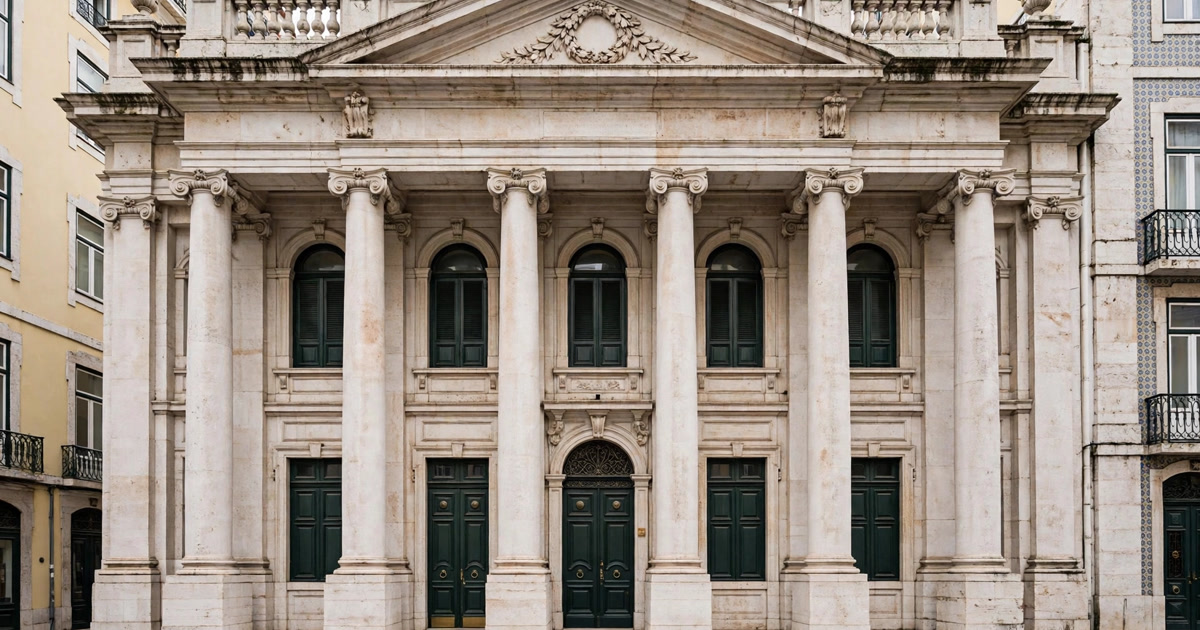
Opening an account is one of the first practical steps for anyone living or doing business in Portugal, and the choice of bank affects fees, apps and branch access. Portuguese banks range from the state-owned giant Caixa Geral de Depósitos to international groups and smaller mutual banks.
This guide compares the major Portuguese banks, explains account types and fees, and covers what expats and newcomers need to open an account. It focuses on everyday banking rather than investment products, so you can choose a bank that fits how you actually use money.
The Major Portuguese Banks at a Glance
Portuguese banks are led by Caixa Geral de Depósitos, the state-owned bank with the widest branch network, and Millennium BCP, the largest private bank. Novo Banco, Santander Portugal, BPI and Montepio complete the main group, each with different strengths in branches, digital services and business banking.
Most Portuguese banks offer current accounts, debit and credit cards, savings products, mortgages and the Multibanco network, which provides ATMs and the MB Way payment app. Comparing Portuguese banks therefore means comparing fees, app quality and branch convenience rather than basic availability.
Accounts and Fees at Portuguese Banks
Portuguese banks charge monthly account maintenance fees that vary by account type, with some accounts free for young customers, students or minimum-balance holders. Card fees, transfer charges and overdraft terms also differ, so read the tariff schedule before signing.
Digital-first options have improved, with mobile onboarding, instant transfers and MB Way integration. Before choosing, check how credit scores work if you plan to use credit, and compare the total annual cost of the account, not just the headline monthly fee.
Opening an Account with Portuguese Banks
To open an account with Portuguese banks you usually need identification, a NIF tax number, proof of address and, for non-residents, additional documentation. Some banks allow remote onboarding, while others require a branch visit, especially for non-EU citizens.
Expats should ask about English-language support, international transfer fees and whether the account supports direct debits for rent, utilities and tax. Banks generally require proof of income or employment for credit products, but basic current accounts are accessible with standard documents.
Digital Banking and MB Way at Portuguese Banks
MB Way, linked to Portuguese banks, lets users send money by phone number, pay online and generate virtual cards, and it is widely accepted in shops and restaurants. Most Portuguese banks also support Apple Pay, Google Pay and instant SEPA transfers.
App quality varies, so test the demo or reviews before committing, especially if you bank mainly by phone. Security matters too: Banks here use strong authentication, and you should never share codes or approve unexpected transactions, however convincing the message looks.
Choosing Between Portuguese Banks
Choose Portuguese banks by matching your needs: branch access matters in rural areas, app quality matters for digital users, and international services matter for expats. Caixa suits those wanting nationwide branches, Millennium BCP suits broad private banking, and Santander and BPI suit customers valuing international group links.
Also consider compound interest for savings goals and inflation when comparing mortgage rates, since the cheapest account is not always the best overall deal. Review your choice annually, because fees and offers change and switching banks in Portugal is straightforward.
Caixa Geral de Depósitos in Detail
Caixa Geral de Depósitos, founded in 1876, is Portugal's state-owned bank and its largest by assets and branch network. It serves retail customers, businesses and public institutions, and its branches reach small towns where private banks have closed, making it a practical choice outside major cities.
Caixa offers the full range of accounts, cards, mortgages and savings products, plus strong public-sector links. Its app and digital services have improved, though customers who value cutting-edge digital features sometimes prefer private competitors with more agile platforms.
Millennium BCP, Santander, BPI and Novo Banco
Millennium BCP is the largest private Portuguese bank, with a broad branch network and a strong digital platform, and it is popular with both residents and businesses. Santander Portugal combines local branches with international group resources, useful for customers with cross-border needs.
BPI, part of the CaixaBank group, is strong in northern Portugal and business banking, while Novo Banco, created from the former Banco Espírito Santo, serves retail and corporate clients nationwide. Comparing these banks means weighing branches, fees, apps and international services together.
Mortgages and Loans from Portuguese Banks
Portuguese banks offer mortgages with variable, fixed or mixed rates, and terms depend on income, deposit and property value. Non-residents can obtain mortgages, though deposits and documentation requirements are usually stricter, and interest rates should be compared across several banks.
Personal loans, car finance and credit cards are also widely available, but borrowing costs vary and should be compared on the annual percentage rate, not the headline rate. Borrow only what repayments allow, and keep an emergency buffer, since rate rises affect variable mortgages quickly.
Safety, Scams and Customer Rights
Portuguese banks operate under Banco de Portugal supervision, with deposit protection up to European limits for eligible deposits. Customers also have rights to clear tariff information, complaint procedures and switching support when changing banks.
Scams targeting bank customers are common, including phishing messages, fake support calls and fraudulent MB Way requests. Banks never ask for full passwords or codes by phone or message, and customers should verify any unexpected request through official channels before acting.
Comparing Banks Side by Side
A practical comparison starts with a simple table: monthly fee, card costs, transfer charges, branch distance, app rating and English-language support. Fill it in for two or three banks, using their published tariffs, and the best choice usually becomes obvious within an hour.
Visit a branch before deciding if branch service matters to you, since staff helpfulness and waiting times vary more than tariffs suggest. Ask about account opening for your situation, bring your documents, and note how clearly staff explain fees. A bank that explains costs plainly before you join is likely to treat you fairly afterwards. Also check how easily you can close or switch accounts, since flexibility matters if your needs change.
The best Portuguese bank is the one whose fees, branches and app match your life. Compare total costs, check MB Way and international features, and keep a second account only if it genuinely saves money.
Sources: Banco de Portugal; individual bank tariff schedules; Portuguese Banking Association.