
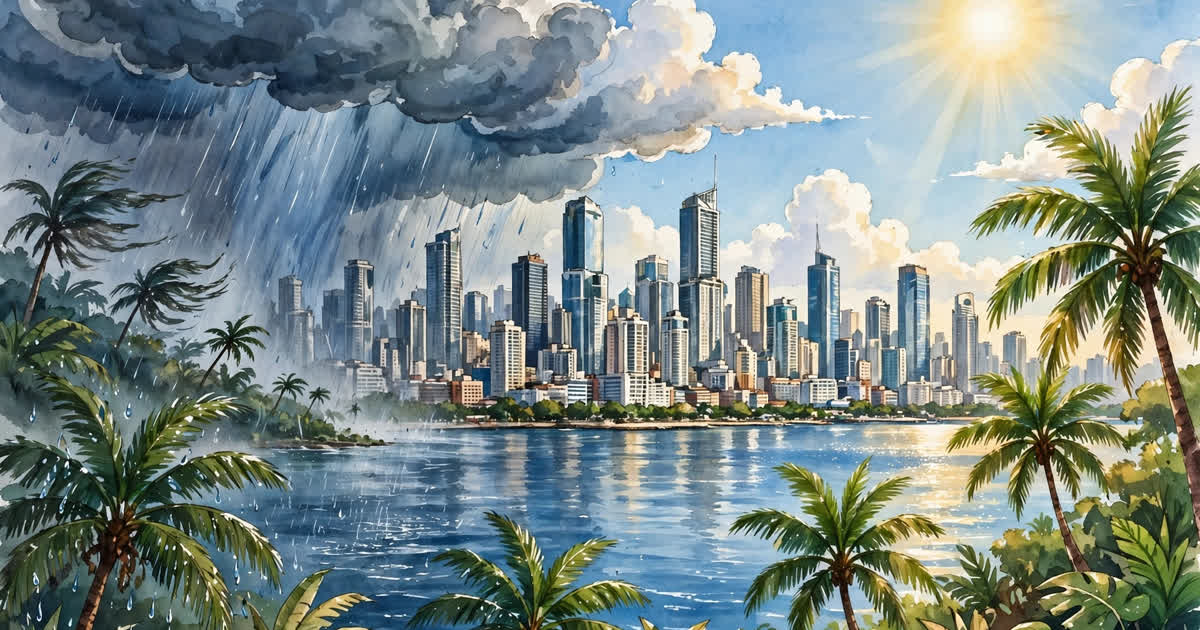
Panama weather seasons are simpler than in many tropical countries, because Panama has two main seasons rather than four: a dry season and a rainy season, both warm. The dry season, often called verano, runs roughly from December to April, while the rainy season, called invierno despite the warmth, runs roughly from May to November. This guide to Panama weather seasons explains what each season feels like, how the Pacific and Caribbean coasts differ, and how to plan trips around rain without missing Panama's best experiences.
Panama sits close to the equator, so temperatures stay warm year-round, with daytime highs usually in the high 20s to low 30s and nights in the low to mid-20s. What changes most with Panama weather seasons is not temperature but rainfall, humidity, sunshine hours and sea conditions. A traveller who understands that distinction can enjoy Panama in either season, choosing activities that suit the rain pattern rather than fighting it.
Panama Weather Seasons: Dry Season December to April
Panama weather seasons in the dry season bring the most reliable sunshine, lower humidity, and calmer seas on the Pacific side, making December to April peak tourist season. Panama City enjoys sunny days, warm evenings and less afternoon rain, ideal for the Canal, Casco Antiguo, rooftop dining and day trips. Pacific beaches, including the Pearl Islands and Santa Maria, offer calmer water and clearer skies, while highland towns such as Boquete and El Valle are sunny and cooler, perfect for hiking and coffee farms.
Dry season also brings higher prices, larger crowds and early booking needs, especially around Christmas, New Year and Carnival. Trade winds can make some Pacific beaches breezy, and the Caribbean side remains wetter than the Pacific even in the dry season, so do not assume dry season means dry everywhere. For Panama weather seasons planning, dry season suits beach holidays, outdoor festivals and multi-stop itineraries where reliable sunshine matters most.
Panama Weather Seasons: Rainy Season May to November
Panama weather seasons in the rainy season bring lush green landscapes, afternoon showers and thunderstorms, lower prices and fewer tourists. Rain usually falls in the afternoon or evening rather than all day, leaving mornings sunny and suitable for sightseeing, hiking and boat trips if you start early. The countryside becomes vividly green, waterfalls flow strongly, and wildlife, including birds and frogs, is more active. Rainy season is also the best time for surfing on the Pacific coast, where swells are stronger, and for whale watching in season.
Rainy season challenges include muddy trails, rougher seas, occasional flooding in low areas, and transport delays during heavy storms. September and October are often the wettest months on the Pacific side, while the Caribbean side has its own pattern with a drier window in September and October in some years. Pack a good rain jacket, waterproof bags, quick-dry clothes and sturdy shoes, and keep indoor alternatives ready for afternoons. With early starts and flexibility, rainy season Panama can be more rewarding and affordable than peak season.
Panama Weather Seasons: Pacific Versus Caribbean
Panama weather seasons differ sharply between coasts, because Panama is an isthmus with Pacific and Caribbean shores only a short distance apart. The Pacific coast, including Panama City, the Azuero Peninsula and the Pearl Islands, has a clearer dry season and a wetter rainy season, with calmer seas in dry months. The Caribbean coast, including Bocas del Toro, Colón and the San Blas islands, is wetter year-round, with rain possible in any month, though September and October can be relatively drier and calmer in Bocas.
That contrast means a single Panama weather seasons forecast is misleading for a two-coast trip. Check Panama City, Bocas del Toro and Boquete separately, because highland weather differs from both coasts. Caribbean boat trips and island stays need extra flexibility, since rough seas can cancel transfers, while Pacific beach resorts are more predictable in dry season. If you visit both coasts, allow buffer days for weather delays, especially for island transfers and flights to remote areas.
Panama Weather Seasons: Panama City, Highlands and Islands
Panama City weather follows the Pacific pattern: dry and sunny from December to April, with afternoon rain from May to November, and warm, humid conditions year-round. The city's modern skyline, historic Casco Antiguo and Canal attractions are enjoyable in either season, with mornings best for outdoor sightseeing in rainy months. Museums, markets, restaurants and shopping provide indoor alternatives when afternoon storms arrive, so a rainy season city break can still be full and enjoyable.
Highland towns offer relief from lowland heat. Boquete, at altitude in Chiriquí, has cooler temperatures, misty mornings and coffee farms, with rain more frequent in the wet season but temperatures pleasant year-round. El Valle de Antón, in a volcanic crater, is cooler and greener than the capital, popular for weekend escapes. Island destinations such as Bocas del Toro and San Blas have tropical island weather, with warm seas, humidity and rain showers, and island infrastructure that is more weather-sensitive than mainland hotels.
Panama Weather Seasons: Hurricanes, Floods and Safety
Panama weather seasons are generally safer than Caribbean hurricane zones, because Panama lies south of the main hurricane belt and direct hurricane hits are rare. Heavy rain, however, can cause flooding, landslides in mountain areas, and dangerous river currents, especially during intense storms. ETESA, Panama's weather and hydrology institute, issues forecasts and warnings, and local authorities advise on flood-prone areas. Take warnings seriously, avoid crossing flooded roads or rivers, and follow hotel and guide advice during storms.
For sea safety, check surf, currents and boat conditions before swimming or taking island transfers, because rainy season swells and winds can make seas rough. Use life jackets on boats, choose reputable operators, and avoid small boat trips in storm warnings. For hiking, start early, carry rain gear, water and a charged phone, and tell someone your route. Panama weather seasons reward preparation: a rain jacket and flexible plans matter more than any single forecast.
Panama Weather Seasons: Best Time and Packing Guide
The best time for Panama weather seasons depends on your trip. For reliable beach sunshine and Canal sightseeing, December to April is best, with January to March often the driest. For lush landscapes, surfing, whale watching and lower prices, May to November offers rewards, especially if you start activities early and accept afternoon rain. For the Caribbean, September and October can offer a useful window, though rain remains possible. For highland hiking and coffee, dry season mornings are ideal, while rainy season brings greener scenery.
Packing for Panama in either season should include light, breathable clothes, swimwear, sunscreen, insect repellent, a rain jacket, waterproof bags, and comfortable walking shoes. In dry season add extra sun protection and a hat, because UV is strong. In rainy season add quick-dry layers and sturdy shoes for muddy trails. With seasons understood and bags packed for rain as well as sun, Panama weather seasons become a planning advantage rather than a gamble. For wider trip planning, see how to travel on a budget, travel insurance explained, and Panama Canal visit and history guide.