
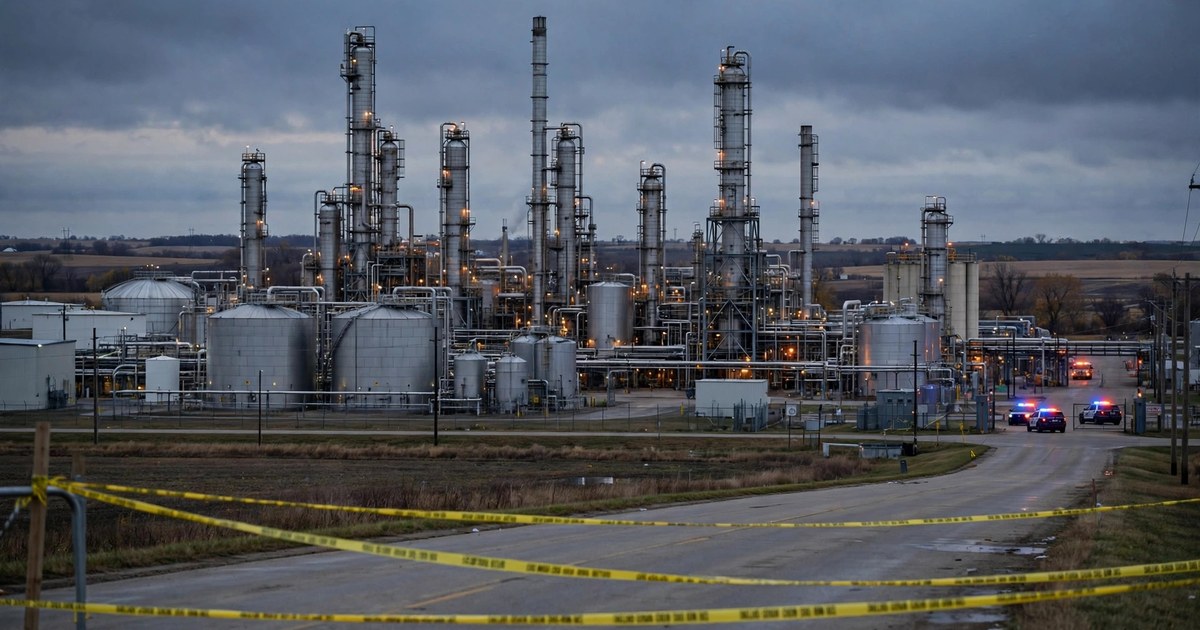
A bomb was found at the BioUrja Renewables ethanol plant in Peoria, Illinois, on Friday, 13 November 2026, forcing police to evacuate everyone within a mile of the site and keep them away overnight. The Peoria bomb threat began with a phone call to the plant at about 1:08 p.m., was judged a credible threat by the evening, and ended on Saturday afternoon when the device had been rendered safe, a full search of the sprawling plant found nothing else, and residents were allowed home. No one was injured, no arrests have been announced, and agents from the FBI's Springfield field office are investigating who planted the bomb and why.
The scare shut down part of downtown Peoria and the Levee District across the river in East Peoria on a Friday night, closed a stretch of the Illinois River, and sent dozens of people to a shelter at a local high school. It ended without an explosion — but with the central questions unanswered: no suspect has been named, no motive has been given, and police have refused to describe the device itself, saying those details are part of an ongoing criminal investigation.
Peoria bomb threat: hour-by-hour timeline
BioUrja notified Peoria police about a bomb threat at approximately 1:08 p.m. on Friday, Police Chief Brad Dixon told reporters. About an hour later, at about 2 p.m., a suspicious package was discovered at the plant on Southwest Washington Street in South Peoria. By 6:45 p.m., investigators had determined the threat was credible, and the evacuation order went out at about 7 p.m. — a one-mile radius around the plant that police described as a blast radius, covering much of South Peoria and parts of East Peoria on both sides of the Illinois River.
Peoria Mayor Rita Ali was blunt about the danger from the start. “It is real. This is a real thing,” she told reporters. “We know that it is a real threat. We know it is a bomb.” Dixon used the same language at a news conference shortly after midnight: “This is a credible threat.”
Bomb technicians rendered the device safe at about 9:15 p.m. on Friday. But that did not mean the plant was clear. Dixon said the facility — about 44 and a half football fields in size, with multiple levels — had to be searched in full before anyone could go home, so the evacuation stayed in place through the night and into Saturday morning while officers combed the site for any other devices. About 50 to 80 people spent the night at a shelter set up at Manual Academy, 811 South Griswold Street.
At about 1 p.m. Central time on Saturday, police lifted the evacuation. Dixon said crews had finished searching the plant and found no other suspicious objects. Residents could return home, businesses could reopen, street barricades came down, and the U.S. Coast Guard lifted its closure of the Illinois River around Peoria. The criminal investigation, police said, remains open.
Why police evacuated a full mile around the ethanol plant
The size of the evacuation was driven by what the plant holds. BioUrja distills ethanol and other highly flammable and combustible materials, Ali said, and a fire or blast at such a facility would not stay contained to one building. That is why the order covered a full mile in every direction, why the river alongside the plant was closed to traffic, and why businesses on both sides of the water were shut while the search went on.
The plant itself made the search slow. At roughly 44 and a half football fields, with tanks, towers and several levels to check, it took bomb squads and officers the whole night and much of Saturday morning to work through it. The device was made safe within hours; proving there was nothing else took far longer. Industrial plants have been in the news for the wrong reasons this month: a steel plant explosion in Izmir, Turkey, killed at least 17 workers, a reminder of how quickly an incident at a heavy industrial site can turn deadly.
Peoria bomb threat investigation: what the FBI is doing next
The investigation is now in the hands of local police working with federal agencies. Agents from the FBI's Springfield field office are involved, the U.S. Coast Guard handled the river closure, and the Department of Homeland Security also assisted during the incident, according to local reports. Police have declined to say what the device was, how it was made safe, or how many were found, saying those details are part of an ongoing criminal investigation.
As of Saturday afternoon, officials had not publicly identified a suspect or established a motive, and no arrests had been announced. What comes next is the slow work of tracing the threat call, the package and access to the plant — and, for Peoria, the question of whether the person behind it acted alone or as part of something larger. Police said updates would follow as the investigation continued.
Why this matters beyond Peoria
Peoria is not a city that usually leads the national news, and an ethanol plant in central Illinois is not an obvious target. That is part of why the incident drew so much attention: a real bomb, a credible threat, and a mile-wide evacuation in a mid-sized American city, with no explanation yet for who did it. The scare also came on the same weekend that American aviation was paralysed by a nationwide FAA ground stop, so the country was already on edge about infrastructure failing at scale.
Bomb threats have also been a wider pattern this autumn. More than 50 flights in Europe were targeted by bomb threats earlier this month, in a campaign that forced diversions and delays across the continent. The Peoria case is different — a physical device, not a phoned-in hoax — but it sits in the same uneasy picture: threats against transport and industry that force expensive, disruptive responses even when nobody is hurt. Read the earlier story here: Europe bomb threats: more than 50 flights targeted in November 2026.
For the people who were evacuated, the outcome was the best available one: home by Saturday afternoon, nobody injured, nothing else found. The open question is the one the FBI now has to answer — who put a bomb at an ethanol plant in Peoria, and whether they intend to try again.