
Supreme Leader Mojtaba Khamenei has ordered Iran's armed forces to prepare an immediate retaliation without geographic limits against the United States and Israel, in the clearest signal yet that Tehran is bracing for a new round of war. The Iran retaliation order, published on his official Telegram and X accounts on Saturday 31 October 2026, also directs commanders to widen the country's target list to include American and Israeli assets of every kind, "tangible and intangible". It came at a moment of acute tension: Gulf officials have reportedly been told to expect a short, intense round of US strikes as soon as Wednesday 4 November, the day after the American midterm elections, even as a US peace letter sits unanswered in Tehran and Qatari mediators shuttle between the two sides. The warning spread within hours, trending per news coverage.
What the Iran Retaliation Order Says
The order was delivered at a meeting on Saturday between Khamenei and Iran's three most senior military commanders: Armed Forces Chief of Staff Ali Abdollahi, Army Commander Amir Hatami and Islamic Revolutionary Guard Corps Commander Ahmad Vahidi. It was the first publicly disclosed meeting between Khamenei and the country's top military commanders since he became Supreme Leader, and it carried unusual weight because Khamenei has not been seen in public since succeeding his father, Ayatollah Ali Khamenei, who was killed in US-Israeli strikes in February 2026.
In a statement from his office, published on his official Telegram account and on X, Khamenei said: "If the enemies once again launch military or terrorist attacks, it is the armed forces of the Islamic Republic and the Iranian nation that will determine the time and conditions for ending them." He added: "Any level or type of threat must be met with an immediate, impactful and geographically unrestricted response."
The statement also ordered the commanders to update Iran's military target list, known as the Targets Bank, so that "all types of tangible and intangible assets belonging to the American-Zionist enemy" fall within the reach of Iran's armed forces. Armed Forces Chief of Staff Abdollahi said the armed forces had already prepared a new list of US and Israeli targets across a wider geographical area, warning of an "unimaginable response" and adding: "We will respond to the enemy with great force and intensity, without geographical limits."
The commanders also reported to Khamenei on military readiness along the Persian Gulf, the Strait of Hormuz, the area around the Gulf of Oman and Iran's border regions, and said weapons production and ammunition stockpiles had increased "several-fold".
Why Khamenei Ordered the Target List Updated
The target-list instruction is the most consequential part of the order, because it widens what Iran says it is prepared to hit. The IRGC-affiliated Tasnim news agency described the directive as a significant expansion of Iran's position, saying Tehran was no longer restricting military action to the Middle East. The phrase "tangible and intangible" assets reaches beyond bases, ships and aircraft to the economic and digital infrastructure that supports them.
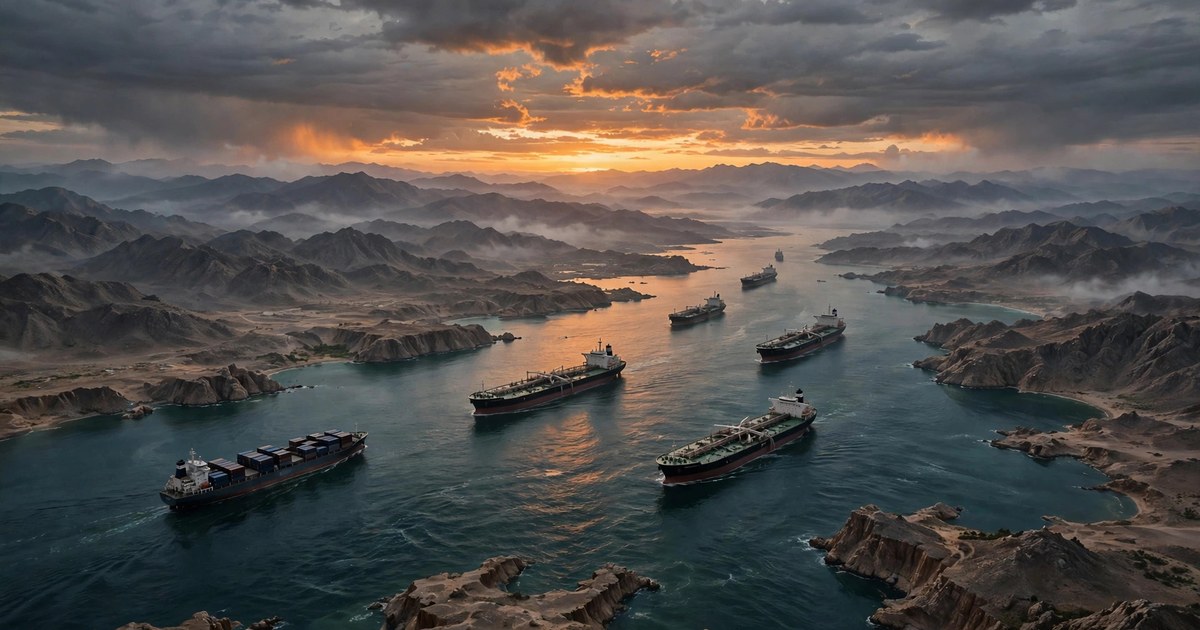
Analysts quoted in coverage of the statement said the expanded targeting language opens the door to asymmetric attacks on data centres, AI systems, undersea cables and shipping in the Strait of Hormuz, the narrow waterway through which a large share of the world's seaborne oil passes. That risk is not abstract: tankers have already been hit in the Strait in recent weeks, and Iran said four tankers were hit by mines in the Strait of Hormuz in late October.
Iran has previously warned it would consider severing undersea cables in the Strait of Hormuz, and the new order folds that kind of threat into a formal targeting instruction. Analysts say that is why the "without geographic limits" wording matters: it tells the United States and Israel that any retaliation would not be confined to the battlefield, or even to the region.
Why 4 November Is the Date Everyone Is Watching
The timing of the order is no accident. MS NOW reported that three senior Arab officials in the Persian Gulf had been briefed by the US administration to prepare for a short, intense round of strikes as soon as Wednesday 4 November, the day after the midterm elections on Tuesday 3 November. The report confirmed earlier reporting from The Wall Street Journal. The White House did not confirm the timeline, and US officials say no decision has been made on new strikes, while President Donald Trump has publicly suggested limited action against remaining sites.
The United States has not struck Iran since early September. Washington had already warned Gulf allies that strikes could resume after the midterms, and Khamenei's order reads as Tehran's answer to that warning: if strikes come, Iran says it will decide when and how they end.
The Diplomacy Running Alongside the Warnings
Even as the warnings harden, diplomacy has not stopped. The United States delivered a letter from Vice-President JD Vance to Tehran, and Iran has not formally answered it. The Vance letter and the state of the US-Iran peace talks remain the clearest diplomatic track, and a Qatari delegation arrived in Tehran on Friday for talks with Iranian officials.
Iran's Foreign Minister Abbas Araghchi wrote on X that red lines are a thing of the past, a message that matches the tone of Khamenei's statement. The sequence captures the contradiction at the centre of the moment: both capitals say they do not want another round of war, and both are preparing for one. The UAE has lifted air traffic restrictions imposed after the Iran war, a sign that Gulf states are trying to return to normal even as they brace for what comes next.
Iran Retaliation: What Happens Next
Three dates now matter. The first is Tuesday 3 November, when Americans vote in the midterm elections. The second is Wednesday 4 November, the earliest date Gulf officials were reportedly told to expect strikes. The third is open-ended: whenever Iran answers the Vance letter, or does not.
Other signals will be watched just as closely. Iran's Revolutionary Guards circulated a threat video after Khamenei's statement, according to Israeli media reports, and hardline Iranian lawmaker Mahmoud Nabavian renewed his call for Tehran to build an atomic bomb shortly after the statement appeared. Nabavian, a member of parliament for Tehran, has held that position since at least 2024, and his call is not official policy, but it shows the pressure inside Iran to answer threats with escalation of its own.
For now, no official American or Israeli response to Khamenei's statement has been reported. The war that began on 28 February 2026 with US-Israeli strikes on Iran, and drew in Gulf states as Iran answered with attacks around the region, has been paused, not settled. The Iran retaliation order is a reminder that the pause can end quickly, and that the next round, if it comes, may not stay inside the borders of the Middle East.
Sources: the statement published on the Supreme Leader's official Telegram and X accounts; reporting by Axios, IRNA, Tasnim, Al Jazeera, The Times of Israel and MS NOW, as carried by multiple outlets on 31 October to 1 November 2026.