
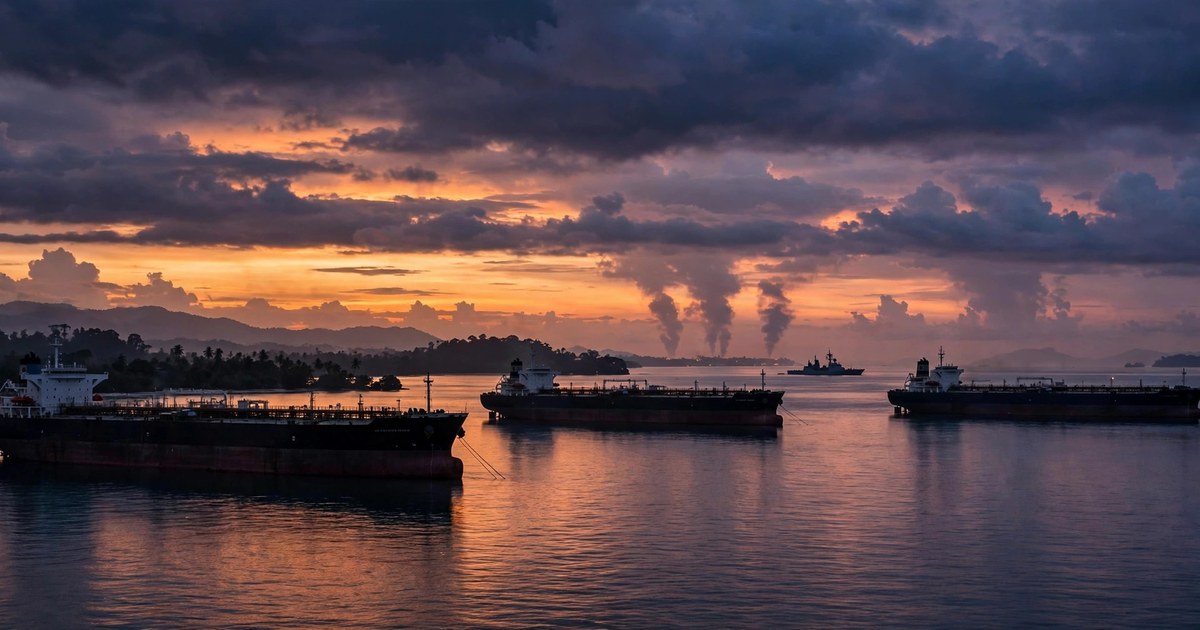
Iran's last reliable source of oil cash is gone. Ship-tracking data shows that the floating reserves of crude Tehran kept anchored off the coasts of Malaysia and Singapore — dozens of tankers holding millions of barrels sold quietly to Chinese refineries — were fully depleted by mid-October, choked off by the months-long US naval blockade. The report, published by the Wall Street Journal on 22 October 2026, marks one of the biggest economic blows to Iran since the war began and is trending per news coverage worldwide.
"There's no more oil to discharge to China anymore," said Homayoun Falakshahi, head of crude-oil analysis at Kpler, the ship-tracking firm whose data underpins the report. The numbers are stark: reserves that peaked at nearly 90 million barrels fell below one million barrels by 5 October, and have since been exhausted.
The floating reserve that kept Tehran's cash flowing
For most of the war, Iran's floating storage acted as an invaluable cushion. When the conflict began in February 2026, Iran had roughly 135 million barrels stored overseas — likely worth $10 billion or more after oil prices surged. Instead of sending oil directly to Chinese refineries, tankers linked to Iran ferried the crude to waters off Malaysia and Singapore, where it was transferred ship-to-ship onto other vessels bound for Chinese ports. The subterfuge made it harder for Washington to track the flow and punish sanctions violators, and the same waters became a useful place to park oil that could not be sold immediately.
That system mattered because oil sales account for 30 to 40 percent of Iranian government revenue and are Tehran's largest source of foreign exchange. With formal exports strangled by sanctions and then by the blockade, floating storage became the main channel keeping Chinese buyers supplied and Iranian state coffers from emptying.
How the reserves ran dry
The reserves followed a saw-tooth pattern through the war. After the United States first imposed the blockade in April 2026, Iran kept selling from its floating stock. When the blockade was lifted in mid-June as part of peace talks, Tehran rushed out more oil, rebuilding stocks to a peak of nearly 90 million barrels — even as a US fighter jet disabled a vessel breaking the blockade, showing how aggressively both sides were contesting the flows.
Then the blockade was reimposed in mid-July. From that point the trajectory was one way. Kpler's data shows the reserves draining steadily through late summer and autumn: below one million barrels by 5 October, and nothing left by mid-October. Other trackers told a similar story — one estimated about six million barrels off Singapore as recently as 9 October — but the direction was the same. The US naval blockade prevented Iran from replacing the crude it normally discharges to Chinese refineries, so every barrel sold was a barrel that could not be put back.
The $25 billion question
The United States is framing the depletion as a strategic victory. US Central Command, which is responsible for the Middle East, said on Saturday that the blockade has denied Tehran at least $25 billion worth of oil revenue — money that, in CENTCOM's words, would otherwise have let Iran replace destroyed factories and weapons. "Imposed devastating costs on Iran's security apparatus," said Admiral Brad Cooper, the head of US Central Command.
Cooper went further, claiming the Islamic Revolutionary Guard Corps is struggling to pay its troops and that Iran-aligned militias across the region have begun withholding fighters' pay to funnel money back to Tehran. Those are US military claims and should be read as such — Washington has every incentive to portray the pressure campaign as working — but they track with the independently verifiable drain in floating storage.
Tehran says talk of collapse is exaggerated
Iranian officials are pushing back. Central bank governor Abdolnaser Hemmati has called US claims of an economic collapse "an illusion," pointing to adequate foreign-exchange reserves and a $2 billion program to defend the rial. That defence faces hard numbers of its own: reporting has put the rial's fall at nearly 35 percent against the dollar since July, with annual inflation reaching 73.6 percent in September and seaborne crude exports falling to essentially zero.
Diplomacy is still moving in parallel. Pakistan's army chief Asim Munir and Qatari envoys have travelled to Tehran in recent days, with the release of frozen funds reportedly floated in exchange for nuclear concessions — though Iranian hard-liners shut that idea down and Foreign Minister Abbas Araghchi has written that Iran will negotiate only if the US gives up its military options.
What it means for oil markets and China
The irony is that while Iran is squeezed dry, the rest of the region is pumping freely. Oil from elsewhere in the Middle East is flowing recently at levels exceeding those seen before the war, as US protection helps secure the passage of non-Iranian oil through the Strait of Hormuz. That passage has been anything but safe — the Journal has tallied about 30 attacks on ships this month — but profits make the risk worthwhile: traders can reportedly earn $20 a barrel more reselling Iraqi oil than before the war.
For China, Iran's biggest customer, the depletion changes the procurement map. Chinese refiners are already turning to alternative suppliers, including Brazil and West Africa, to replace the lost Iranian barrels. The return of Venezuelan crude to open markets is part of that picture — Washington is even leaning on India's Reliance to refine more Venezuelan heavy crude — suggesting a broader reshuffling of who sells discounted oil to whom.
What happens next
The depletion tightens the US negotiating position. With two weeks to go until the 3 November US midterm elections, President Trump has repeatedly vetoed a return to major combat this month, even as the US and Israeli militaries have developed specific plans for renewed strikes after the vote. Mediators are scrambling to revive talks as the US moves a third aircraft carrier to the region.
But the risk runs both ways. Analysts warn that Iran, stripped of its floating-storage income, could try to reassert pressure on the strait — striking harder at shipping and potentially drawing the US into another confrontation. As one former British naval officer put it, Iran may be trying to re-establish its own blockade of the strait precisely because it can no longer benefit from the flows around it. Whether Tehran escalates or negotiates, the era in which it could simply sell oil from anchored tankers while the war went on is over.
Frequently asked questions
What is Iran's floating oil storage?
Dozens of Iran-linked tankers anchored in waters off Malaysia and Singapore, holding crude that was sold ship-to-ship to vessels bound for Chinese refineries. The system let Iran evade sanctions tracking while keeping cash flowing during the war.
How much oil did Iran lose from its floating reserves?
The reserves peaked at nearly 90 million barrels after the blockade's mid-June lift, fell below one million barrels by 5 October 2026, and were fully depleted by mid-October, according to Kpler ship-tracking data cited by the Wall Street Journal.
How big a financial hit is this for Iran?
US Central Command says the blockade has denied Tehran at least $25 billion in oil revenue. Oil sales are 30 to 40 percent of Iranian government revenue and its main source of foreign exchange.
Does this mean Iran's economy is collapsing?
Iranian officials dispute that, with the central bank governor calling collapse claims "an illusion." Independent figures show serious strain, though: the rial is down about 35 percent since July and annual inflation hit 73.6 percent in September.
Where is China buying oil now?
Chinese refiners are increasingly turning to alternative suppliers, including Brazil and West Africa, while non-Iranian Gulf oil is flowing above pre-war levels under US naval protection through the Strait of Hormuz.
Sources: Wall Street Journal (Jon Emont), Livemint, InvestingLive, Kpler (Homayoun Falakshahi), US Central Command (Adm. Brad Cooper), The Diplomatic Insight, Magna Bureau.