
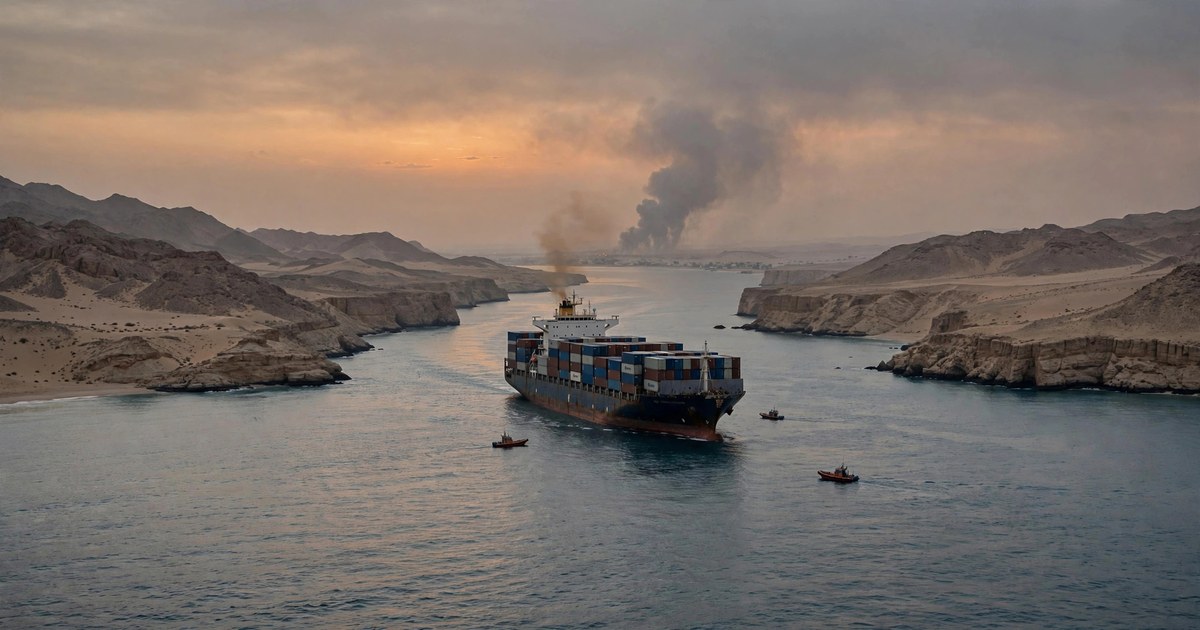
Two cargo ships sank or began sinking near the Strait of Hormuz within the same day, after being struck by projectiles in attacks that maritime security sources described as a sharp escalation in the eight-month US-Iran war. The incidents, reported on Wednesday, October 14, 2026, were trending per news coverage across Reuters, The Wall Street Journal, and maritime trade publications.
The Singapore-flagged container ship GFS Pride sank after being hit by an unknown projectile a day earlier. A second vessel, the Antigua and Barbuda-flagged bulk carrier Cape Dao, which had been damaged in an attack on September 23, was reported to be sinking after a rescue attempt failed. A third ship, the GFS Giselle, was struck but reached a safe anchorage under its own power.
What Happened to the Three Ships
According to Singapore's Maritime and Port Authority (MPA), the GFS Pride was struck on October 13 while transiting the Strait of Hormuz. The attack caused damage and a fire on board. All 21 crew members were safely evacuated and no injuries were reported. The vessel sank the following day, and Pakistan's hydrographic office issued a navigational warning to ships, cautioning mariners about floating containers from the sunken ship.
The GFS Pride was a relatively small container ship with a capacity of 2,824 TEU (twenty-foot equivalent units), managed by the UAE-based GFS Ship Management FZE. Maritime security firms Vanguard, Marisks, and Neptune reported that the ship was hit about one nautical mile east of Ras Makhbuq, Oman, and that an onboard fire followed before the crew abandoned the vessel.
The GFS Giselle, also Singapore-registered and operated by the same manager, was struck on October 14 and sustained hull damage. The MPA said all 22 crew members aboard were safe, there were no injuries, and the vessel reached a safe anchorage under its own propulsion. No Singapore nationals were aboard either vessel, the authority added.
The Cape Dao's story stretches back further. The Antigua and Barbuda-flagged bulk carrier was attacked on September 23 by two unidentified projectiles that struck its port side when it was roughly 15 nautical miles northeast of Khasab, Oman. One Indian crew member died in that attack. The ship was carrying about 170,000 tons of coal from the United Arab Emirates to India. British maritime risk management group Vanguard said on Wednesday that the vessel was reported to be sinking after an unsuccessful rescue attempt.
Why the Strait of Hormuz Matters
The Strait of Hormuz is a narrow waterway between Iran and Oman that connects the Persian Gulf with the Gulf of Oman and the open sea. At its narrowest, the strait is only about 21 nautical miles wide, with shipping lanes squeezed into two narrow channels. Roughly one-fifth of the world's petroleum liquids pass through it, making it the single most important oil chokepoint on the planet.
That geography is why attacks there carry weight far beyond the ships involved. When vessels are struck in or near the strait, insurers raise war-risk premiums, shipping companies reroute or delay sailings, and oil markets price in the risk of a supply disruption. The war has already pushed regional energy tensions sharply higher, and countries such as Japan have moved to reduce their dependence on the strait.
A Sharp Escalation in the Shipping War
The sinkings did not come out of nowhere. The campaign against commercial shipping has intensified steadily through October. At least six vessels were struck in a single day on Sunday, October 11, and the United Kingdom Maritime Trade Operations (UKMTO) office has since issued four additional verified attack warnings covering incidents on October 13 alone.
The latest UKMTO warnings, numbered 170-26 through 173-26, described attacks on three container ships and one tanker. Two of the warnings reported a container ship and a tanker struck by unknown projectiles without identifying the vessels. Two time-late reports described a 50,000-tonne container ship struck during an inbound transit and a 19,000-tonne container ship struck during an outbound transit, both of which reported minor damage, no casualties, and continued their voyages. It remained unclear whether any of those UKMTO reports correspond to the Singapore-registered vessels.
According to data from the International Maritime Organization (IMO), the GFS Pride is the second vessel to sink since the US-Iran war began on February 28, 2026. The first was the Malta-flagged container vessel Safeen Prestige, which sank in early March after a projectile sparked a fire in its engine room. The crew abandoned that vessel, a tugboat sent to rescue it was also struck, and four seafarers died with three more severely injured, the IMO said. The Wall Street Journal reported that the latest sinkings are the first such incidents in months, and described the escalation as having little precedent.
Reuters reported that Iran is deploying new tactics to target ships sailing through the strait, citing two senior Iranian officials who said the aim was to keep oil prices high and influence the upcoming US midterm elections scheduled for November 3. The United States has been shepherding more Gulf oil through the strait while enforcing a naval blockade of Iranian oil exports, and Iran has repeatedly escalated its attacks in an attempt to disrupt that operation.
Oil Prices and Global Markets
The war and the disruption to shipping have kept energy markets on edge. Brent crude was trading at around $106.58 a barrel on Wednesday amid concerns over supply disruptions. Higher oil prices feed directly into fuel and transport costs worldwide, and into the politics of the US midterm elections, where gasoline and diesel prices have become a major issue.
The broader regional conflict has already hit energy infrastructure. Earlier this month, a missile struck the Saudi Aramco headquarters in Dhahran, and tanker attacks near Oman left sailors missing. Each incident adds another layer of risk to a market already stretched by the war.
What Could Happen Next
Several developments could shape what follows. The United States maintains a naval presence in the region, including roughly a dozen Navy ships enforcing the blockade of Iran, and could step up convoy or escort operations to protect shipping through the strait. Diplomacy is also in play: Qatari mediators have been awaiting Iran's response to the latest US counterproposal aimed at ending the war and securing nuclear concessions.
Politically, the timing is sensitive. President Donald Trump said earlier this month that the United States would not attack Iran before the midterm elections, citing "productive discussions" with Tehran, but then warned Iran at an Alaska campaign rally that its patience had run out. Axios reported that Trump and Israeli Prime Minister Benjamin Netanyahu discussed the possibility of a major new military operation against Iran before the elections, although a White House official disputed that account. The conflicting signals leave the course of the war uncertain, and shipping in the Strait of Hormuz remains on the front line.
Frequently Asked Questions
What is the GFS Pride?
The GFS Pride was a Singapore-flagged container ship with a capacity of 2,824 TEU, managed by the UAE-based GFS Ship Management FZE. It was struck by an unknown projectile on October 13, 2026, caught fire, and sank near the Strait of Hormuz the next day. All 21 crew members were safely evacuated.
Did anyone die in the GFS Pride sinking?
No. Singapore's Maritime and Port Authority confirmed that all 21 crew members aboard the GFS Pride were safely evacuated and no injuries were reported. The Cape Dao, a bulk carrier that was also reported sinking, had one Indian crew member killed in the original September 23 attack on that vessel.
Why are ships being attacked near the Strait of Hormuz?
Attacks on merchant shipping are part of the US-Iran war that began on February 28, 2026. Reuters reported that Iran is deploying new tactics to target ships transiting the strait, citing two senior Iranian officials who said the aim was to keep oil prices high and influence the US midterm elections. The United States has been enforcing a naval blockade of Iranian oil exports while escorting Gulf oil through the strait.
How important is the Strait of Hormuz for global oil?
The Strait of Hormuz is the world's most important oil chokepoint. Roughly one-fifth of global petroleum liquids pass through it. Attacks there raise insurance premiums, disrupt shipping schedules, and push oil prices higher - Brent crude was trading at around $106.58 a barrel on October 14, 2026.
How many ships have sunk since the US-Iran war began?
According to data from the International Maritime Organization, the GFS Pride is the second vessel to sink since the war began on February 28, 2026. The first was the Malta-flagged container vessel Safeen Prestige, which sank in early March, killing four seafarers. The Cape Dao was reported to be sinking after an earlier attack, which would raise the toll further if confirmed.
Sources: Reuters (Oct 14, 2026) - Container ship sinks near Hormuz after being hit by projectile; The Wall Street Journal (Oct 14, 2026) - Two Cargo Ships Sink Near Strait of Hormuz; gCaptain (Oct 14, 2026) - Containership Sinks as Hormuz Attacks Spiral Out of Control; Maritime and Port Authority of Singapore (Oct 14, 2026) - statement on GFS Pride and GFS Giselle; Vanguard maritime risk group (Oct 14, 2026) - note on Cape Dao; International Maritime Organization - shipping loss data; United Kingdom Maritime Trade Operations (UKMTO) - warnings 170-26 to 173-26.