
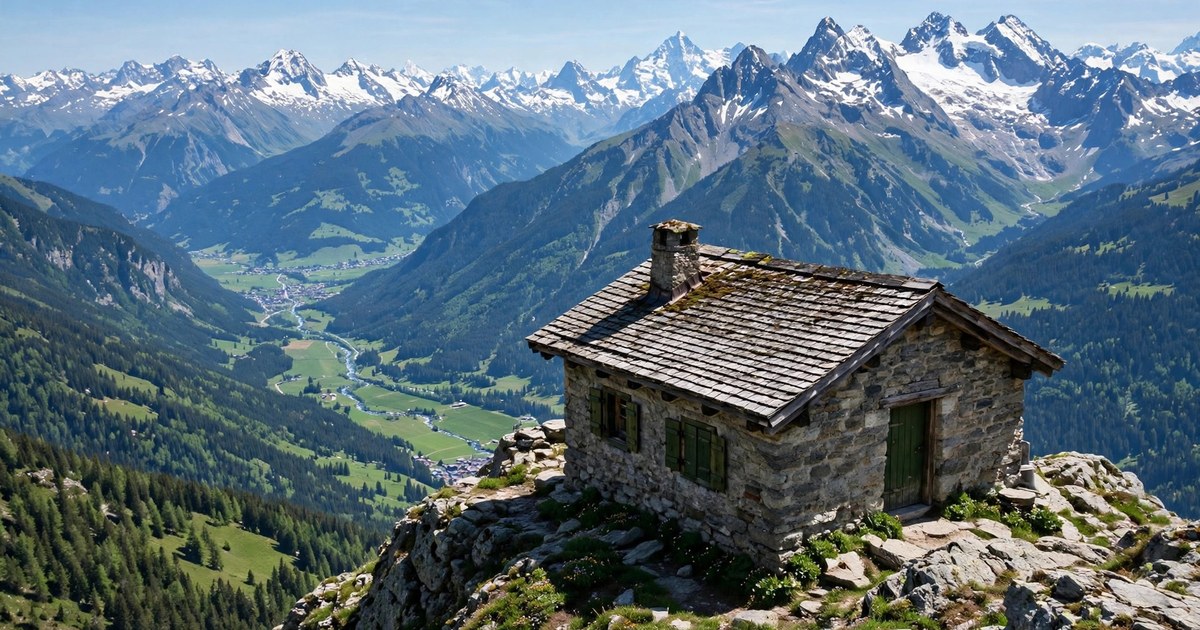
The Eagle's Nest fire has stunned Germany and history watchers around the world. Flames engulfed the Kehlsteinhaus — the infamous mountaintop retreat built for Adolf Hitler in the Bavarian Alps — late on Friday night, October 23, 2026, and Bavarian police have detained a suspect while they investigate whether the blaze was deliberately set. Trending per news coverage on Saturday morning, the story fuses a dramatic overnight emergency operation with the dark history of one of the most recognizable landmarks of the Nazi era.
Fire crews were alerted shortly after 9 p.m. local time, but reaching the summit was a race against the terrain itself. The Eagle's Nest sits at 1,834 metres above sea level, and the only routes up are a steep mountain path and a famous brass elevator carved through solid rock. Because of the difficult climb, the local rescue service did not reach the top of the alp above Berchtesgaden until 9:52 p.m. — nearly an hour after the alarm was raised — by which time the historic building was already engulfed in flames, German newspaper BILD reported.
Around 200 firefighters and emergency personnel battled the blaze through the night, according to Reuters, which cited a German police statement. The logistical challenge was enormous: with no road access for heavy equipment, water and gear had to be hauled up the mountain. More than 200 emergency workers rushed to the scene in total, the New York Post reported, citing Der Spiegel. As of Saturday morning, the full extent of the damage was still not clear.
What Happened in the Eagle's Nest Fire
The Eagle's Nest fire broke out on the evening of Friday, October 23, 2026, at the Kehlsteinhaus on the Kehlstein mountain near Berchtesgaden in southern Bavaria, close to the Austrian border. The building — which operates as a mountain inn with a restaurant and exhibitions documenting its Nazi-era past — was believed to be empty when the fire started, and no injuries had been reported in the first hours of the emergency response.
BILD reported that the structure was already fully engulfed when firefighters arrived, raising fears about how much of the 1930s interior could be saved. The site's extreme isolation, which once made it a secure retreat for Nazi leaders, worked against the rescuers: specialized mountain roads and the brass elevator are the only way up, and moving water to 1,834 metres in the dark is a formidable operation. By Saturday morning, German media including Der Spiegel were describing a major criminal investigation underway at one of Bavaria's most visited historic sites.
The Suspect and the Arson Investigation
Bavarian police said they suspected arson almost immediately — and they already have a person in custody. According to BILD, officers heading toward the fire encountered a motorcyclist on the mountain road and alerted the fire brigade following behind them. The man was stopped and arrested, a police spokesperson told the newspaper. Reuters confirmed on Saturday that German police had "detained a suspect" after the fire broke out at the historic guest house.
Investigators are now working to establish whether the detained man was connected to the blaze. Police said in a statement that they were examining the suspect's possible link to the fire, and there was no immediate word about a motive, Reuters reported. The exact cause of the fire had not been established as of Saturday morning — but the speed with which police raised the arson theory, and the arrest so close to the scene, suggests investigators are treating the case with the utmost seriousness.
If the fire proves to be arson, the case would join a troubling pattern of attacks on historic and symbolic sites in Europe. But officials have cautioned against speculation: until forensic teams can safely examine the ruins at the summit, the cause remains officially undetermined.
What Is the Eagle's Nest? A Brief History
To understand why the Eagle's Nest fire matters, you have to understand the building. The Kehlsteinhaus — known in English as the Eagle's Nest — was built in 1937–38 as a prestigious teahouse and guest house for Nazi officials, constructed on the orders of Martin Bormann, one of Adolf Hitler's most powerful deputies. Perched spectacularly above Berchtesgaden in the Obersalzberg area, it was designed as a venue for receiving foreign guests and diplomats away from public view, and as a symbol of the regime's power carved into the Alpine landscape.
Ironically, the man it was built to honour barely used it. Hitler himself visited the Eagle's Nest only a handful of times; he reportedly disliked the heights and preferred to stay farther down the mountain at the sprawling Berghof complex, which served as the Nazis' second government headquarters. The Eagle's Nest is a separate building from the Berghof, and it survived the Second World War largely unscathed — unlike many of the structures in Obersalzberg, it sustained no damage during Allied bombing campaigns.
After the war, the building was classified as a historical monument recalling the Nazi period. Since 1952 it has operated as a mountain inn, and today — owned by the Free State of Bavaria — it houses a restaurant and exhibitions that document its links to Nazi Germany. It is one of Germany's most visited historic sites, drawing tourists who ride the famous brass elevator through the rock to the summit for the views and the history alike.
Why the Eagle's Nest Fire Resonates Worldwide
The global reaction to the Eagle's Nest fire reflects the building's unique place in public memory. For historians, it is a primary artifact of the Nazi era — one of the few major regime buildings to survive the war intact, preserved precisely so that its history could be confronted rather than erased. For Germany, it is a sensitive symbol: a monument that the state of Bavaria deliberately maintains as a place of remembrance and education, not celebration.
The fire also raises difficult questions about the protection of difficult heritage. Sites associated with atrocity regimes are sometimes targeted by arsonists, vandals, or extremists — either to destroy the evidence of history or, conversely, to attack symbols they associate with an ideology. German authorities have not suggested any political motive, and the investigation is in its earliest stages. But the speed of the arrest and the prominence of the target guarantee that the inquiry will be watched closely in Berlin and beyond.
There is also a practical concern: the Kehlsteinhaus is a major tourist destination, and its seasonal operation supports the local economy around Berchtesgaden. A prolonged closure for investigation and restoration would be felt well beyond the summit.
What Happens Next for the Kehlsteinhaus
In the coming days, three questions will dominate the story. First, the criminal investigation: will forensic evidence confirm arson, and will the detained suspect be charged? Bavarian police have said only that the link between the suspect and the fire is under investigation, and no motive has been announced.
Second, the damage assessment. Because the site is so hard to reach, a full survey of the 1930s structure may take days. Preservationists will be watching closely: the building's value lies not just in its dramatic setting but in its original fabric — the stonework, the elevator, the interiors that survived the war. Whether those can be restored will depend on what the flames left behind.
Third, the future of the site. The Free State of Bavaria, as owner, will have to decide how to secure and eventually reopen a monument that now carries a new layer of history: the night in October 2026 when the Eagle's Nest itself caught fire. Whatever the investigation finds, the Kehlsteinhaus will remain what it has been since the war — a place where Germany confronts its past, now with one more chapter to explain.
Related: Germany's security services remain on high alert after a suspected Russian spy was arrested in Germany earlier this month, and Berlin has been shoring up critical infrastructure as Germany secured extra winter gas storage ahead of the cold season. Emergency crews in North America faced their own major blaze recently, when a serious fire incident at CFB Wainwright turned fatal.
Sources: Reuters; BILD, Der Spiegel and OE24 (via news coverage); New York Post; Sweden Herald; Bytes Europe — October 24, 2026.