
Booker Prize 2026 winner M. John Harrison was announced on Monday 9 November 2026 at Old Billingsgate in London, and the result made literary history twice over. Harrison, 81, is the oldest writer ever to win the Booker Prize, and his novel The End of Everything is widely described as the first work of science fiction to take the award. The judges, chaired by historian Mary Beard, chose the book unanimously. Harrison receives £50,000 and the Booker trophy, presented to him by last year's winner, David Szalay.
The win caps a writing career of six decades for an author who had never before been nominated for the Booker Prize. The End of Everything, his 13th novel, was the shortest book on this year's six-title shortlist at 198 pages, and it was published by Serpent's Tail, an imprint of the independent publisher Profile Books, which had never won the Booker before. For a prize that has sometimes been accused of favouring a narrow band of literary fiction, the choice of a post-apocalyptic satire by an 81-year-old science-fiction writer is a striking one.
Booker Prize 2026 Winner: The Oldest in Prize History
Harrison, born in Rugby in 1945, was 81 when the prize was announced, making him the oldest winner in the Booker's history. The previous record holder was Margaret Atwood, who was 79 when she jointly won the 2019 prize for The Testaments. CNN reported that Harrison is the oldest author ever to receive the honour, and Reuters confirmed that he became the oldest winner in the award's history at 81. The gap matters because the Booker has long been seen as a young writer's prize in practice, even though it has no age limit: winners are usually in their forties or fifties, and a debut or second novel often takes the award.
Harrison's age is only half the story. He has been writing science fiction and fantasy for more than 50 years, publishing his first science-fiction work in 1971, and his career as a novelist and critic spans six decades, according to Reuters. Yet The End of Everything was his first Booker nomination, let alone his first win. He had even served as a Booker judge himself, in 2022, sitting on the other side of the table. That long apprenticeship — six decades of writing, a spell judging the prize, and a first nomination at 81 — is part of what made the announcement at Old Billingsgate feel like a late-career vindication rather than a routine prize-giving.
What Is The End of Everything About?
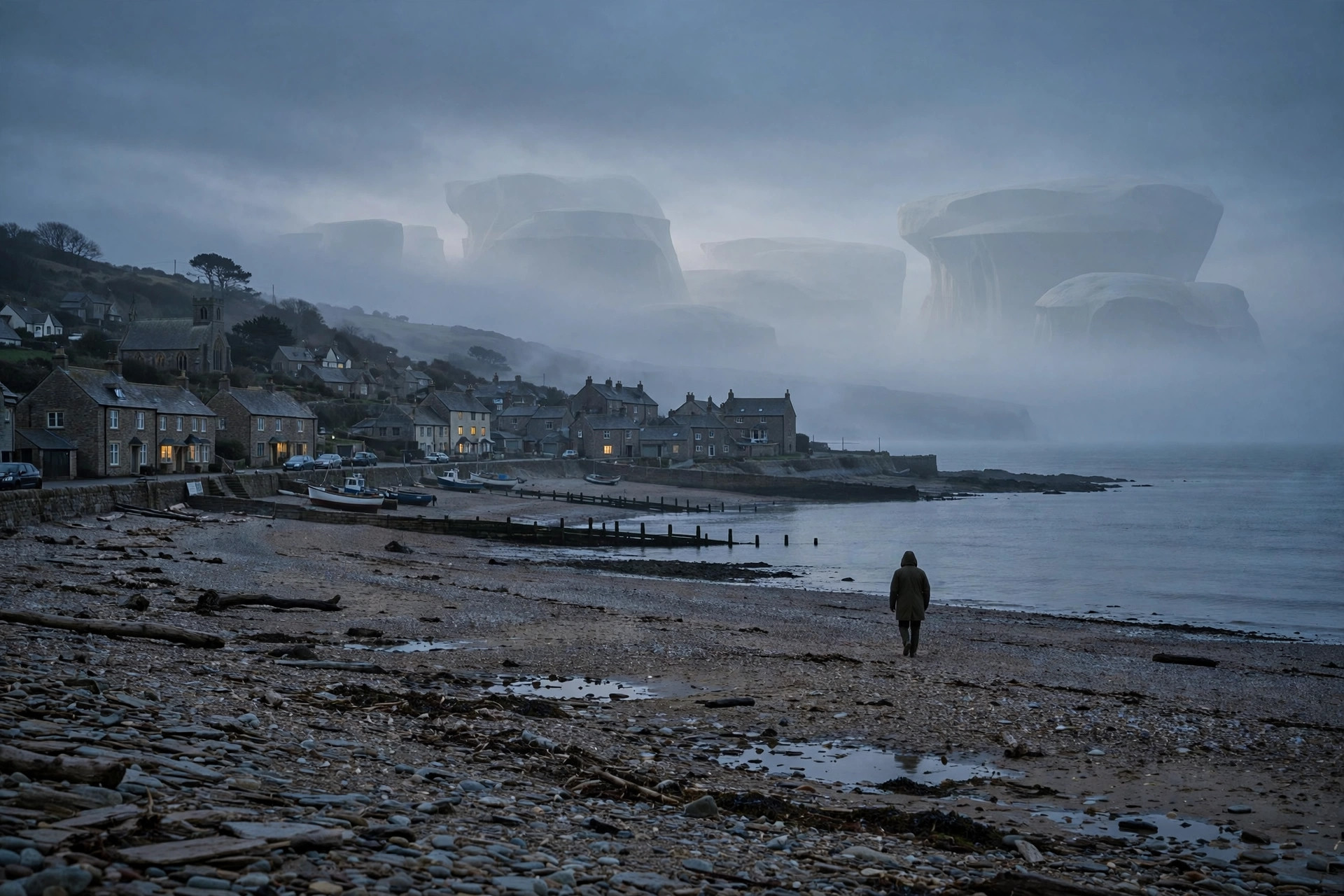
The End of Everything is a post-apocalyptic novel set in the fictional English coastal town of Dalston-on-Sea, on the Kent coast, in the not-too-distant future. Social order has broken down after the arrival of mysterious entities known as the iGhetti, giant creatures whose nature and purpose nobody in the novel fully understands. The story follows Phillip Tennent, a beachcomber on England's south coast, and his elderly aunt Marnie, as they pick through the remains of a collapsed society and come across an unfamiliar, organic object that might hold the key to humanity's survival.
At 198 pages, the novel was the slimmest of the six shortlisted books, and its brevity is part of its design: Harrison leaves much unexplained, including the iGhetti themselves, and the book's tension comes from what its characters cannot understand rather than from what they can. The Booker Prizes organisation describes the novel as presenting "the politics of now seen through the lens of the future", while Reuters calls it a dystopian satire that probes the limits of human understanding. Harrison himself described it, in comments reported by The Irish Times, as "a disaster story in which the disaster is the failure to comprehend". That failure to comprehend — by governments, by scientists, by ordinary people — is the book's real subject, and it is what the judges appear to have responded to.
Why the Judges Chose It
The five judges reached their decision unanimously after a day of deliberation, according to the prize chair, Mary Beard. The panel brought together a historian, two writers, a critic and a musician: Beard chaired, alongside poet Raymond Antrobus, novelist Patricia Lockwood, critic Rebecca Liu and Jarvis Cocker, frontman of the band Pulp. A unanimous verdict is not automatic for the Booker — judging meetings have famously run long and split in the past — so the fact that five judges from such different backgrounds agreed on a short, strange science-fiction novel says something about how strongly the book landed in the room.
The judges were choosing from 163 eligible books, narrowed to a 13-book longlist announced on 28 July 2026 and then a six-book shortlist announced on 22 September at the Southbank Centre in London. The prize is awarded for the best English-language novel published in the United Kingdom or Ireland between 1 October 2025 and 30 September 2026. Against that field, The End of Everything won not by being the most conventional literary novel on the list but by being the most distinctive: a short, unsettling book that uses an alien arrival to examine how societies fail to understand the crises in front of them. That theme — a society unable to grasp what is happening to it — reads as a commentary on the present, which is exactly how the Booker Prizes organisation frames it.
A First for Science Fiction
Harrison is the first avowed science-fiction author to receive the Booker Prize, according to a literary-awards guide summarising the result, and CNN noted that the win could be considered the first time a science-fiction novel has been awarded the prize. That distinction matters because the Booker has historically drawn its winners from literary fiction, and genre writers — science fiction, fantasy, crime — have often been longlisted but rarely crowned. Harrison spent his career moving between science fiction and literary fiction, refusing to stay in one category, and the prize now rewards that refusal.
The win also breaks a pattern in a second way. The Booker has sometimes been criticised for rewarding the same kind of novel: a big, serious, realist book about history or family. The End of Everything is none of those things. It is short, it is speculative, and it leaves its central mystery unsolved. Its victory suggests the judges were willing to reward a book for what it does differently rather than for how closely it resembles past winners. For science-fiction writers who have watched the prize from the outside for decades, that is a meaningful shift, and it is likely to be the most argued-over aspect of this year's result.
Booker Prize 2026 Winner: What Happens Next for the Novel
With the Booker Prize 2026 winner announced, attention now turns to what the win does for the book. The immediate prize is £50,000, worth about $67,000 according to CNN, plus the Booker trophy, a design originally created by children's author and illustrator Jan Pieńkowski in 1969 and reinstated in 2022. Harrison received the trophy from David Szalay, who won the 2025 Booker for Flesh. For the publisher, the win is a first: Serpent's Tail had been nominated five times before without winning, and The End of Everything is its first Booker victory.
What follows a Booker win is usually a sharp change in a book's fortunes. The winning novel is reprinted, put at the front of bookshops, and taken up by readers who would never otherwise have found it — a pattern that matters all the more for a short, challenging book from an independent publisher. The win also brings translation interest and a new audience for Harrison's earlier work, much of which has been in print for decades. At 81, Harrison now has the largest readership of his career, and the prize gives his back catalogue a second life alongside the winning novel.
The 2026 Shortlist and the Road to the Prize
Harrison was selected from a shortlist of six novels. Alongside The End of Everything, the finalists were The Disappearers, Black Bag, May We Feed the King, The Things We Never Say and John of John. The 163 submissions considered by the judges were whittled down to 13 on the longlist and then to six, a process that ran from the spring through to the shortlist announcement in September. The ceremony itself took place at Old Billingsgate, a former fish market in the City of London, on the evening of Monday 9 November.
The result leaves the Booker with a story it will be telling for years: an 81-year-old science-fiction writer, on his first nomination, winning unanimously with the shortest book on the shortlist. Whether the win opens the prize to more genre fiction or stands as a one-off, it has already changed how this year's prize will be remembered. For readers who enjoy fiction that looks at the present through an imagined future, the novel's themes will feel familiar from the real world — including the hottest October on record, covered by Worldlession in five facts about October 2026, the warmest October ever recorded, and the severe smog that followed Diwali in Delhi, covered in our report on Delhi's worst Diwali air quality since 2021. Readers can also follow the 5.7-magnitude earthquake that struck Hamamatsu, Japan.