
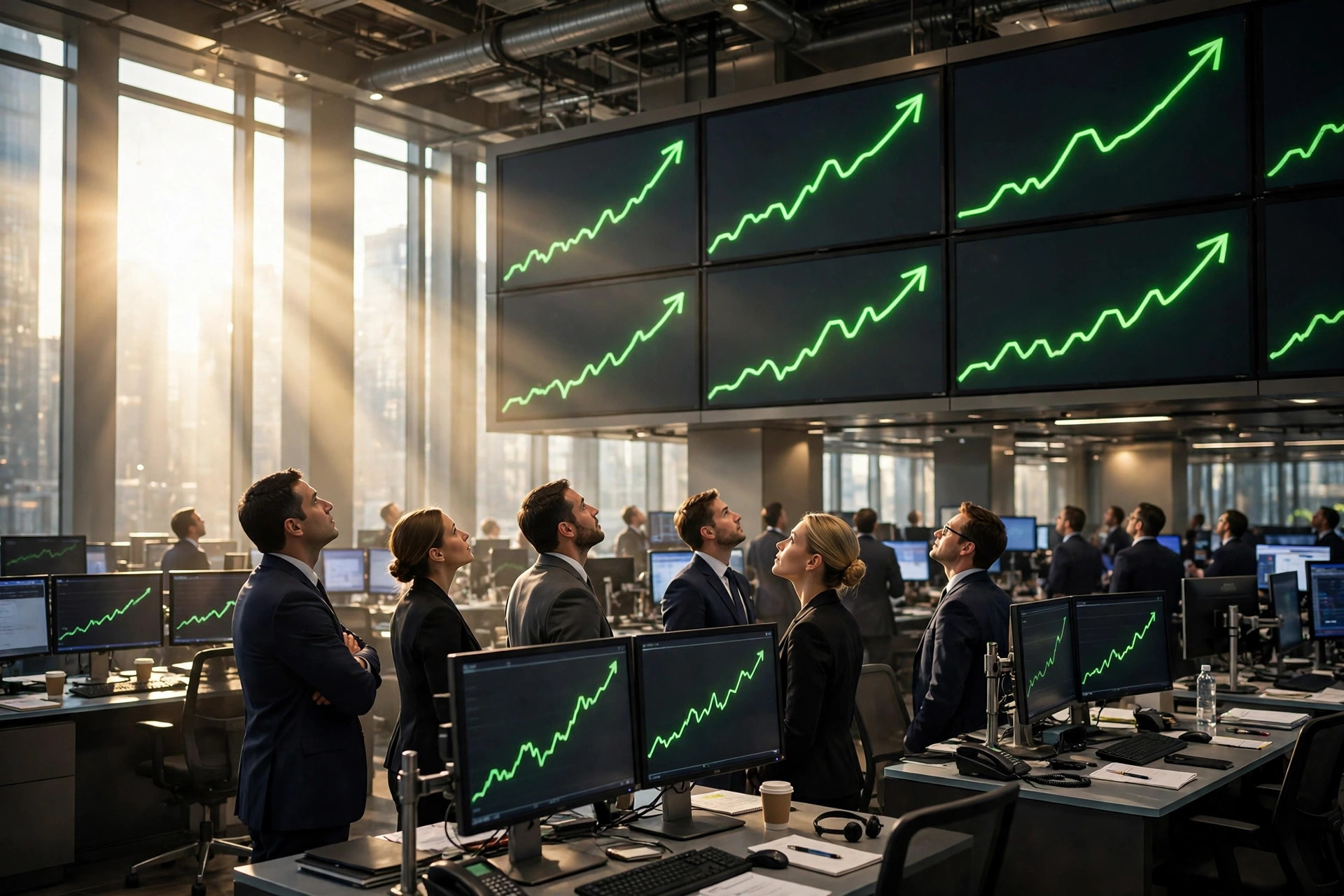
The Anthropic IPO debut delivered one of the most dramatic first days in stock market history on Thursday 19 November 2026, when shares in the artificial intelligence company behind Claude opened on the Nasdaq at $111.50 — about 34% above the $83 offer price — before giving back much of the gain in a single afternoon. Within hours, the stock had climbed as high as $114.99, then slipped to about $95.69 by 1:55pm ET, a peak-to-trough swing that wiped roughly $345 billion from the company's peak valuation. All prices quoted here are intraday snapshots, not closing prices, and they capture a debut that was as volatile as it was historic. Anthropic had priced 980 million shares at $83 the day before, raising about $81.3 billion in what Reuters described as the largest initial public offering on record.
How the Anthropic IPO Debut Unfolded on Thursday
Trading began under the ticker ANT, and the opening print set the tone immediately. At $111.50, the shares opened roughly 34% above the offer price, and the buying did not stop there. By around 11:50am ET the stock had reached $114.99, about 39% above the $83 pricing level, and the opening implied a fully diluted valuation near $2 trillion. More than 600 million shares changed hands in the first hours of trading, making Anthropic the most actively traded stock on the Nasdaq that day, according to market data reported by Reuters. The scale of the turnover showed how many investors wanted a piece of the listing on day one, and how many early holders were willing to sell into the strength.
The mood of the Anthropic IPO debut shifted after midday. Around 12:30pm ET the shares were trading at about $100.92, and by 1:55pm ET they had fallen further to about $95.69 — still above the $83 offer price, but well below the morning peak. The retreat was sharp enough that the peak-to-trough swing erased roughly $345 billion of the valuation implied at the intraday high. For a company whose shares had only just started trading, that is an unusually violent first-day range, and it left two very different stories in play at once: a record-breaking listing that rewarded anyone who bought at the offer price, and a stock that gave back a large part of its opening surge before the day was out.
The structure of the Anthropic IPO debut helps explain both the pop and the fade. Only about 8.6% of Anthropic's shares were available to the public after the IPO, so a relatively small free float met very large demand, which tends to push an opening price higher. Lock-up agreements also keep most existing shareholders from selling for now, with those restrictions expiring over the next year. That scarcity can lift a debut, but it can also make the first days of trading choppy, because a small number of trades moves the price a long way in either direction.
A Record $81.3 Billion Raising — and a $107.3 Billion Total Haul
The numbers behind the Anthropic IPO debut are difficult to overstate. Anthropic priced 980 million shares at $83 on 18 November, above the $70 to $78 range it had originally set, and raised about $81.3 billion. That made it the largest IPO on record, surpassing SpaceX, which had raised $75 billion in its base offering and about $86 billion including its over-allotment. At the $83 offer price, Anthropic carried a fully diluted valuation of about $1.5 trillion, already placing it among the most valuable companies ever to list.
The public offering in the Anthropic IPO debut was only part of the money raised. Alongside it, Anthropic agreed a concurrent private placement of about $26 billion, taking the total haul to roughly $107.3 billion. The private placement brought in some of the biggest names in technology and chips: Nvidia, Google, AMD, Microsoft, Broadcom, Micron and TSMC all took part. Their presence matters because these are not only investors — several of them are also Anthropic's suppliers, customers and rivals in the race to build artificial intelligence systems, and their money ties them closer to the company's future.
The underwriters in the Anthropic IPO debut also hold a 30-day option to buy roughly $12 billion or more of additional stock, the arrangement known on Wall Street as a green shoe. If that option is exercised in full, the total raised would climb further still, and the extra shares would add to the public float. For now, the $81.3 billion public raising and the $26 billion private placement together give Anthropic one of the largest cash piles ever assembled by a newly listed company.
What the Anthropic IPO Debut Means for Investors
For investors, the Anthropic IPO debut is a test of how much the market is willing to pay for growth in artificial intelligence, and how much risk it will tolerate to own it. The opening at $111.50 rewarded the institutions that bought at $83, and the near-$2 trillion valuation implied at the open put Anthropic in the same conversation as the largest listed companies in the world. Yet the afternoon fade to about $95.69 showed that even the most sought-after listing of the year is not immune to sellers taking profits, or to doubts about what the company is worth once the first rush of buying passes.
Those doubts about the Anthropic IPO debut have a concrete basis in the company's own filings. Anthropic reported an annualised revenue run rate of $81 billion as of 31 October, up $10 billion from 30 September, and revenue of $33.2 billion for the nine months to 30 September, against $2.5 billion in the same period a year earlier. That is extraordinary growth by any standard. But the company also reported a loss of $80.7 billion in the first half of 2026, a reminder that building and running the computing infrastructure behind frontier AI models is enormously expensive, and that the path to sustained profit is not yet proven.
The $220 Billion Cash Pile Behind the $80.7 Billion Loss
After the Anthropic IPO debut, Anthropic holds roughly $220 billion in cash and short-term investments, according to figures reported after the listing. That war chest is the other side of the $80.7 billion first-half loss: the company is spending at a scale few businesses in history have attempted, and it has now raised the money to keep spending. The cash will fund computing capacity, research and the hiring of engineers in a market where the scarcest resource is not money but the people and the chips needed to train the next generation of models.
The question for shareholders in the Anthropic IPO debut is whether that spending turns into durable profit. Revenue is growing fast — the $81 billion annualised run rate as of 31 October was $10 billion higher than a month earlier — but the losses show that each new step in capability costs more than the last. Investors who bought at the open are betting that the revenue curve eventually outruns the cost curve. The afternoon slide suggests that not everyone is willing to pay a near-$2 trillion price for that bet on day one, and that the stock may need to find a steadier level before the market settles on a verdict.
What Happens Next After the Anthropic IPO Debut
Several dates now matter more than the opening price. The underwriters' 30-day option for about $12 billion or more of extra stock will be watched closely, because exercising it would signal continued demand and add shares to the public float. The lock-up expiries over the next year will matter even more: as existing shareholders become free to sell, the supply of shares will grow, and the stock will have to absorb it. Anthropic's next financial updates will also be scrutinised for evidence that the $81 billion revenue run rate is still climbing, and for any sign that the losses are narrowing.
For the wider market, the debut sets a benchmark, even as the Dow fell for a third straight day on rate-hike worries. It shows that investors will still pay extraordinary prices for a leading AI company, and it gives every other private AI firm a reference point for its own value. But it also shows that a record IPO does not guarantee a smooth ride: a stock can open 34% higher, touch a valuation near $2 trillion, and still finish the afternoon well below its peak. The Anthropic IPO debut will be remembered as the biggest listing ever — and as a reminder that even the biggest listings have to earn their price, one trading day at a time.