
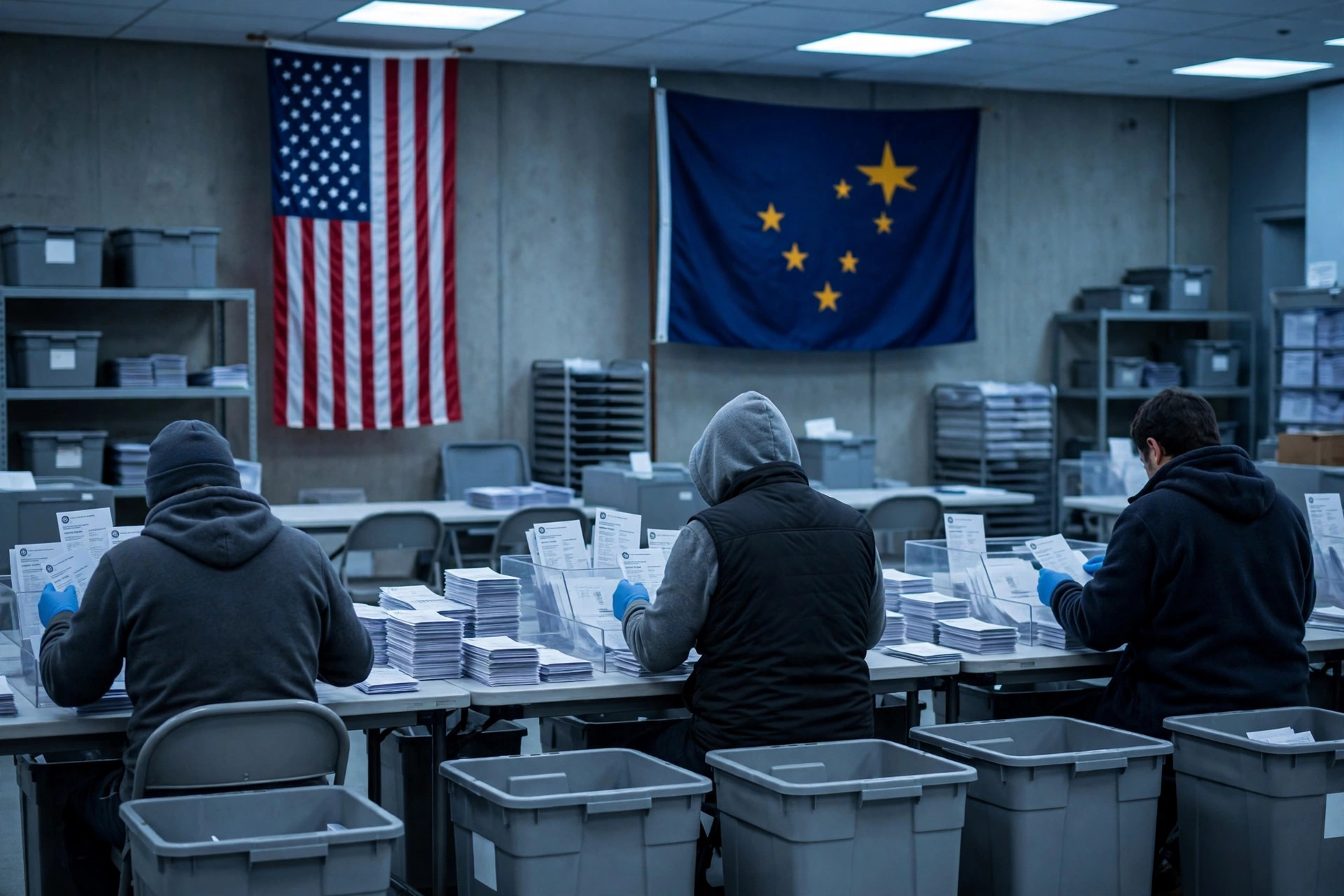
The Alaska Senate race is decided. The Associated Press called it for Democrat Mary Peltola on Tuesday evening, 17 November, two weeks after Election Day, closing the last undecided Senate contest of the midterm elections. Peltola defeated two-term Republican incumbent Dan Sullivan with 144,302 first-choice votes — 50.12% — to Sullivan's 131,844 (45.80%), clearing the 50% threshold outright, so Alaska will not run the ranked-choice tabulation it had scheduled for 18 November. Her win gives Democrats a 56–44 majority in the next Senate. This is how the count ended, why Alaska took so long, and what the result decides.
The numbers come from the Alaska Division of Elections summary published on 17 November, with 401 of 401 precincts reporting. Election officials counted 290,003 ballots from 605,433 registered voters, a turnout of 47.90%. In the Senate race, Peltola has 144,302 first-choice votes, 50.12%. Sullivan has 131,844 votes, 45.80%. Daniel J. Sullivan Jr. received 4,760 votes, and Republican Gerald Heikes 2.1%, according to the Associated Press. Peltola's lead is 12,458 votes. The earlier 14 November report (140,637 to 129,424, an 11,213-vote lead) is superseded by this count. The Associated Press called the race on Tuesday evening, 17 November, with an estimated 99% of the vote counted.
Why the Alaska Senate race took so long to call
Alaska counts slowly by design. State law accepts absentee ballots from overseas voters for up to 15 days after Election Day as long as they were postmarked by 3 November, and many ballots come from communities off the road system. Ballots mailed from inside the United States had to arrive by Friday 13 November; ballots from overseas could arrive until 18 November. The final count was published on 17 November, and certification is targeted for 25 November.
The second reason was the margin. Neither candidate had 50% of first-choice votes until the final absentee ballots arrived, and the gap between them was about 1.6 points. Alaska uses ranked-choice voting in general elections: voters rank candidates in order of preference, and if no one tops 50% once every ballot is counted, the lowest-placed candidates are eliminated one by one and their supporters' next choices are redistributed until one candidate reaches a majority. The official ranked-choice tabulation had been scheduled for 18 November, the day the last overseas ballots were due. In the end it was not needed: the final count put Peltola over 50% on first choices, so she won outright.
The two Sullivans and the ranked-choice maths
The race has a twist that no other Senate contest has: two men named Sullivan on the ballot. Dan S. Sullivan is the incumbent senator. Daniel J. Sullivan Jr., a retired teacher, finished fourth with 4,760 votes in the final count. His votes mattered in the ranked-choice maths: had no candidate cleared 50%, the rounds would have started by eliminating the lowest-placed candidates, and his supporters' second choices would have been redistributed first. In the end Peltola cleared 50% on first choices, so no redistribution ran.
Early analyses of the ballot-level data pointed the same way. FairVote, using the Division's cast vote record updated 13 November, expected Peltola to win the ranked-choice tally, 51.7% to 48.3% in the final round, with her lead narrowing to about 9,910 votes after transfers — and noted she might cross 50% of first-choice votes, which would remove the need for a ranked-choice tally at all. The Alaska Beacon's analysis of preliminary data found Sullivan gaining 3,066 redistributed votes and Peltola 2,160, a net gain of 906 for the incumbent — not enough to erase a 10,412-vote first-choice lead. Both proved right in direction: the final count put Peltola over 50% on first choices, so no ranked-choice tally ran.
Trump's claim and the court ruling
President Donald Trump declared on Saturday 7 November that Sullivan had won. In a post on Truth Social, he wrote that Sullivan was leading substantially once the votes for two other candidates were added to his total: "When you add Daniel (3,600, 1.68%) into Dan, and Gerald Heikes (4,846, 2.27%), Senator Dan Sullivan is up by thousands of Votes. The Alaska Race is OVER. Dan Sullivan WON, BY A LOT!" At the time he posted, Peltola led by 637 votes, 102,962 to 102,325, with an estimated 74% of the vote counted. The New York Post reported the declaration. The Associated Press called the race for Peltola on Tuesday evening, 17 November, and other major news organisations followed. Trump's calculation treated votes cast for other candidates as though they belonged to the senator; Alaska's ranked-choice system redistributes those votes only according to each voter's own rankings, not by adding them to another candidate.
The race has also been fought in court. On Thursday 12 November, Superior Court Judge Thomas Matthews denied the Peltola campaign's request for a list of voters whose absentee ballots were rejected. The campaign sued on 7 November; Sullivan's campaign sued to block access to the voter registration database. Judge Matthews called the request "not reasonable" at the height of the count. With the race called on first-choice votes, the ranked-choice tabulation scheduled for 18 November was not needed. Meanwhile the Peltola campaign had declared that she would win: campaign manager Cheryl Bruce said the latest ballot release showed there was "not a viable path to reelection for Senator Sullivan." That assessment proved correct: the Associated Press called the race for Peltola on Tuesday evening, 17 November.
What the Alaska Senate race decides — and what it does not
The race no longer decides control of the Senate. Democrats flipped the Senate, winning nine seats to take back control of the upper chamber in the midterm elections, according to the Associated Press. Mississippi, the other uncalled Senate race, was called for the Democrats on Wednesday evening. Alaska was the last one left, and its outcome decided the size of the Democratic majority: 56 seats, not 55 — the size of their majority, not who holds it.
That distinction mattered for how to read the final week. Peltola's win makes her the first Alaska Native elected to the United States Senate, and it widens the Democratic majority to 56 seats. The Senate's balance was already settled. What was not settled was the seat itself, and it was not settled by a declaration on social media or by a campaign press release. It was settled by the count: Peltola cleared 50% of first-choice votes, so no ranked-choice tabulation was needed, and the result will be certified by 25 November.
Superior Court Judge Thomas Matthews denied the Peltola campaign's request for the names of voters whose absentee ballots were rejected, ruling the records "cannot reasonably be produced at this juncture" while election officials are still counting. The campaign had sued on 7 November seeking the list; the Division of Elections said it lacks the capacity to produce the report from voter registration records during the count.
The count itself now makes the statement plain: Peltola won with 144,302 first-choice votes to Sullivan's 131,844 — a lead of 12,458 votes — and Democrats will hold a 56–44 Senate majority when the new Congress is sworn in on 3 January 2027.
Read more: Democrats win Congress in the 2026 midterms, What a Democratic Congress means next, Trump on the midterm losses and US stocks surge after the midterm results.