
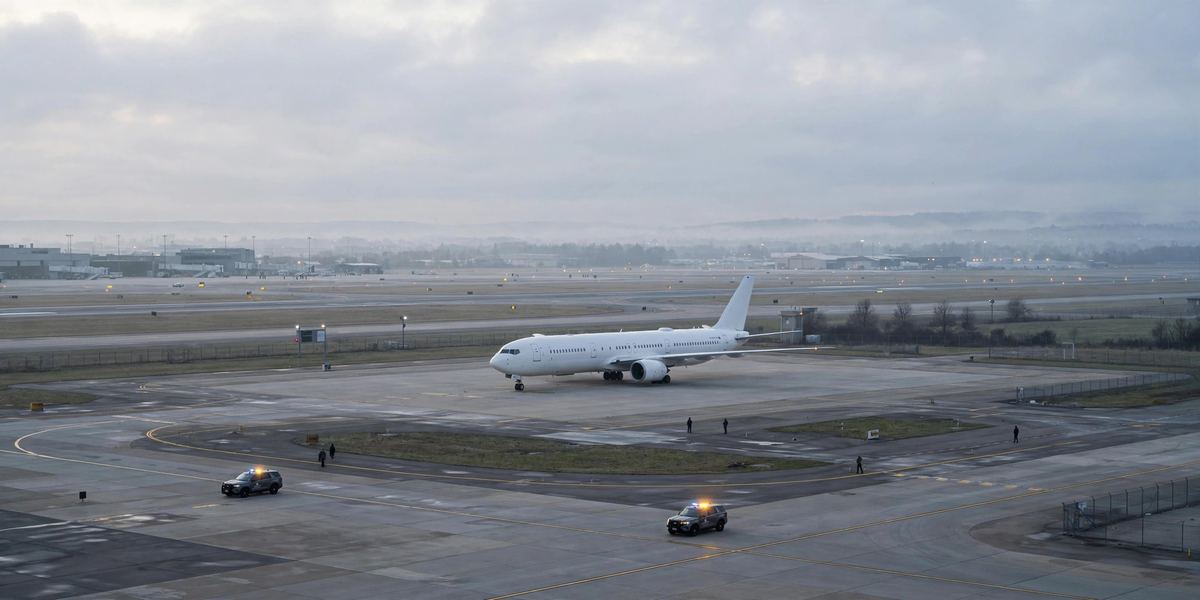
On Wednesday morning, 14 October 2026, a routine long-haul flight from Frankfurt to Delhi turned into a full-scale security operation. Air India flight AI2030, a Boeing 787-9 Dreamliner carrying more than 300 people, was diverted to Jaipur International Airport after air traffic control received a signal indicating possible unlawful interference with the aircraft — the internationally recognised hijack alert known as squawk code 7500. The aircraft landed safely, was moved to an isolation bay, and every passenger and crew member was screened before the flight continued to Delhi. The alert, trending per news coverage across Indian and international outlets, turned out to be false — but the mystery of how it was triggered has now become the subject of a formal investigation.
This article explains what happened on the morning of 14 October, what squawk code 7500 means and why it triggers such a dramatic response, what the security operation at Jaipur involved, and what investigators are trying to establish next.
What happened on flight AI2030
AI2030 was operating Air India's scheduled service from Frankfurt, Germany, to Delhi, India. According to reports citing officials, Ahmedabad Air Traffic Control (ATC) received a brief emergency transponder signal from the aircraft on Wednesday morning, while it was in Indian airspace. The signal was code 7500, the transponder code reserved worldwide for reporting unlawful interference with an aircraft — in plain language, a possible hijacking.
Controllers acted on the signal immediately. The flight was diverted to the nearest suitable airport, Jaipur International Airport in Rajasthan, where it landed safely on Wednesday morning. Within minutes of landing, the aircraft was moved to an isolation bay — a remote parking position kept clear of terminals and other aircraft so that security teams can work without putting anyone else at risk. Passengers were taken off the aircraft in phases under security supervision and moved to the terminal building, where they underwent security screening along with their baggage.
On the ground, the response was extensive. The Central Industrial Security Force (CISF), local police, the Anti-Terrorism Squad (ATS) and the Bomb Detection and Disposal Squad took part in inspecting the aircraft and luggage. India's federal counter-terrorism force, the National Security Guard (NSG), was placed on standby in Delhi as a precaution. Both pilots were deboarded in line with security protocol.
After the checks were complete, the aircraft and crew were cleared by security agencies. Passengers reboarded the same aircraft and the flight continued on its journey to Delhi. Air India said the flight had been diverted following a perceived security concern, that the relevant security agencies had carried out the necessary checks, and that the safety and security of passengers and crew remained its highest priority. Nobody was hurt, and no threat was found on board.
What is squawk code 7500?
Every aircraft carries a transponder, a device that replies to radar signals from air traffic control with the aircraft's identity, altitude and a four-digit code chosen by the pilots. Most of the time the code is an ordinary one assigned by ATC. But a small set of codes is reserved worldwide for emergencies, so that a pilot in trouble can alert controllers instantly without needing to speak:
- 7500 — unlawful interference with the aircraft, such as a hijacking.
- 7600 — radio failure, meaning the crew cannot communicate by voice.
- 7700 — a general emergency, covering everything from engine trouble to a medical crisis.
Code 7500 is deliberately designed to be discreet. A crew facing a hijacker may not be able to speak openly on the radio, so entering 7500 silently flags the emergency on controllers' radar screens and sets off a special indication at ATC facilities. Controllers then follow established security procedures: they clear other traffic out of the way, alert security agencies, and guide the aircraft to a suitable airport — all without broadcasting anything that could tip off a hijacker listening in.
That discretion is exactly why the system is built to be taken seriously every single time. Controllers and security agencies cannot know, in the moment, whether a 7500 signal means a genuine hijacking or a false alarm. The only safe assumption is that it is real until proven otherwise. That is why a single four-digit code, transmitted briefly, can trigger a response involving airport security, police, anti-terror units, bomb squads and a national counter-terrorism force — and why the Jaipur response, though it turned out to be unnecessary, was the correct one.
Why the alert is disputed
What makes the AI2030 incident unusual is that the two sides of the story do not yet agree on the most basic fact: whether the code was actually transmitted by the crew at all.
According to sources cited by The Hindu BusinessLine, the pilot-in-command denied squawking transponder code 7500, while air traffic control maintained that it had received the signal from the aircraft. That disagreement is now at the centre of the investigation. Preliminary reporting has suggested the signal may have been transmitted accidentally — through a technical malfunction or pilot error — but that has not been confirmed as a final finding, and investigators had not publicly established the cause as of Wednesday afternoon.
The dispute matters because it decides what needs fixing. If the code was entered in error, the questions are about cockpit procedures, training and how easily such an error can happen. If it was a technical fault in the transponder or related systems, the questions are about equipment and maintenance. Either way, the investigation will need to examine the aircraft's flight data recorder, cockpit voice recorder, radar recordings and the transponder's own logs to reconstruct exactly what happened, second by second.
The DGCA investigation
India's civil aviation safety regulator, the Directorate General of Civil Aviation (DGCA), has opened a probe into the incident. Investigators are working to establish what triggered the squawk 7500 transmission and why the aircraft was diverted. The probe is expected to cover the transponder and cockpit audio, the crew's account of the flight, and ATC recordings.
False or accidental emergency signals are a known issue in aviation. Transponder codes are entered on a small keypad in the cockpit, and a slip of a finger — entering 7500 instead of a nearby assigned code, for example — is one of the classic ways a false alarm can start. Equipment faults can produce similar effects. Aviation regulators treat every such incident seriously precisely because the emergency system only works if controllers trust it: if false alarms became routine, there would be a risk of slower responses when a genuine emergency occurs.
The DGCA probe will also look at the wider picture, including how quickly the diversion and security response were carried out and whether any part of the response needs tightening. For now, the official position is that the alert was false, everyone on board is safe, and the cause is under investigation.
What this means for travellers
For passengers, the AI2030 diversion is a reminder of how aviation safety works in practice: layers of procedure designed to protect people even when the threat turns out not to be real. A diversion, an isolation bay, hours of screening and a standby counter-terrorism force may look like an overreaction to a false alarm — but the system is built on the principle that you cannot afford to guess wrong about a hijacking. As covered in Worldlession's report on the flydubai hijack attempt, where a crew member allegedly tried to seize an aircraft, the threat that code 7500 guards against is real, and the procedures exist because they have been needed before.
There are practical lessons too. Diversions like this one can strand passengers for hours, and knowing your rights when flights are disrupted — and what travel insurance covers — makes an unexpected delay far easier to handle. In this case, Air India said its teams worked with authorities to minimise inconvenience, and passengers reboarded the same aircraft for the onward journey.
Key Takeaways
- Air India flight AI2030, Frankfurt to Delhi, was diverted to Jaipur on 14 October 2026 after ATC received a squawk 7500 hijack alert.
- The Boeing 787-9 landed safely, was moved to an isolation bay, and more than 300 people on board were screened; the flight then continued to Delhi.
- The alert turned out to be false — no hijacking occurred and no threat was found on board.
- The pilot-in-command reportedly denied transmitting the code, while ATC says it received the signal; the DGCA is investigating.
- Squawk 7500 is a discreet, internationally standard hijack signal — and every activation is treated as real until proven otherwise.
Sources: PTI via The Hindu BusinessLine, LiveMint, Aviation A2Z via The Aviation Hub, India This Week (per news coverage, 14 October 2026).