
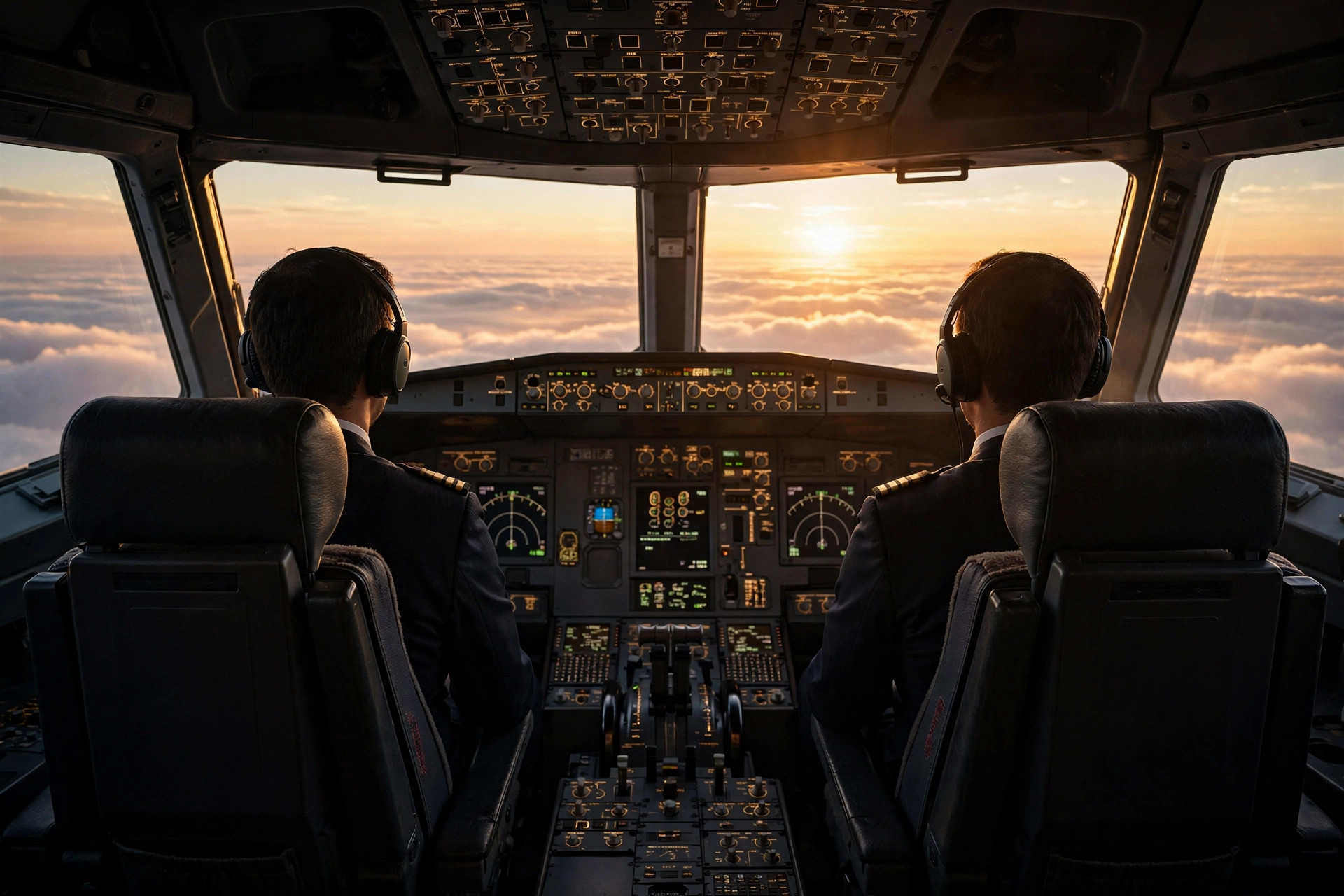
In early October 2026, passengers on a flydubai flight lived through one of the most frightening scenarios imaginable: a member of the flight crew himself allegedly tried to seize control of the aircraft. According to investigators, the co-pilot is accused of attempting to hijack — or even crash — the plane, and the evidence so far suggests he likely acted alone. What stopped him, reporters say, was extraordinary courage from the captain — an Indian pilot who fought back through a fractured skull — and timely help from a dentist travelling as a passenger.
This article explains what is known so far, how modern cockpit security is supposed to work, and why the training and instincts of the crew mattered so much. It stays with the reported facts; where details are still under investigation, we say so.
What Happened on the Flight
flydubai is a low-cost airline based in Dubai, operating short and medium-haul routes across the Middle East, Africa, Europe, and Asia. Like every commercial airliner, its aircraft are flown by two pilots — a captain and a co-pilot (also called the first officer) — who share duties in the cockpit.
According to the reporting, the crisis began when the co-pilot allegedly turned on the captain and attempted to take control of the aircraft for a hijack attempt. Investigators have said the co-pilot likely acted alone, meaning the working theory is not that of an organized plot but of one individual's actions. The motive remains under investigation.
What happened next is the part of the story that has captured global attention. Despite sustaining a fractured skull during the confrontation, the Indian captain resisted the attempt and worked to keep the aircraft safe. A dentist who happened to be among the passengers stepped in to help the injured pilot, providing urgent assistance in the air until the situation was under control.
The aircraft landed safely, and the immediate danger passed. Authorities then began the painstaking work of establishing exactly what occurred in the cockpit — a process that involves cockpit voice recordings, flight data, witness statements, and a deep examination of the accused co-pilot's background.
Why the Captain's Actions Matter
A fractured skull is a severe injury that can impair consciousness, balance, and decision-making. The fact that the captain continued to fight for control of the aircraft in that condition speaks to both personal courage and professional training. Commercial pilots are trained to handle incapacitation scenarios — including the incapacitation of a fellow crew member — and to prioritize the safety of the aircraft above everything else.
The dentist's intervention was equally significant. Medical emergencies at 35,000 feet are handled with whatever resources are on board: the aircraft's medical kit, advice from ground-based medical services by radio, and the skills of any medically trained passengers. In this case, having a healthcare professional in the cabin helped stabilize the injured captain during the critical period after the attack.
How Cockpit Security Works on Modern Airliners
To understand why an attempt like this is so difficult to carry out, it helps to know how cockpit security has evolved:
Reinforced, lockable cockpit doors
After the September 2001 attacks in the United States, aviation regulators worldwide required reinforced cockpit doors that can be locked from inside the flight deck. On most aircraft, the door can only be opened from the cabin with a code — and the pilots inside can deny entry. This system was designed to keep intruders out of the cockpit.
The "two-person" principle
Many airlines and regulators strengthened a rule requiring two authorized people to be in the cockpit at all times, so that one pilot is never alone on the flight deck. Procedures vary by airline and country, but the goal is the same: no single person should have unobserved control of the aircraft.
Crew Resource Management
Pilots train extensively in Crew Resource Management (CRM) — a system developed after researchers found that communication breakdowns, not just technical failures, caused accidents. CRM teaches crews to challenge unsafe actions, speak up clearly, and take over when a colleague is incapacitated or acting dangerously. The captain's resistance in this incident reflects exactly the mindset CRM is meant to build.
Psychological screening and monitoring
Pilots undergo medical examinations, including mental-health components, at regular intervals to keep their licenses. After rare past incidents involving pilots deliberately crashing aircraft, the industry has debated how to strengthen ongoing psychological support and monitoring. This case is likely to renew that conversation.
How Rare Is This?
Attempted hijackings of commercial airliners are extraordinarily rare in modern aviation. The last decades have seen aviation become one of the safest forms of travel ever devised, with multiple overlapping layers — passenger screening, baggage checks, air marshals on some routes, reinforced doors, and crew training — designed so that no single failure leads to catastrophe.
Cases where a crew member is the threat are rarer still, precisely because pilots pass through extensive background checks, training, and medical certification. That rarity is also why each case is studied so closely: investigators and regulators look for lessons that can make an already safe system even safer.
What Happens Next
The investigation will likely take months. Aviation investigators typically reconstruct events from several sources:
- Cockpit voice recorder: captures sounds and conversation on the flight deck.
- Flight data recorder: logs the aircraft's speed, altitude, control inputs, and system states second by second.
- Witness accounts: from cabin crew and passengers, including the dentist who assisted.
- Background review: the accused co-pilot's training, medical, and personal history.
Regulators may also review flydubai's procedures and, more broadly, whether industry-wide rules on cockpit access and crew monitoring need updating. Any criminal case against the co-pilot would proceed separately once investigators finalize their findings.
What This Means for Travellers
News like this can be unsettling if you fly regularly. A few things are worth keeping in perspective. First, the system worked as designed in the most important sense: the crew's training and courage, plus an alert passenger, prevented disaster. Second, flying remains statistically the safest way to travel long distances — a single shocking incident does not change the overall safety record built over millions of flights.
If you are a nervous flyer, it can help to learn how aviation safety systems work — understanding the layers of protection tends to reduce anxiety rather than increase it. And as always, practical preparation makes travel smoother: planning trips wisely and understanding what travel insurance covers are sensible steps for any journey, whatever the headlines say.
Key Takeaways
- A flydubai co-pilot is accused of attempting to hijack or crash the aircraft; investigators say he likely acted alone.
- The Indian captain resisted despite a fractured skull, and a passenger who is a dentist helped save him.
- Modern cockpit security — reinforced doors, two-person rules, and crew training — exists precisely to defeat threats to the flight deck.
- The investigation will examine recordings, flight data, and the accused co-pilot's background; findings could shape future aviation rules.