
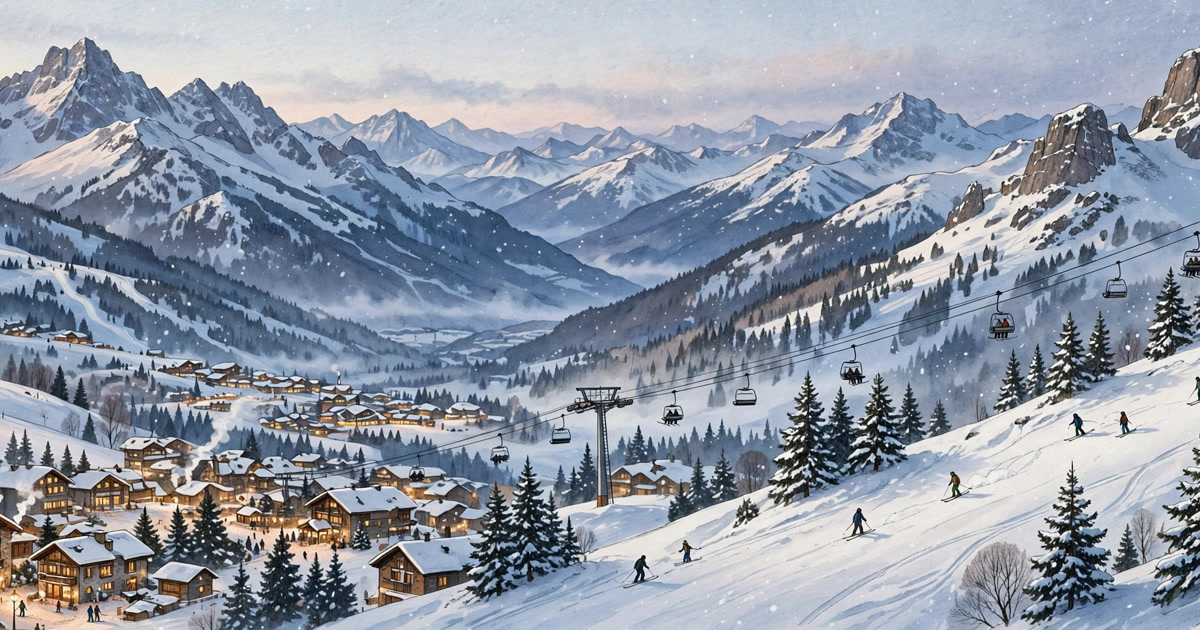
Andorra ski resorts explained: how the season works
Andorra ski resorts offer the largest ski area in the Pyrenees in a country smaller than many cities, and that combination of scale and compactness is what makes them special. Two main domains, Grandvalira and Vallnord-Pal Arinsal, together provide more than 300 kilometres of pistes, served by modern lifts and resort villages at altitude. This guide to Andorra ski resorts explains both domains, the snow season, the passes, and how to plan a trip that suits beginners, families, and experienced skiers alike.
The simplest way to use Andorra ski resorts is to separate three questions that fans often mix up: what is coming next, what has just finished, and where a team stands overall. Fixtures answer the first question, results answer the second, and the table answers the third. When you check Andorra ski resorts on a Monday morning, start with the results, then look at the next round, and only then judge the table. A single weekend can change the mood around a club completely, but it rarely changes the whole season, so reading Andorra ski resorts in that order keeps one surprising scoreline in proportion.
Andorra ski resorts: Grandvalira and Vallnord-Pal Arinsal
Grandvalira is the giant, with about 210 kilometres of pistes across seven sectors, including Pas de la Casa, Grau Roig, Soldeu, El Tarter, Canillo, and Encamp. Soldeu and El Tarter are the family-friendly heart, with excellent ski schools and gentler slopes, while Pas de la Casa, the highest sector, offers reliable snow and lively apres-ski. El Tarter also hosts one of southern Europe's largest snowparks, and Soldeu regularly hosts international ski competitions, which is a useful sign of snow quality and piste preparation. One Grandvalira pass covers the whole domain, so you can ski a different sector each day without buying again.
Vallnord-Pal Arinsal, in the west of the country, is smaller but has its own character. Pal-Arinsal offers about 63 kilometres of friendly, well-groomed pistes that suit families and intermediates, while Ordino-Arcalis is the freerider's choice, famous for deep powder and off-piste terrain that attracts expert skiers from across the Pyrenees. Vallnord sits closer to Andorra la Vella, the capital, which makes it easier to combine skiing with shopping, spas, and restaurants. Andorra ski resorts also include cross-country trails at La Rabassa, where families can try snowshoeing, dog sledding, and the Tobotronc alpine slide.
How to follow Andorra ski resorts all season
Most leagues publish fixtures in rounds or matchdays, and the same round is often spread over several days, from Friday evening to Monday night. That spread is deliberate: broadcasters want separate television slots, and clubs need recovery time between league games and cup or European ties. When you follow Andorra ski resorts, always note the kick-off time in your own time zone as well as the local time, because a game listed for the evening in Andorra may start in the afternoon or the early hours where you live. Fixture dates can also move at short notice for television, weather, or a clash with another competition, so check again in the week of the match before you book travel.
If you are planning to watch in person, treat the fixture list as a starting point, not a promise. Buy tickets only through a club's official channels or a seller the club names, keep your booking confirmation, and arrive early for big games, when security checks and queues are longest. For away trips, plan transport that does not depend on a single late train or bus, and check whether the stadium area has restrictions on bags, flags, or cameras. Our budget travel tips can help you keep an away weekend affordable, and what travel insurance covers explains the cover worth considering before you travel.
Planning an Andorra ski trip: passes, snow, and getting there
The Andorra ski season usually runs from late November or early December to late April, with the most reliable snow from December to March and quieter, softer spring conditions in April. Andorra has no airport of its own, so most visitors fly to Barcelona, Toulouse, or Girona and travel by bus or car, a journey of about three hours that needs winter tyres or chains in snowy conditions. Book passes online for discounts, stay in a village with direct lift access if you want ski-in convenience, and remember that Andorra's duty-free shopping is a bonus, not a reason to skip travel insurance or proper winter clothing.
The most common mistake when following Andorra ski resorts is to read too much into one result. A heavy defeat in autumn does not end a title race, and a winning run in spring does not guarantee a trophy. Form, injuries, suspensions, and the difficulty of the remaining fixtures all matter more than any single scoreline. A better habit is to compare a team's last five results with its next five fixtures, and to watch how it performs against direct rivals rather than only against the teams at the bottom. That simple comparison turns Andorra ski resorts from a list of scores into a story you can actually follow week after week.
Tables also deserve a careful reading when you follow Andorra ski resorts. Three points for a win and one for a draw is the standard system, but tie-breakers differ: some leagues use goal difference first, others use head-to-head results, and a few use a combination that changes with the phase of the season. That is why two clubs can sit level on points yet occupy different positions, and why a team that looks safe in tenth can still be dragged into trouble if its rivals hold the head-to-head advantage. Check the league's tie-breaker rules once, and you will never again be confused by a table that seems to contradict the results. Finally, remember that Andorra ski resorts are a guide to a living competition, not a prediction: injuries, transfers, managerial changes, and cup runs rewrite the story every month, which is exactly why following a full season is more rewarding than following a single weekend.
A final habit will make following Andorra ski resorts far more enjoyable: keep a simple season note for your own club or favourite team, recording each result, the scorers you remember, and one sentence about how the game felt. After a month, that note becomes a personal history of the season, far richer than any table, and it helps you spot patterns, such as a team that always concedes late or always starts slowly after an international break. Share that note with friends, compare predictions before each round, and let the season become a shared story rather than a stream of isolated scores. That is, in the end, what following Andorra ski resorts is really for.