
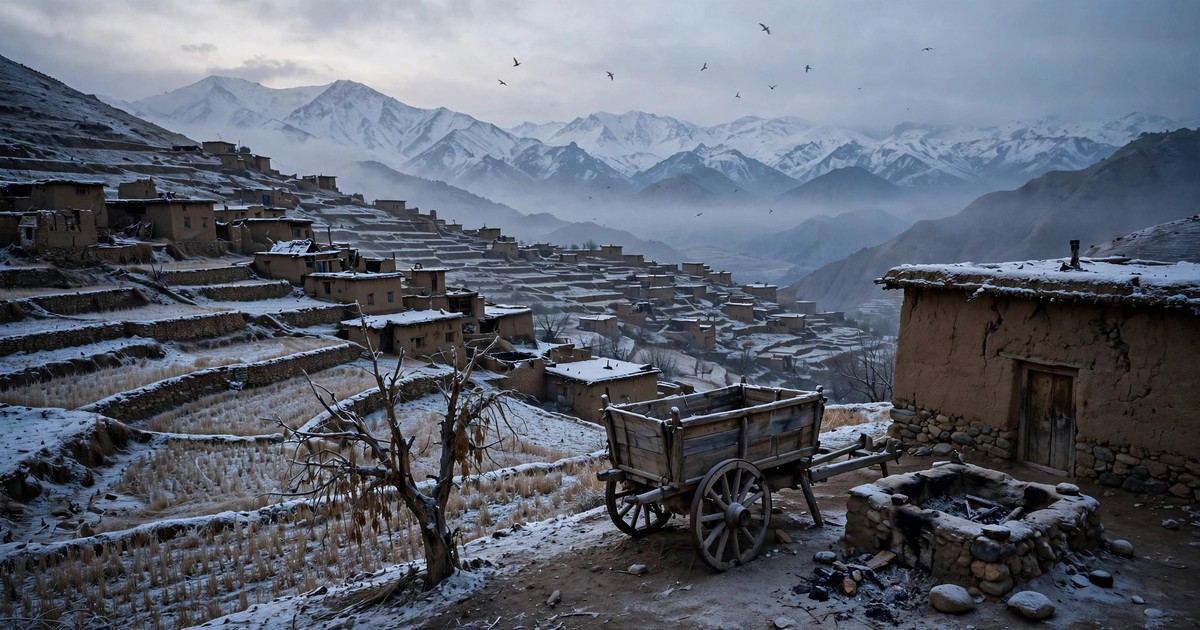
The United Nations has warned that 19.2 million people in Afghanistan — nearly 40% of the population — could face acute food insecurity this winter, in what UN officials describe as one of the worst hunger outlooks the country has seen in years. The warning, trending per news coverage across international outlets, came in a briefing from Kabul on Tuesday, October 21, 2026, and carries a stark message: a better harvest will not save the families who cannot afford to buy food.
"A harvest can improve, markets can have food, but families can still go hungry," said Olga Cherevko, spokesperson for the UN Office for the Coordination of Humanitarian Affairs (OCHA), briefing from Kabul after recent field visits to southern and northeastern Afghanistan. She called the situation "one step away from famine" for the most vulnerable — and said the outlook is deteriorating.
The numbers behind the warning
According to the latest Integrated Food Security Phase Classification (IPC) analysis — the global standard for measuring hunger, produced with UN support — about 15.9 million Afghans, or 32% of the analysed population, are currently living in crisis-level hunger (IPC Phase 3) or worse. Of those, some 3.4 million are in emergency conditions (IPC Phase 4), a level where families face large gaps in food consumption and acute malnutrition is widespread.
The projection for the November 2026 to April 2027 winter lean season is worse: 19.2 million people at Phase 3 or worse, up from 17.4 million projected for the same period a year earlier. Around five million people are expected to reach emergency-level hunger — roughly double the number projected for April–September 2026 — with the worst conditions likely in Badakhshan, Badghis, Daykundi, Ghor, Samangan, Sar-e-Pol and rural Ghazni, according to the Food and Agriculture Organisation (FAO) and the World Food Programme (WFP).
Malnutrition among children is surging alongside it. The UN agencies expect around four million children to require treatment for acute malnutrition next year — a rise of nearly 10% on 2026 — with about a quarter of those cases severe and life-threatening. WFP's country director, John Aylieff, told reporters during a visit to a Kabul children's hospital on October 16 that 5.3 million women and children will need malnutrition treatment in the coming year, a rise of 1.3 million since 2022. Twelve provinces have already reached critical levels of acute child malnutrition, a record number.
Why the harvest is not enough
The paradox at the heart of the UN's warning is that food production is actually up. Afghanistan's agriculture ministry announced on Tuesday that wheat production rose 13.4% this year to 5.15 million tonnes, up from 4.54 million tonnes last year, thanks to favourable rainfall. But domestic demand stands at about 7.09 million tonnes — leaving a shortfall of roughly 1.94 million tonnes, only partly covered by imports.
And production is only half the equation. "I saw first-hand that this crisis is not simply about whether food exists, but whether people can afford it," Cherevko said — echoing FAO representative Richard Trenchard's point that "for a parent with no steady income, nutritious food in the market can still be out of reach." Persistent unemployment, years of conflict, economic hardship and drought have worn down families' ability to cope, and staple food prices have climbed 10% to 30% since 2022.
Several fresh shocks are compounding the strain. More than 1.2 million Afghans were forcibly returned from Iran and Pakistan this year, adding pressure on already stretched communities. Border closures and disruptions to shipping through the Strait of Hormuz have pushed up the price of basic goods. And the agencies say prevention and treatment services are lagging just as need peaks — leaving women and children, as always, the most exposed.
Clinics are closing as need peaks
The funding picture is bleak. WFP now holds just 12% of the money it had available in 2022 — an 88% drop in real terms — and its staff are turning away six of every seven acutely malnourished women and children who reach its supported clinics. The agency has closed 142 health centres since August and has appealed for $540 million to keep its remaining services running over the next six months.
UNICEF says more than 100 sites treating children with severe wasting have closed in 2026, and its nutrition programme has received only 22% of the $180 million it needs this year. Save the Children reported that nearly 600 health facilities have been shut or suspended due to funding cuts, affecting about four million people — roughly half of them children. Overall, the $1.71 billion humanitarian appeal for Afghanistan is only just over 26% funded, which Cherevko called "alarming."
The timing makes the cuts especially dangerous: winter shuts down agricultural work, erases day labour, blocks roads and makes it harder for aid teams to reach remote communities. WFP's Aylieff has warned that the "window to act" is rapidly closing if families are to survive the winter "with dignity."
What the UN is asking for
Cherevko urged the international community to act before families exhaust their remaining options — calling for increased investment in agriculture, rural livelihoods, local markets, employment, water systems, health services and economic opportunities for women. FAO's Trenchard put the case for prevention: creating dependable incomes is essential to helping communities withstand future shocks, and early intervention costs far less than treating children once they reach life-threatening stages.
Analysts cited in the coverage warn that without a significant scale-up, Afghanistan's food emergency risks becoming one of the world's most severe humanitarian crises of the coming year — a sobering counterpoint to the usual assumption that a good harvest means an easier winter. As Cherevko put it: "These numbers represent children whose parents cannot afford nutritious food and families whose ability to cope has been worn down by years of conflict, economic hardship, drought and other shocks."
Related coverage: the strain on fragile health systems is also visible in Nigeria's Ebola contact-tracing effort, while major food-safety recalls and the Sahel's deepening humanitarian fallout show how food and displacement crises compound each other across the region.
The crisis is not confined to conflict zones: in Canada, food bank use has hit a record 2.3 million monthly visits as grocery costs bite.
Sources: UN News (OCHA briefing); AnewZ; IANS (IPC/FAO/WFP analysis); Global Issues/Inter Press Service; NationPress; The Fourth Plate; Sowetan (AP/WFP); Save the Children; UNICEF.